Boxfish
box_fish
Lactoria cornuta
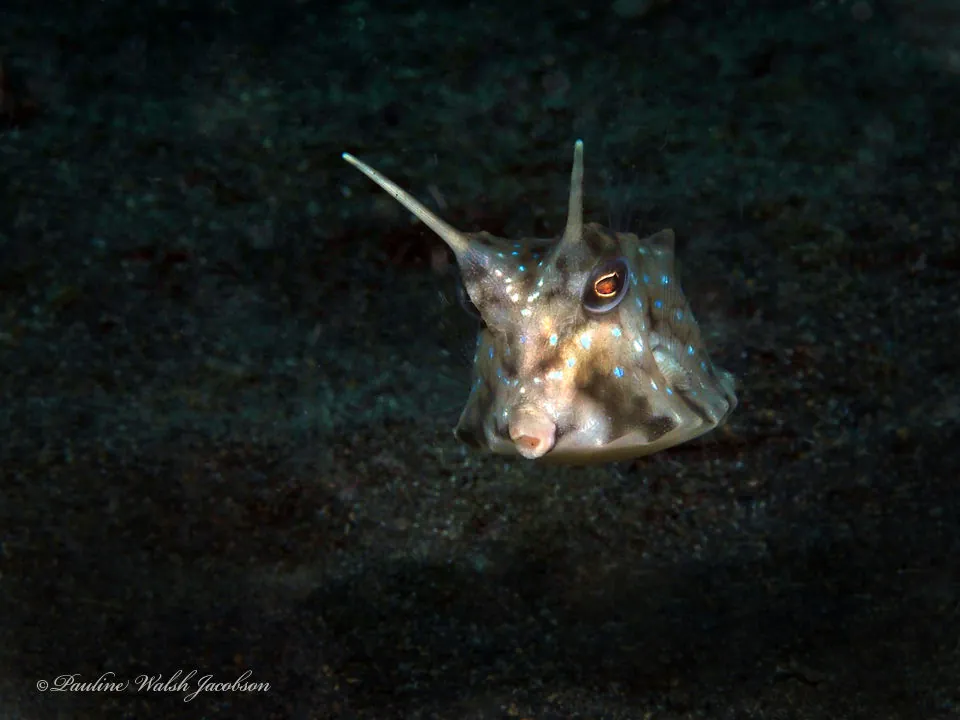
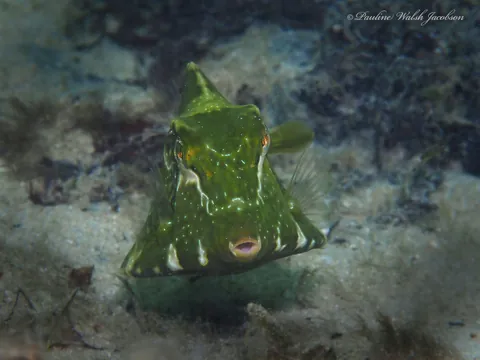
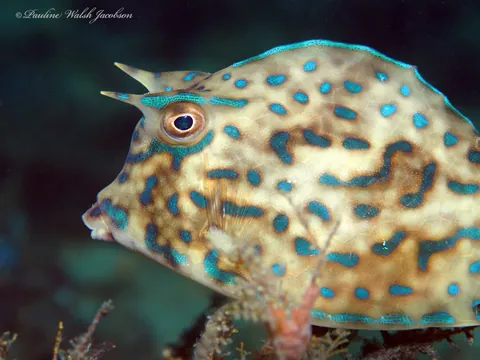
The longhorn cowfish is one of the most unmistakable fish on the reef, named for the pair of long horns that jut forward from its head like those of a cow. It can grow up to 46 cm long.
Also known as: long-horned cowfish, long-horn cow-fish, cow-fish, cowfish, cofferfish, long horned cowfish, long-horn cowfish, trunkfish
Its box-shaped body is shared with other boxfish, but the longhorn cowfish stands apart from nearly all of them. The long, forward-pointing horns above its eyes are unique among reef boxfish, and settle the identification at a glance.
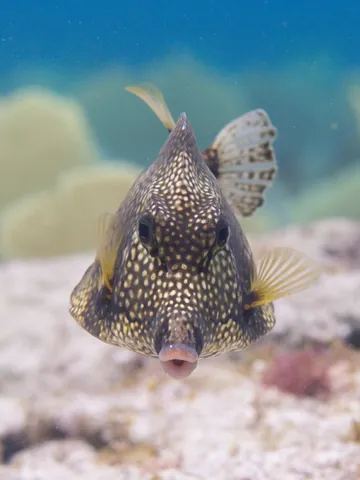
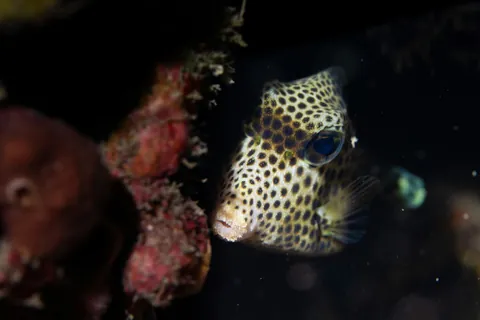
This fish has a boxy, rigid body encased in a bony shell, with a long horn projecting forward above each eye. Its base colour is yellow to olive, covered in white or bluish spots. Males and females look alike, with no difference in colour between them.
Longhorn cowfish live on coral reefs in lagoons, reef flats, bays, and estuaries, as well as sandy or muddy inshore areas and harbours, from about 1 to 100 m deep. Juveniles often shelter near river mouths in brackish water and around branching corals.
This species forms harems of three or four females with one male. The females spawn shortly after sunset, or during the day when cloud cover is heavy, over a spawning season running from February to early October. The eggs and young larvae drift in open water, and as the larvae develop they grow the bony box-like shell that covers the adult fish.
This fish was first named Ostracion cornutus by Carl Linnaeus in 1758. In 1902, it was made the type species of a new subgenus, Lactoria, a name inspired by the cow-like horns above its eyes.
Describe what you saw and we name it, then keep every species you find in your Oceandex.