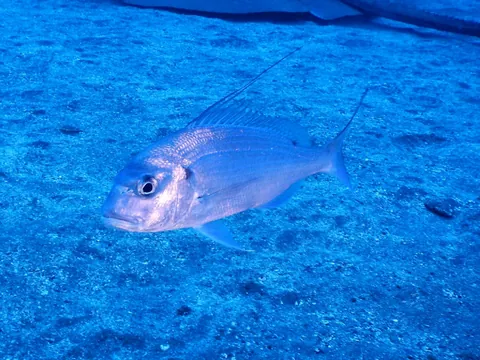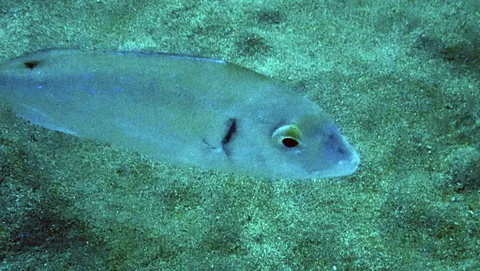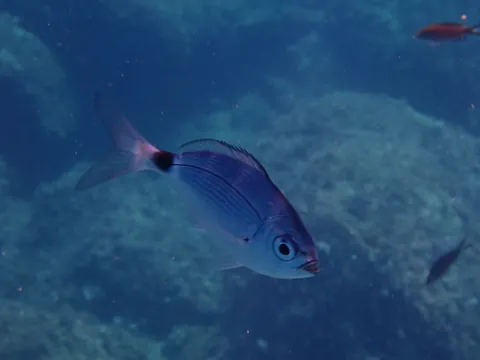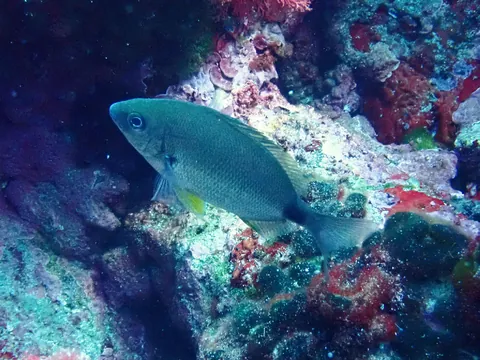
Annular Seabream
Diplodus annularis
Diplodus sargus
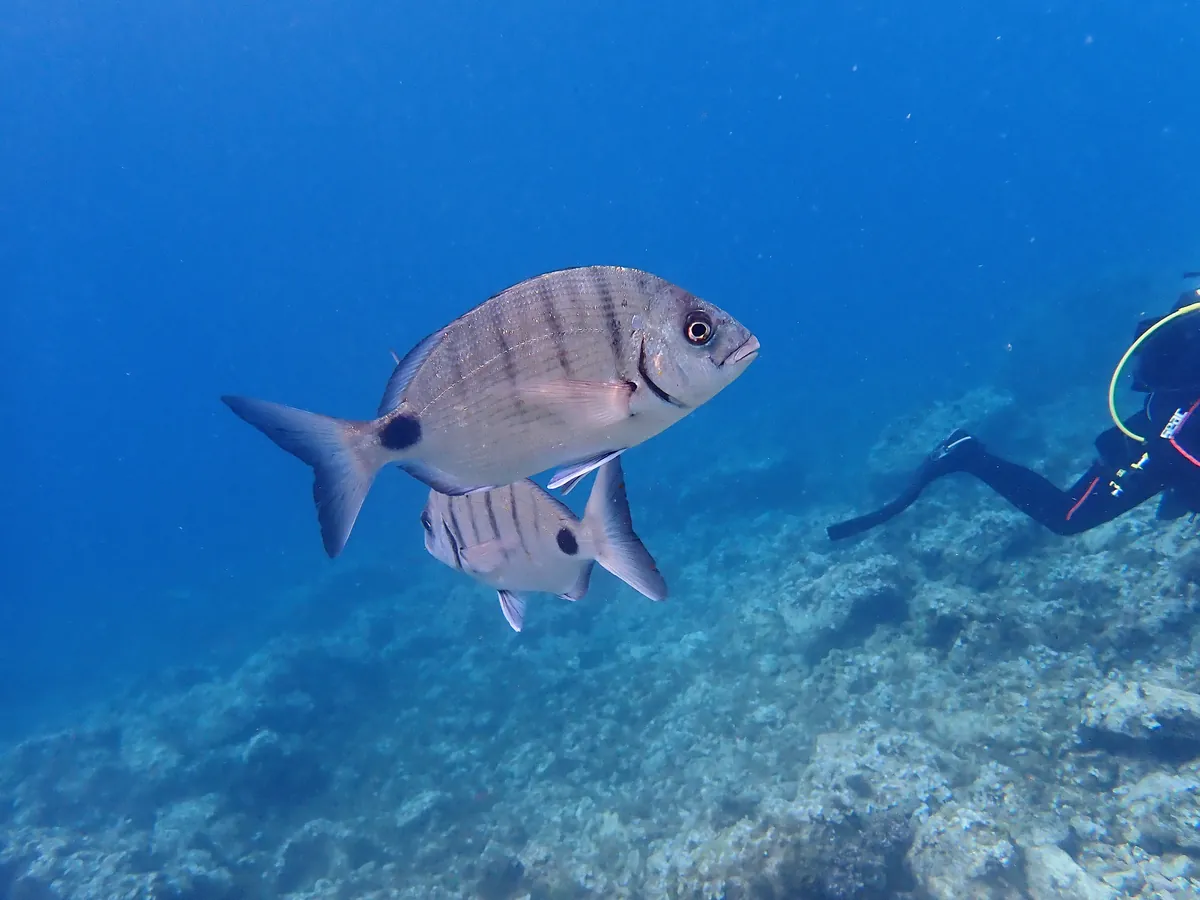
The white sea bream is a deep-bodied, silvery fish common on rocky Mediterranean and eastern Atlantic reefs. It grows to about 45 cm, though most divers see smaller fish around 22 cm, moving in loose schools over rock and sand.
Also known as: white bream, blacktail, sargo
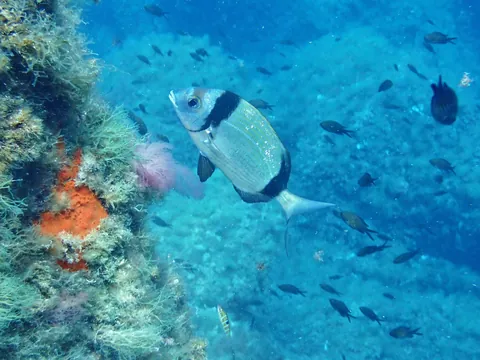
It can be confused with other Diplodus sea breams that share similar banding. Look for the dark saddle blotch on the tail base paired with the black spot at the pectoral fin base; other sea breams rarely show both marks together.
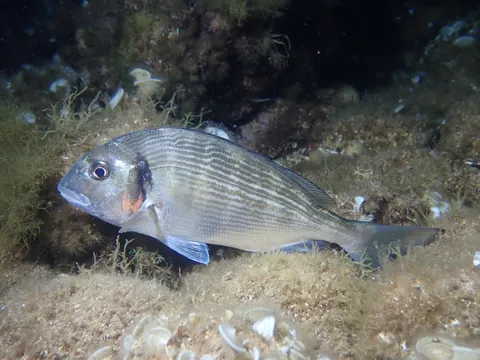
This is a deep-bodied fish with a high, arched back and a silvery-grey colour, darker on the front of the head. Up to nine vertical bars cross the body, alternating dark and pale, though some fish show only faint bars or none at all. A dark, saddle-like blotch sits on the tail base, just behind the dorsal fin, and a black spot marks the base of the pectoral fin. The tail fin is forked with a black rear edge, and the dorsal and anal fins darken toward their tips.
It lives over coastal rocky reefs mixed with sand, often mixed with seagrass meadows, from the surface down to deep water. It is most common in the surf zone, where waves break over shallow rock. Young fish shelter in seagrass beds and estuaries before moving onto the open reef.
White sea bream are active by day, often near dawn, and feed on algae, sea urchins, worms, and small shellfish picked from the seabed. They have been seen cleaning parasites off grey mullets, acting briefly like a cleaner fish. Spawning runs from March to May as the water warms.
Describe what you saw and we name it, then keep every species you find in your Oceandex.