Warty oreo
Allocyttus verrucosus
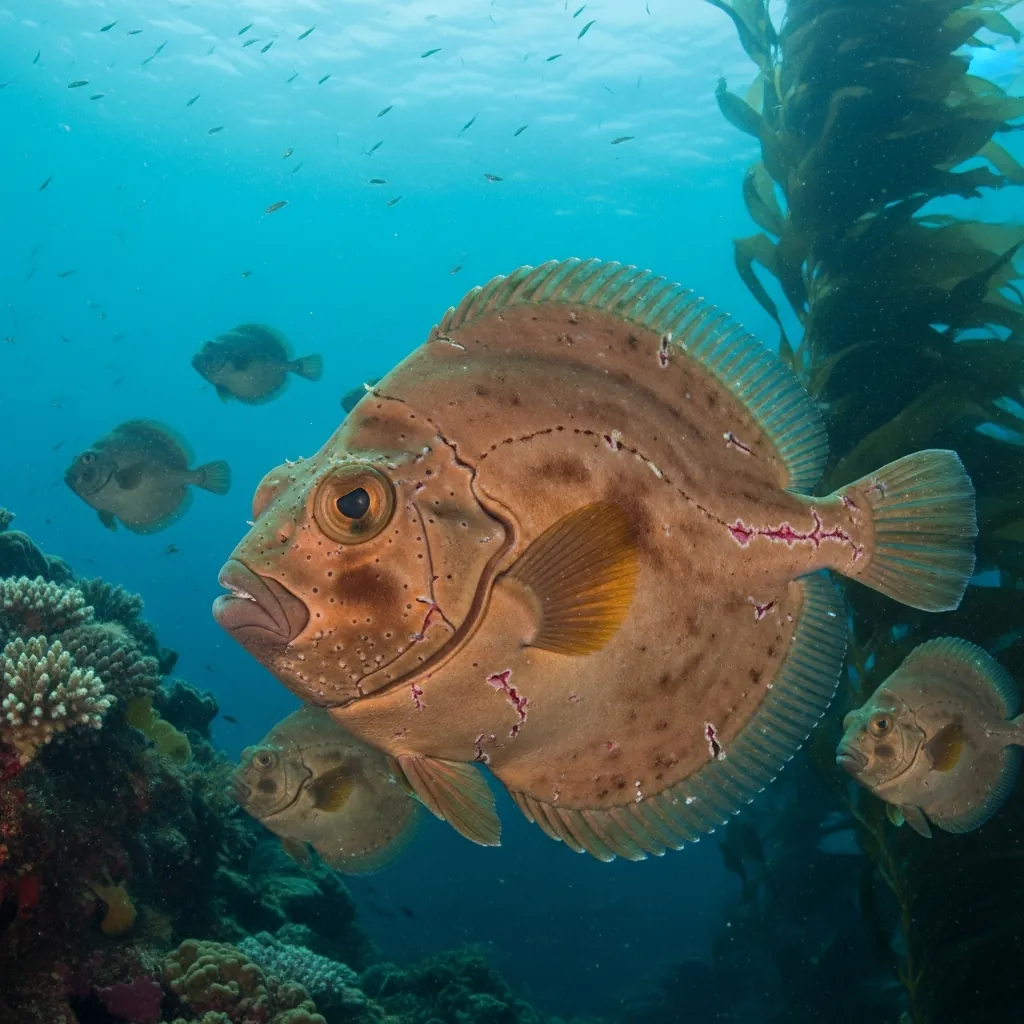
About
The warty oreo is a deep-water fish of the continental slope, the long ramp that drops away from the edge of the shelf. It gathers in big shoals over rough ground near pinnacles and canyons, and spreads out thinly over smooth bottom. Most live between 800 and 1200 m, and the species has been found as deep as 1800 m. Young fish start life far above all this, drifting in open water. The eggs float near the surface and the larvae stay there too. Adults reach about 42.5 cm and up to 2 kg, and they hunt shrimps, squid and other fish.
Also known as: warty oreo, oreo dory, spiky oreo, warty oreodory, black oreodory, warty oreo, warty dory, black oreo, oxeye oreo, ox-eyed oreo, warty oreodory, warty dory, warty oreo
- Length
- 42.5 cm
- Weight
- max 2 kg
- Depth
- 800–1200 m
How to tell it apart
The look-alike is the spiky oreo. Check the two rows of coarse, warty scales low on the flank, between the pelvic and anal fins, and the spines on the anal fin. Neither of these changes with mood or light. The dorsal fin is also lower than the spiky oreo's, and the bottom corner of the body is less pointed, but the warty scale rows are the mark that settles it.
Appearance
The body is deep and diamond-shaped, flattened from side to side, with a lower corner that is fairly blunt. Adults are dark grey to blackish with black fins. The eyes are large, which is normal for a fish that lives in near-darkness. Two rows of big, warty scales run along each side, between the pelvic fin and the anal fin. There are spines along the anal fin, and only one spine in each pelvic fin. Young fish look nothing like the adults: they are silvery with a greenish back and large grey blotches, and those blotches fade by the time the fish is about 12 cm long.
Log it in Into the Blue
Describe what you saw and we name it, then keep every species you find in your Oceandex.