California Lizardfish
Synodus lucioceps
Synodus variegatus
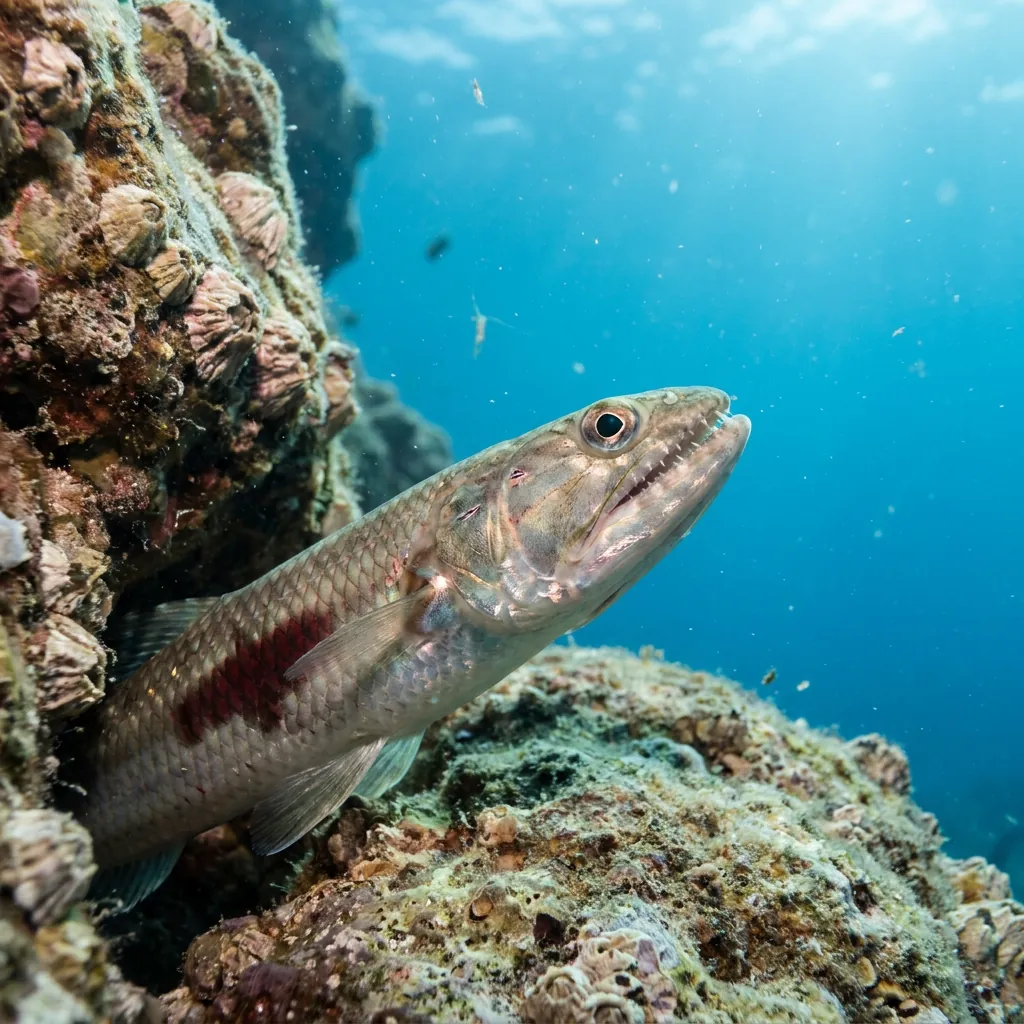
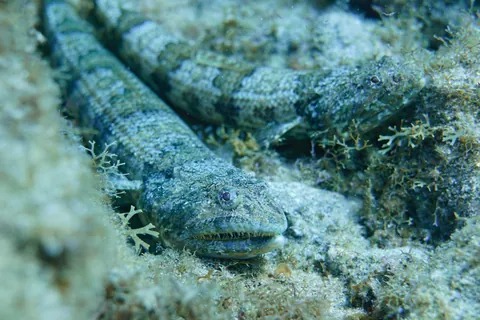
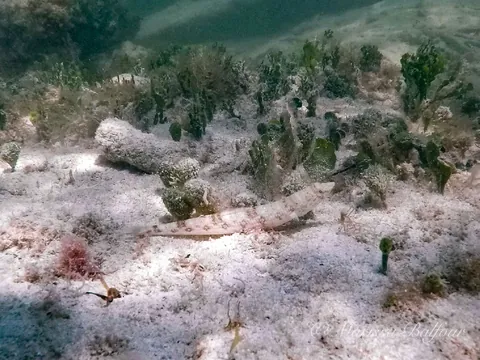
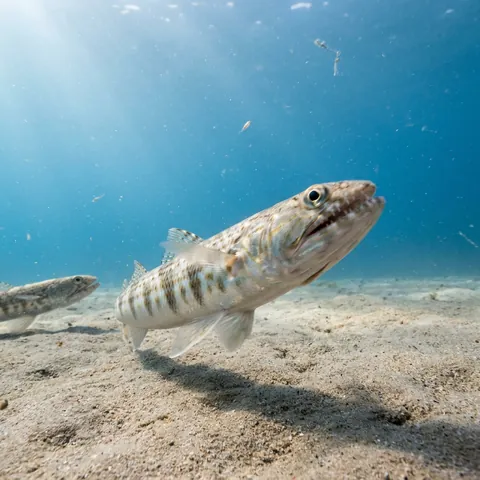
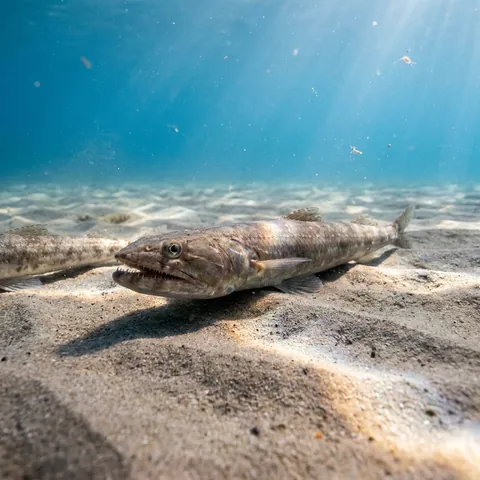
This ambush hunter looks less like a fish and more like a stone with a mouth. It lies dead still on open sand, propped up on stiff fins, waiting for a meal to swim past. It grows to about 40 cm, though most divers see one closer to 30 cm.
Also known as: fowler's lizard fish, hoult's lizardfish, pointhead lizardfish, redband lizardfish, reef lizardfish, scaly-cheek lizardfish, short-nosed lizardfish, two-spot lizardfish, variegated lizardfish, engleman's lizardfish, hoult's lizardfish, two-spot lizardfish, reef lizardfish, red lizardfish, redband lizardfish, pointhead lizardfish, scaly-cheek lizardfish, fowler's lizard fish, variegated lizardfish, short-nosed lizardfish, lizardfish, variegated lizardfish
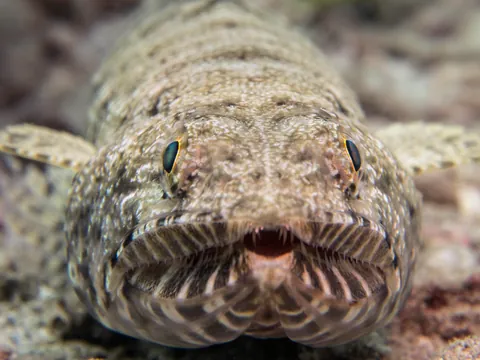
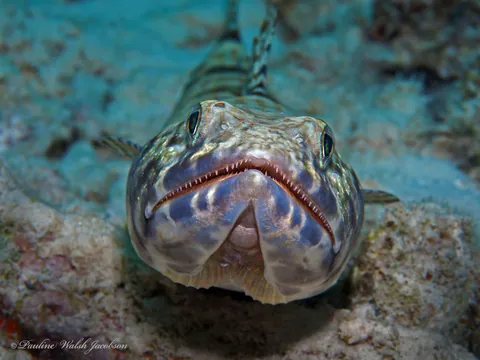
The posture is the giveaway: it rests propped up on its stiff pelvic fins with its snout tilted up, unlike most fish, which lie flat on the sand. Combined with its lizard-like flattened head, this stance identifies it at a glance even when its body colour shifts from grey to deep red.
The body is rounded in cross-section, with a broad, slightly flattened head and a wide mouth. Both jaws stick out equally and are lined with fine, backward-curving teeth. Colour ranges from grey to red, with dark hourglass- or saddle-shaped markings running down the flanks. Large individuals can look thick-bodied, almost humped through the back. Thick, sturdy pelvic fins let it prop itself up on the seabed.
On some individuals, the hourglass markings along the side disappear completely under a solid dark red band.
Describe what you saw and we name it, then keep every species you find in your Oceandex.