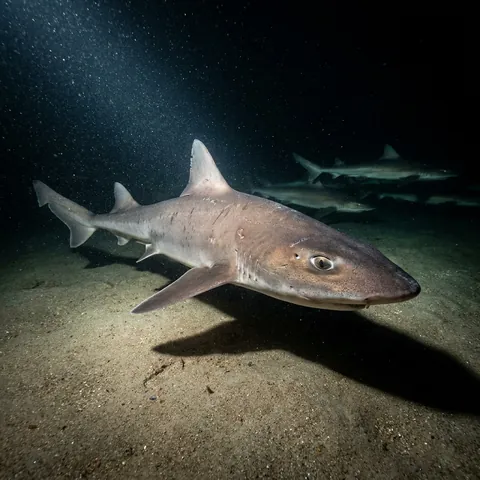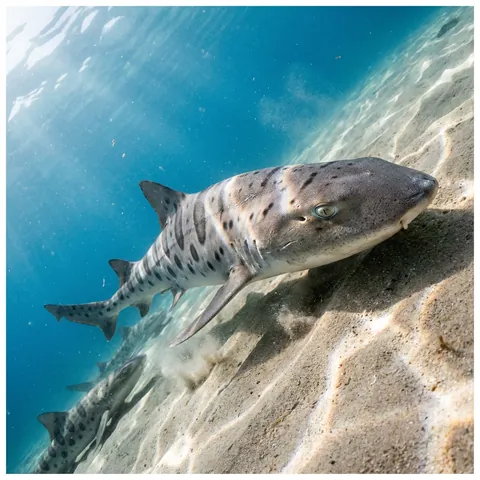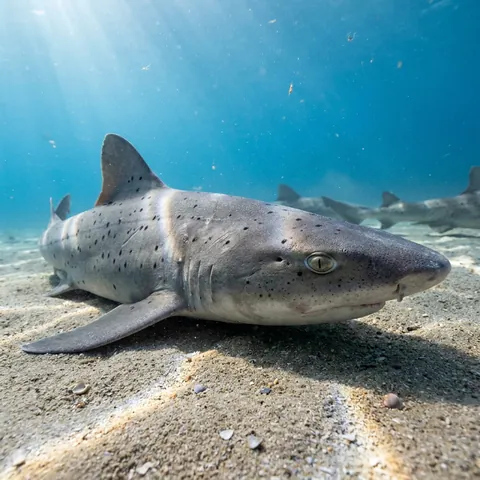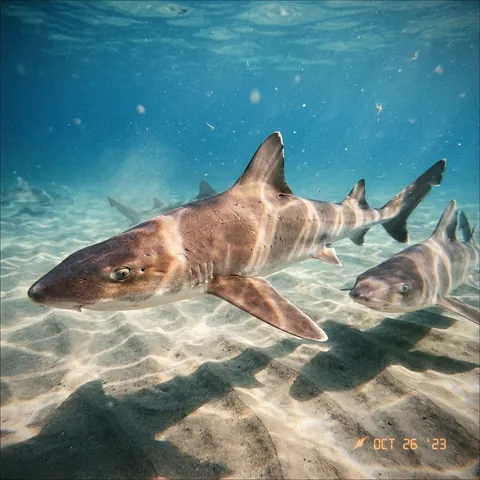
Brown Smooth-hound
Mustelus henlei
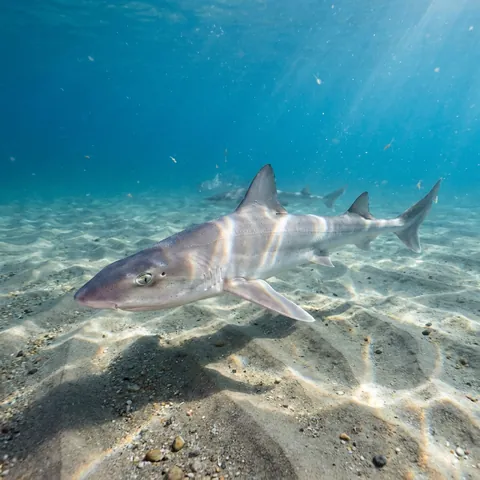
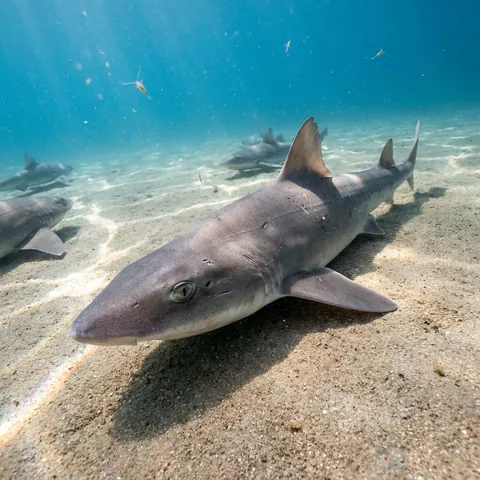
Galeorhinus galeus
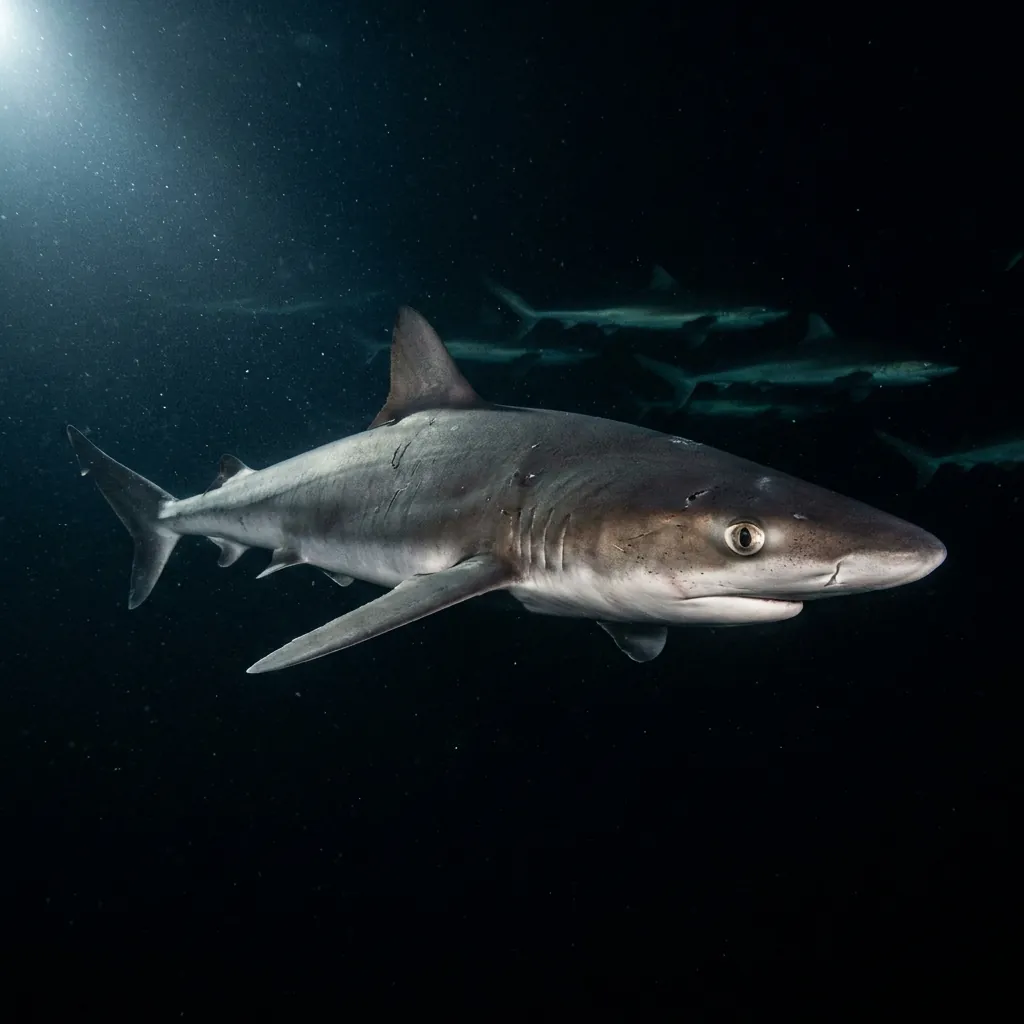
The tope shark is a lean, fast-swimming hunter of temperate seas, reaching up to 193 cm and 44.7 kg. It travels in schools and covers huge distances as it moves between feeding and breeding grounds.
Also known as: soupfin shark, tope soupfin shark, hundshai, vitamin shark, sweet william shark, eastern school shark, tope oil shark, tope school shark, tope, greyboy, schnapper shark, snapper shark, sharpie shark, greyshark, penny's dog, flake, school shark, school shark, soupfin shark, snapper shark
It can be confused with other houndsharks and smoothhounds. Check the second dorsal fin: on the tope shark it is nearly as large as the anal fin beneath it, while most similar sharks have a noticeably smaller second dorsal.
This is a slim, shallow-bodied shark with a long, pointed snout and a large, crescent-shaped mouth. Its small teeth are flat, angled backward, and finely serrated. The first dorsal fin is triangular and sits just behind the pectoral fins, while the second dorsal fin is about the same size as the anal fin below it. The tail fin has a notch near its tip. The body is dark bluish grey above and white underneath, and young sharks carry black markings on their fins.
The tope shark lives mainly near the seabed on continental shelves in temperate waters, though it also swims well out in open water. It ranges from close to shore down to 1100 m, usually between 2 and 471 m, and turns up off coasts on both sides of several oceans, from cool Atlantic and Pacific waters to the seas around southern Australia and New Zealand.
Tope sharks are highly migratory and travel in small schools, sometimes moving between continents. They feed on whatever fish are most common nearby, including sardines, squid, and flatfish, hunting both near the bottom and higher in the water. Unusually for a shark, they show a strong liking for barracuda where the two share a reef. Females carry their young inside the body, where each pup feeds on a large yolk sac before being born fully formed.
The tope shark is listed as Vulnerable. It is heavily fished for its liver oil, meat, and fins, mainly using gillnets and longlines, and young sharks are sometimes caught close to shore where nursery habitat is being degraded.
The tope shark shows an unusually strong preference for hunting barracuda wherever the two species share a reef.
Describe what you saw and we name it, then keep every species you find in your Oceandex.