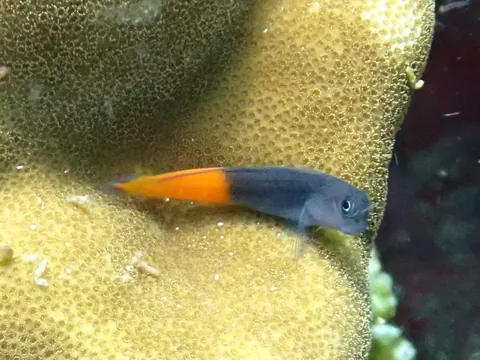
Bicolor Blenny
Ecsenius bicolor
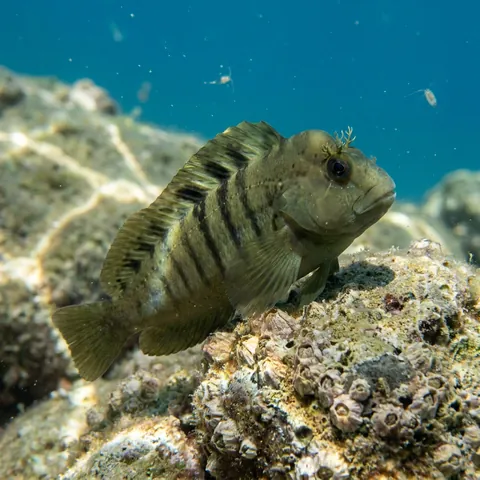
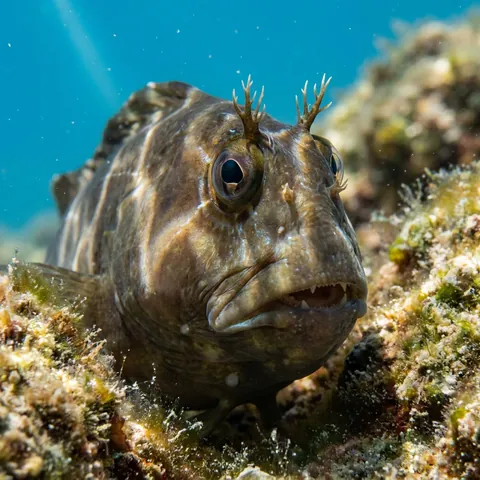
Parablennius gattorugine
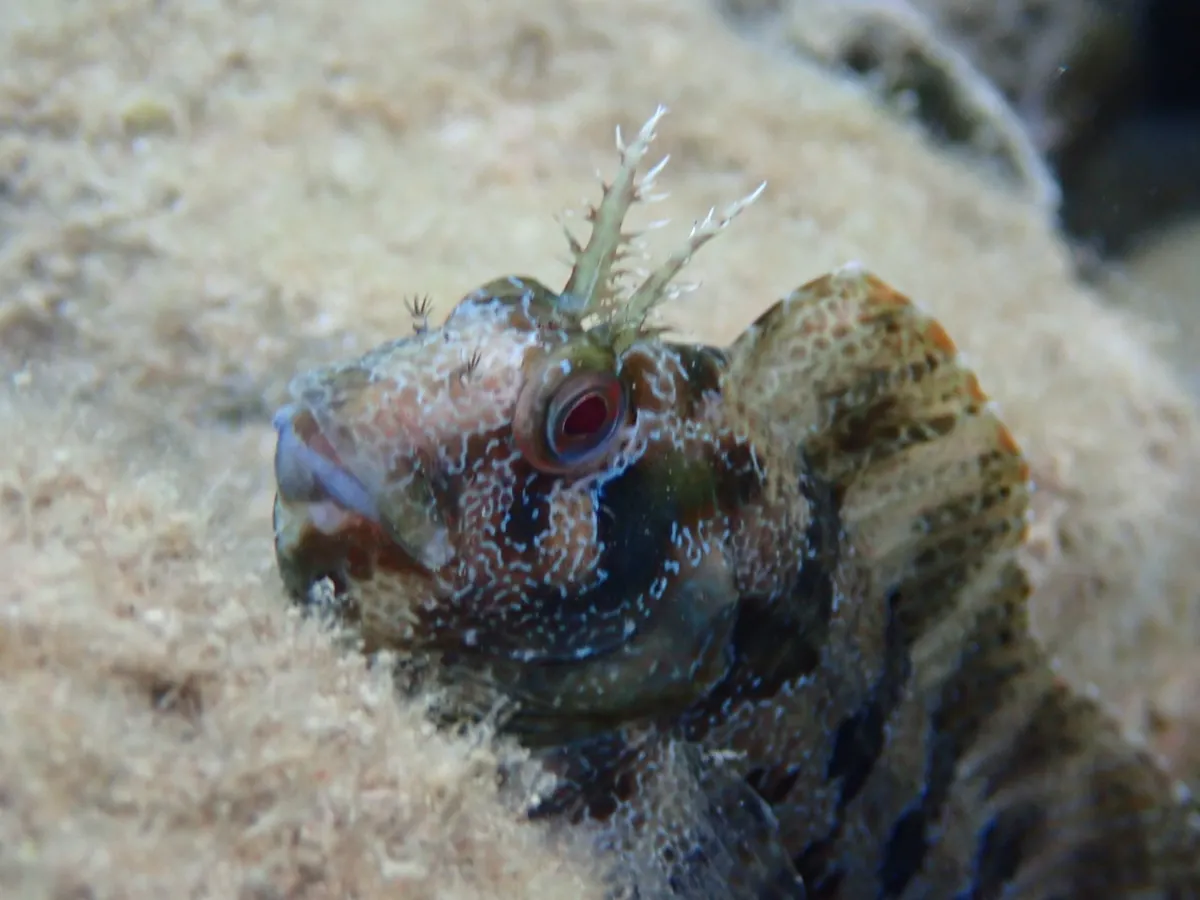
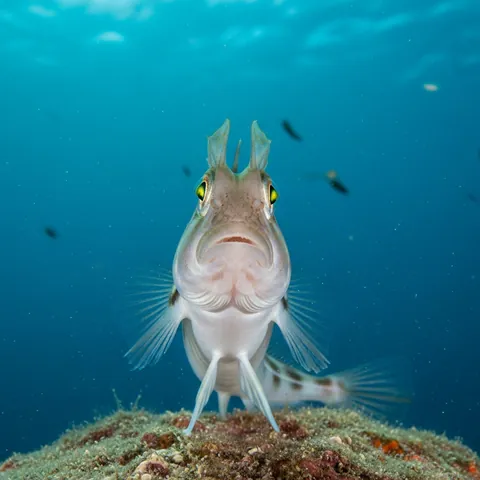
The tompot blenny is a bold, big-eyed fish that watches divers from the mouth of its favourite crevice rather than bolting for cover. It grows up to 30 cm, though most are closer to 17.5 cm.
Also known as: gattorugine
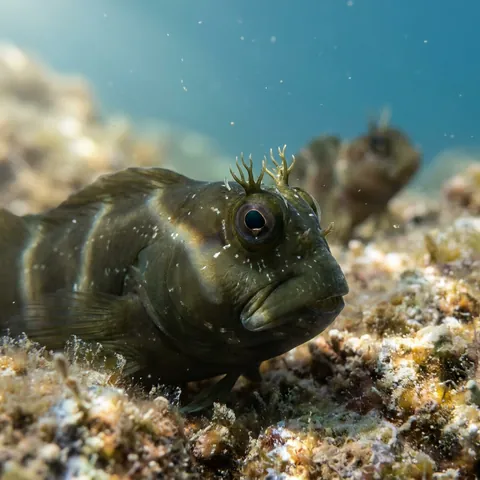
Several blennies share tentacles above the eyes, but this species' branched eye tentacles and sharply two-toned, brown-and-white eyes are a reliable pointer.
It has an elongated body, a large head, and large eyes, each topped with a branched tentacle, plus smaller tentacles above the nostrils. The eyes are two-toned, brown on top and white below. Colour is mostly yellow-brown, sometimes greenish, crossed by at least seven dark bars that run from the dorsal fin down to the belly. The dorsal fin runs the length of the body and is split into two parts by a shallow notch. Breeding males turn chocolate brown and grow pale bulb-like glands on the anal fin.
It lives in shallow, rocky seas, holding a territory around a crevice it uses for shelter, at depths from about 3 to 32 m. Young fish shelter in seaweed closer to shore. Its range runs along the Atlantic coast of western Europe and North Africa, and through the Mediterranean and Black Sea.
Males mate with several females and then guard the eggs alone until they hatch, about a month later. The eggs are sticky and attach to the seabed in a clump inside the male's crevice. Spawning happens from March to May, and males often fight each other while defending their territory.
Each tompot blenny has its own unique pattern of markings on its face, distinct enough that researchers use them to recognise individual fish over time.
Describe what you saw and we name it, then keep every species you find in your Oceandex.