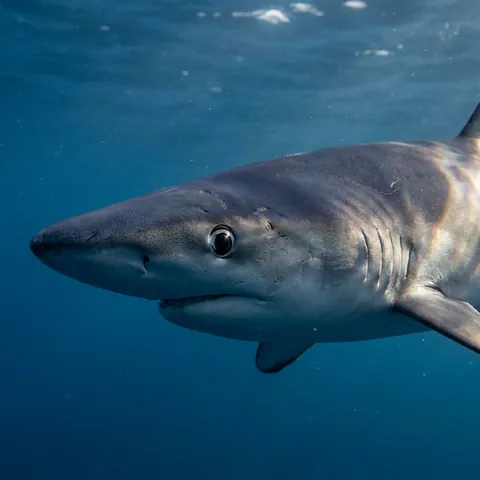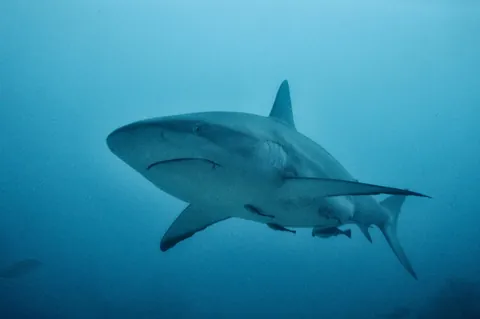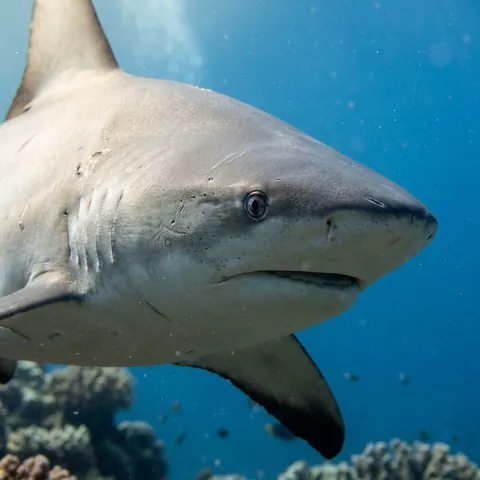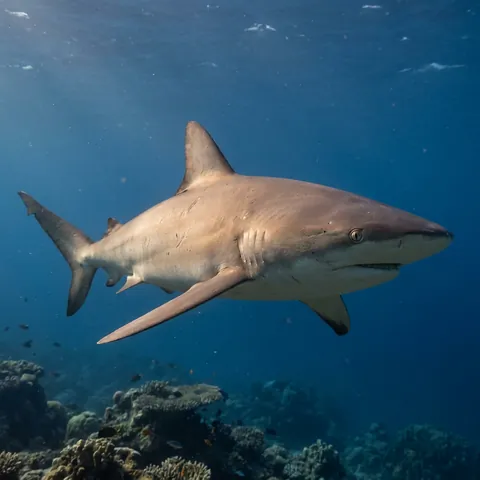
Blacktip reef shark
Carcharhinus melanopterus
Galeocerdo cuvier
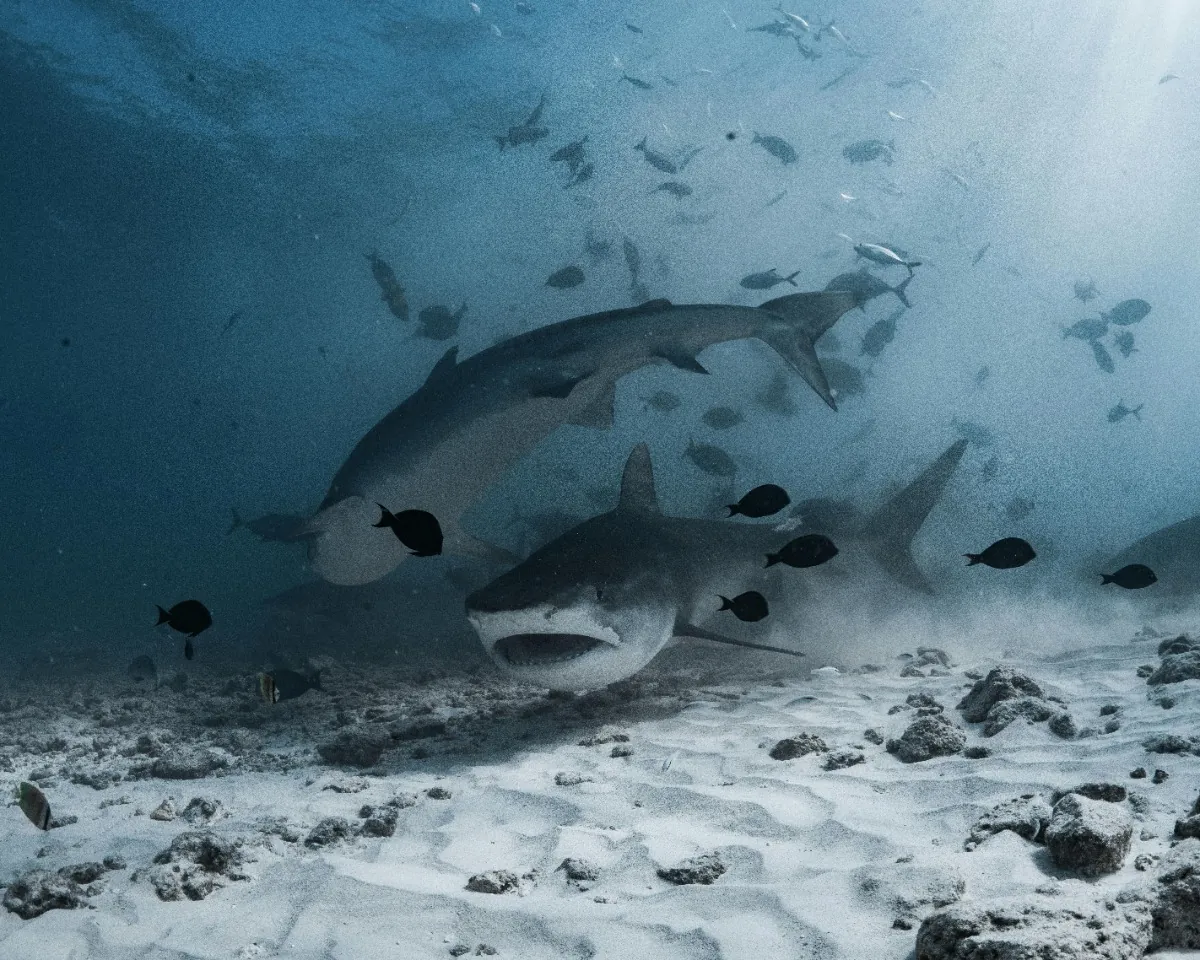
The tiger shark is one of the ocean's true generalists, a big, solitary hunter that will eat almost anything it can catch. It can grow to 750 cm, with a typical adult reaching around 500 cm, making it one of the largest predatory sharks divers ever encounter.
Also known as: galeocerdo cuvier, leopard shark, maneater shark, spotted shark, tiger-shark
The dark body stripes that give this shark its name are the main mark to look for, but keep in mind they fade with age, so large adults may look almost plain. On a striped individual, this pattern combined with its large, bulky size sets it apart from other big sharks.
As a juvenile and young adult, this shark carries dark vertical stripes and blotches down its body, similar to a tiger's pattern. These markings fade as the shark grows older, so large adults may show little or no stripe pattern at all.
Tiger sharks favour tropical and subtropical waters close to the coast, often patrolling deep water along the outer edge of reefs before moving into shallower channels to hunt. They are nomadic, following warm currents and staying nearer the equator during colder months, and have been recorded from Japan to New Zealand. Fuvahmulah, an island in the Maldives, hosts the largest known aggregation of tiger sharks anywhere.
This is a mostly solitary, nocturnal hunter. It tends to move into shallower water close to shore at night to feed, then retreats to deeper water during the day. Orcas are its only known natural predator, and have been recorded flipping tiger sharks upside down to immobilise them before attacking.
Tiger sharks are apex predators with an unusually broad diet. Young sharks feed mainly on small fish, jellyfish, and molluscs. Once they near sexual maturity, their prey expands to include larger fish, sea turtles, sea snakes, sea birds, dolphins, dugongs, and other sharks. They also have a reputation for swallowing inedible, human-made objects that then linger undigested in the stomach.
Females mate only once every few years. Rather than laying eggs, tiger sharks give birth to live young that develop inside the mother, nourished by fluid-filled sacs rather than a placenta, a method unique among sharks.
potentially dangerous — a large predator; treat with caution and respect
Tiger sharks are hunted for their fins, meat, and liver, and populations have dropped where fishing pressure is heavy. Demand for shark fin continues to drive further declines.
Tiger sharks are the only sharks known to nourish their young with fluid-filled sacs inside the womb instead of a placenta, a reproductive method called embryotrophy that lets the pups grow much larger before birth.
Describe what you saw and we name it, then keep every species you find in your Oceandex.