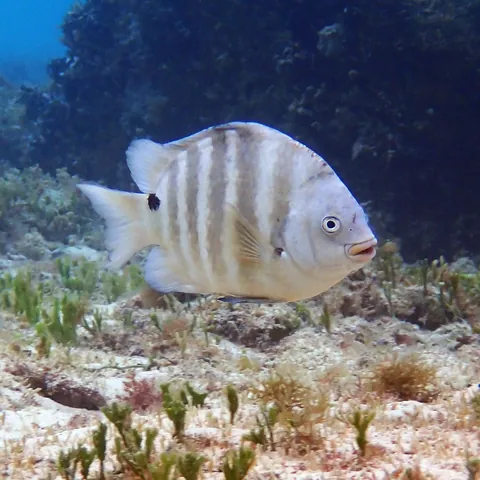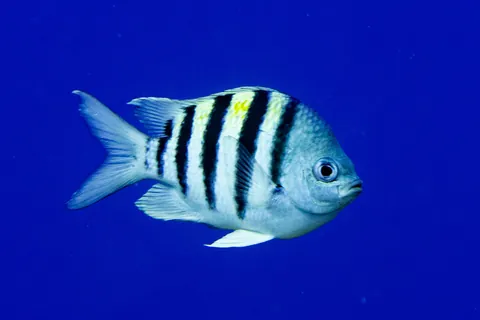
Atlantic Sergeant Major
Abudefduf saxatilis
Dascyllus trimaculatus
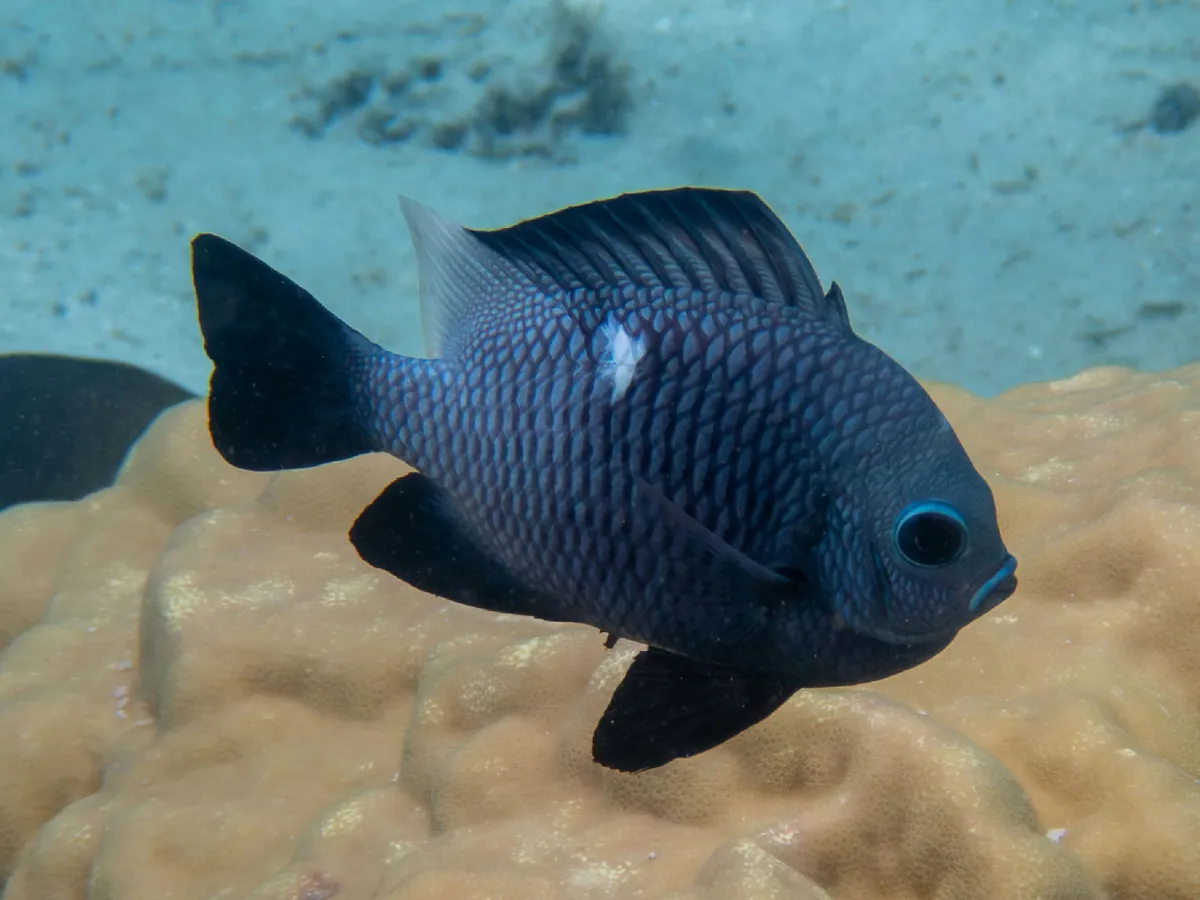
Nicknamed the domino damsel, this small reef fish carries three white dots on a black body, like a die from a game of dominoes. As a juvenile it often shelters inside a sea anemone, right alongside clownfish.
Also known as: three-spot dascyllus, three-spot dascyllus, threespot dascyllus, three-spot humbug, threespot damselfish, domino, domino damselfish, threespot dascyllus, three spot damsel, domino damselfish, three spot damselfish, white-spot puller, threespot dascyllus, three spot dascyllus, whitespot humbug, threespot damselfish, damselfish, three-spot dascyllus, domino, threespot humbug, three-spot damselfish, three-spot humbug, damsel fish, domino damsel, threespot dascyllus, threespot humbug
The juvenile's three white spots on a black body are distinctive among small damselfish sheltering in anemones; adults keep the spots but they often fade or shrink, so look for the grey-black body still schooling in a tight group near shelter.
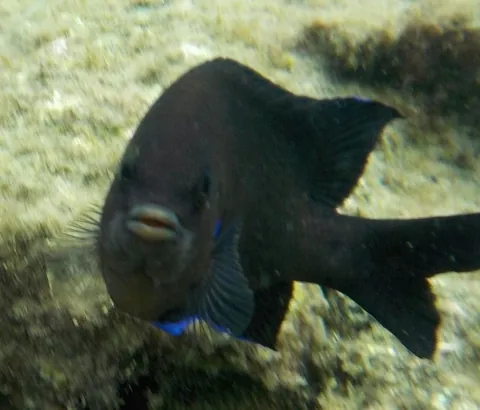
Adults are grey to black, growing to about 14 cm, sometimes with a pale spot between the eyes and faint spots higher on the sides. Juveniles are solid black with bluish scale centres and a clear white blotch on the forehead plus one white spot on each side of the body, all fins black except for the clear pectoral fins.
Adults gather in small groups around coral heads or large rocks on reefs, from the shallows to about 55 m. Juveniles often live among the tentacles of large sea anemones or hide between the spines of sea urchins.
Juveniles sometimes share their host anemone with baby clownfish, though the more aggressive clownfish species will chase them off.
Describe what you saw and we name it, then keep every species you find in your Oceandex.