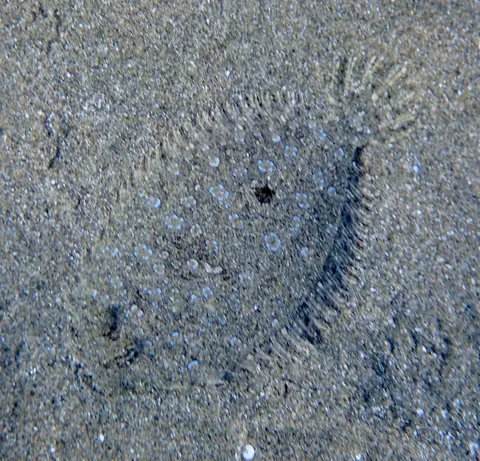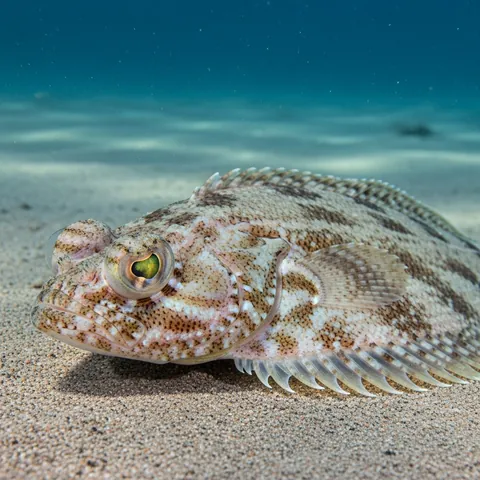
Cape Scaldfish
Arnoglossus capensis
Paralichthys dentatus
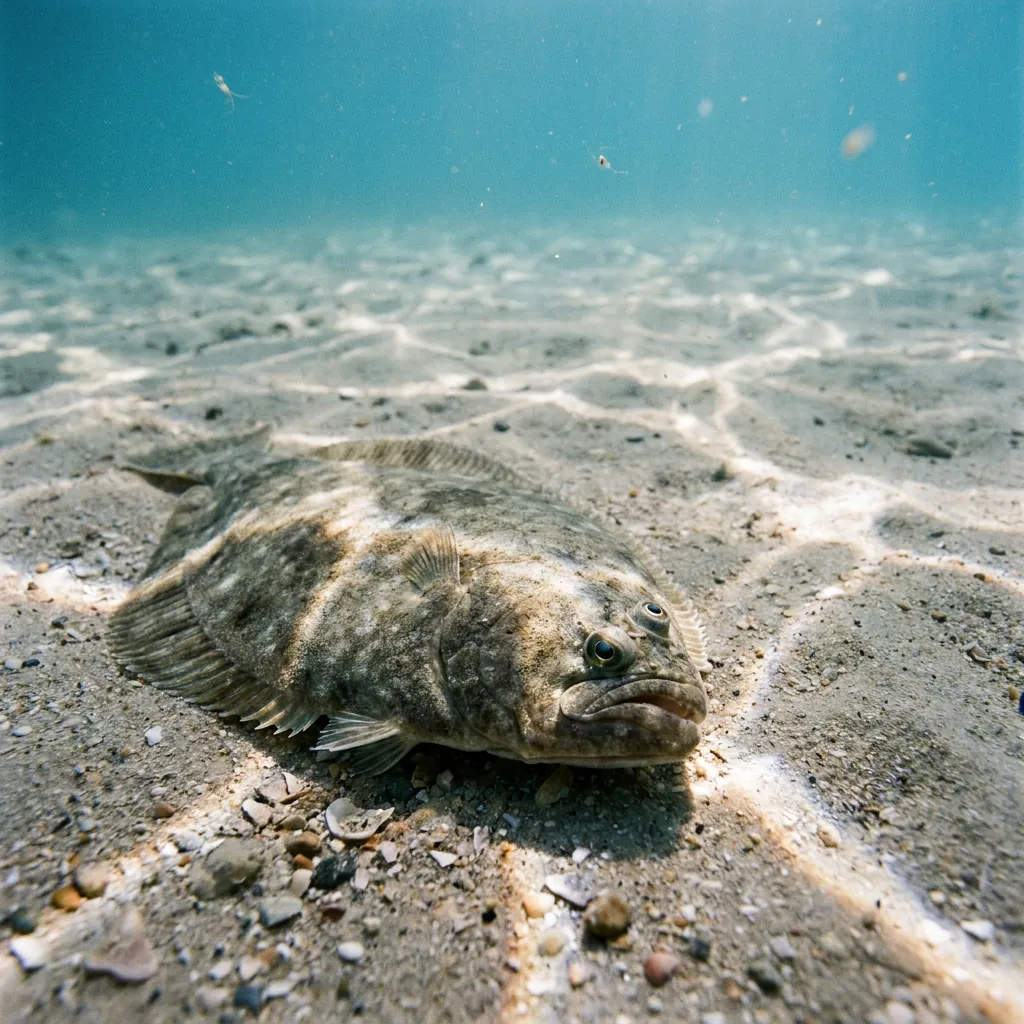
The summer flounder is a flat, side-lying fish of the US East Coast, known to anglers as fluke. It can grow to 94 cm, and its knack for vanishing into the seabed makes it one of the ocean's best-hidden ambush hunters.
Also known as: fluke
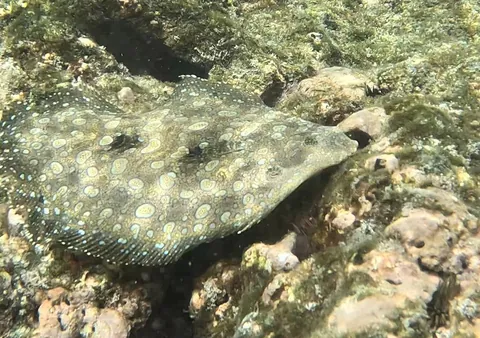
It closely resembles the southern flounder, which shares its range near Florida. The summer flounder's dark eye-like spots on the body settle the difference; the southern flounder lacks them.
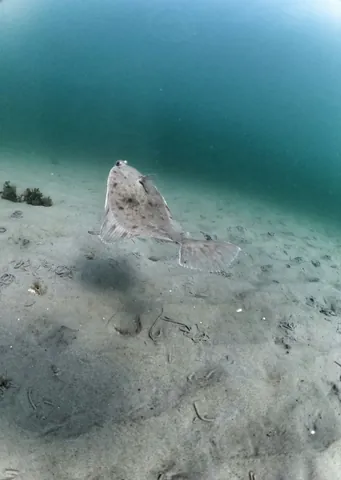
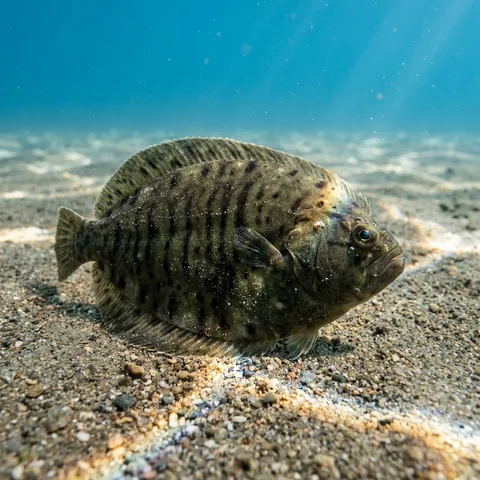
Its body is flattened side to side, so it lies and swims on one flank with both eyes on the same side. Five to fourteen dark, eye-like spots dot the upper body, and the jaws carry sharp, well-developed teeth.
It lives over hard sandy bottoms where it can burrow, but also uses muddy creeks, salt marshes, seagrass beds, and sand flats in bays and estuaries. Depth ranges from 10 to 183 m, usually no deeper than 37 m. In spring it moves inshore to beaches, inlets, and bays, then returns to deeper water in autumn.
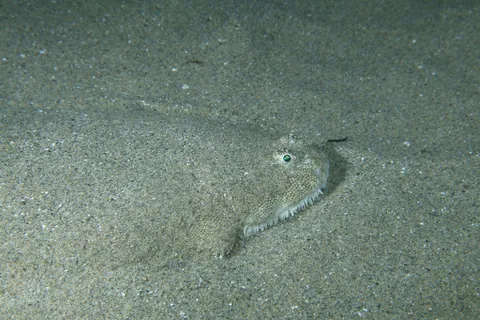
This is a highly predatory, mostly fish-eating flounder. It lies buried with only its head showing and ambushes prey such as small fish, squid, shrimp, and crabs. Despite living mostly on the bottom, it can swim fast over short distances and will chase prey up to the surface. Like other left-eye flounders, it can change the colour and pattern of its upper side to match the seabed.
Despite lying with its eyes turned away from the seabed, it can still match the colour and grain size of the bottom beneath it, and no one is sure how it manages this without seeing the surface it is copying.
Describe what you saw and we name it, then keep every species you find in your Oceandex.