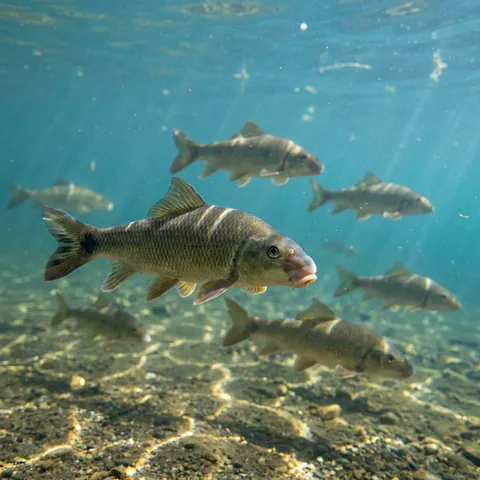
Blacktail Redhorse
Moxostoma poecilurum
Minytrema melanops
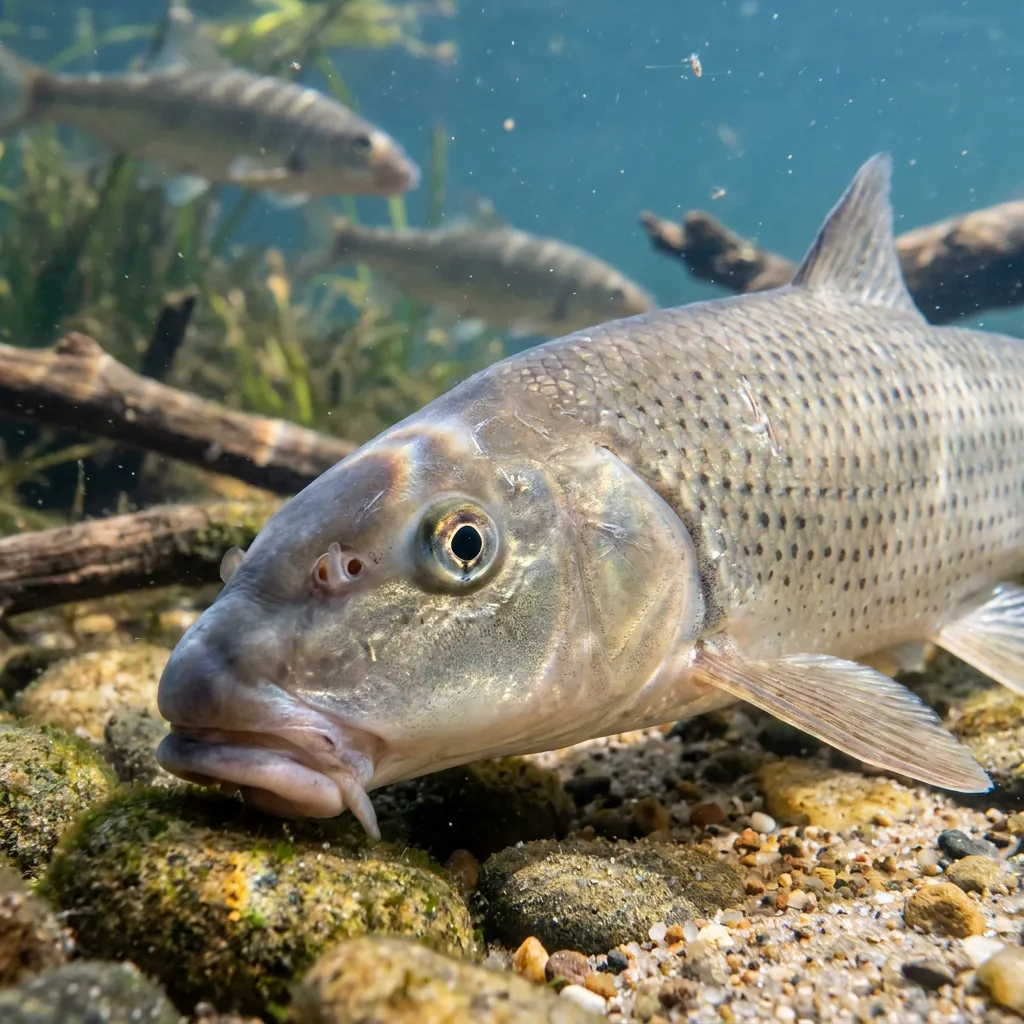
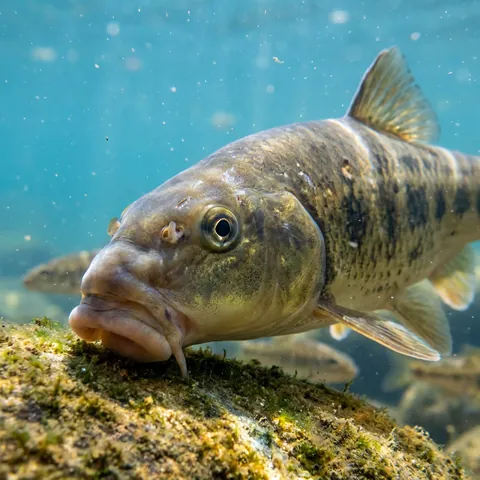
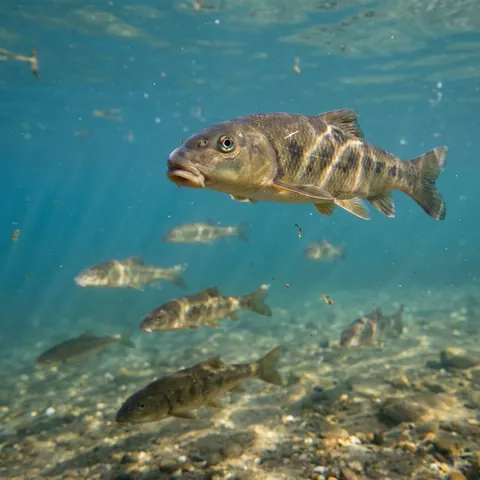
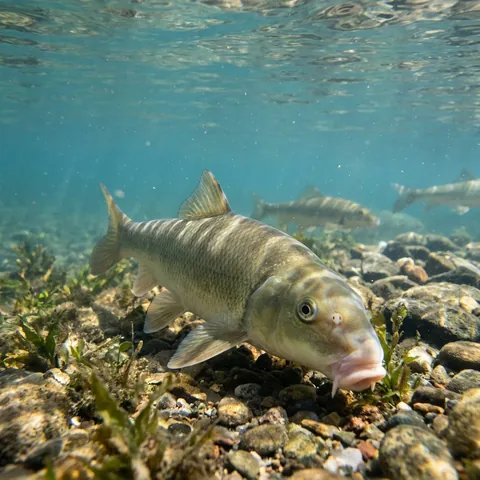
The spotted sucker moves quietly along the bottom of clean rivers and oxbow lakes, its body dotted with small dark marks that give it its name.
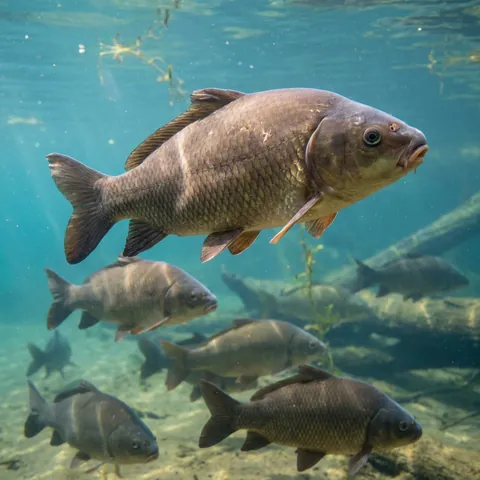
Its general shape is much like other suckers sharing the same rivers. Look for the rows of small dark spots running along the body, a pattern that plainer suckers in the same water do not share.
This fish carries a dark spot at the base of each scale, which lines up into many rows of small black spots covering its body.
It lives in deep pools of small to medium rivers over clay, sand, or gravel, and is also found in creeks and larger rivers. It favours clean, clear water with a firm bottom and is often abundant in oxbow lakes and other areas with little current, but it struggles where water is polluted or clogged with silt.
To spawn, this fish migrates upstream into smaller tributaries and gathers over gravel riffles, usually with two males for every female. As a female approaches, two males clasp her between them and vibrate their tails as they rise toward the surface, releasing eggs into the current. Neither parent guards the eggs afterward, and both sexes can spawn more than once in a season.
This species is not listed as threatened in the United States, where populations remain widespread. In Canada, however, numbers are low enough that it is considered a species of concern, and anglers are asked to report sightings to help track the population.
Young spotted suckers travel in schools and feed on drifting zooplankton, but as adults they scatter to feed alone on the river bottom.
Describe what you saw and we name it, then keep every species you find in your Oceandex.