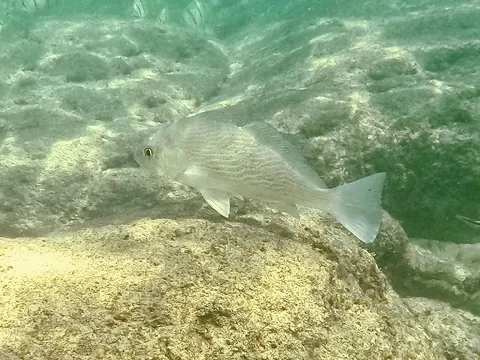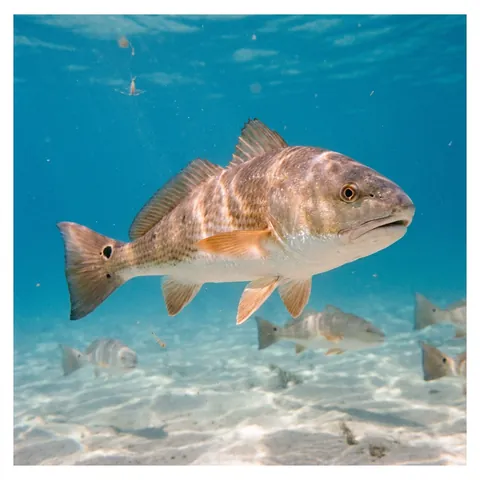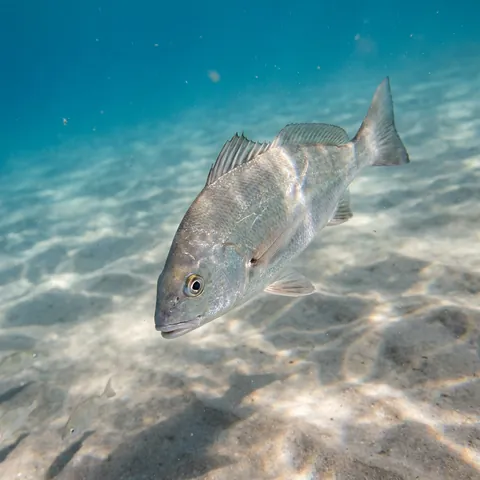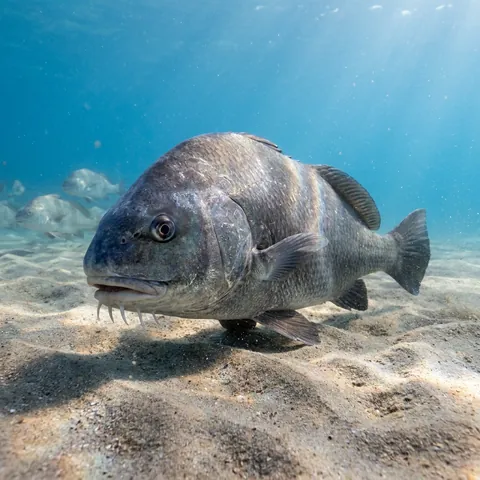
Black Drum
Pogonias cromis
Eques punctatus
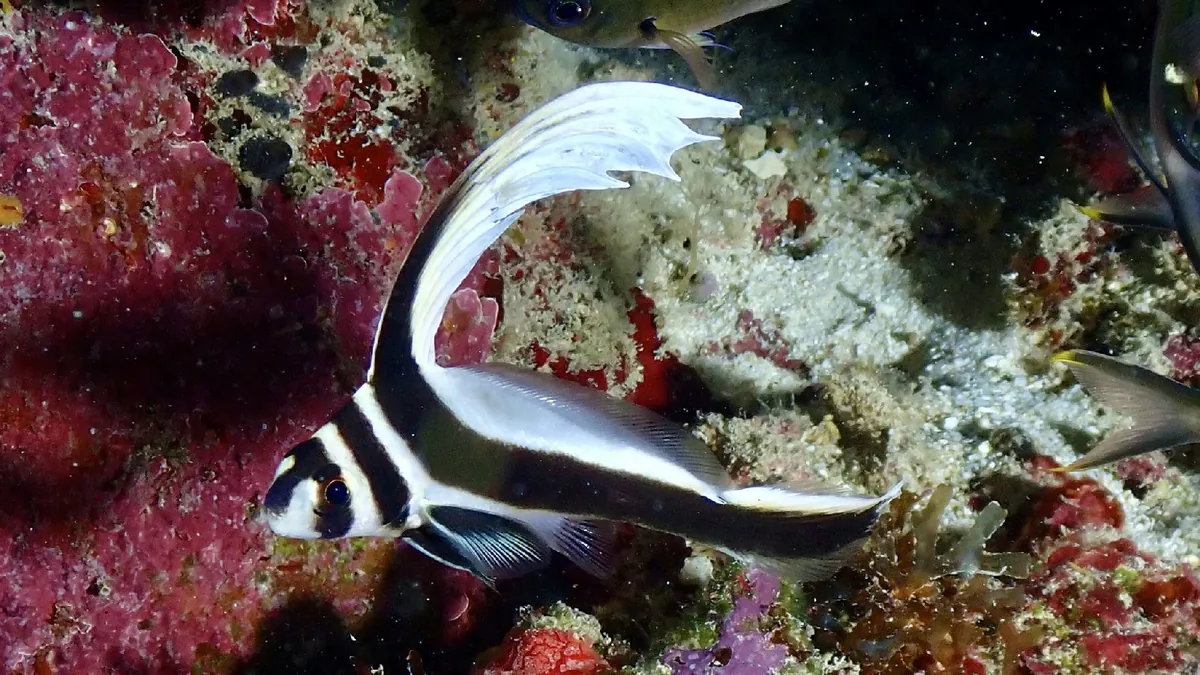
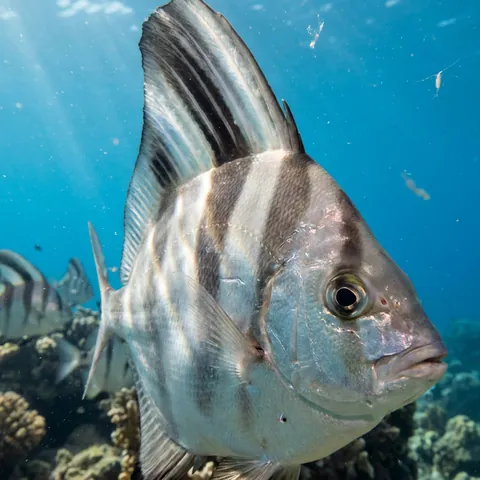
The spotted drum is a striking reef fish of the western Atlantic, easy to spot by its long, trailing dorsal fin and bold black-and-white pattern. It spends its days sheltering near reef ledges, coming out to feed only after dark.
Also known as: Equetus punctatus
Juveniles look so different from adults, with plain black-and-white bars instead of spots, that divers often mistake them for an entirely different species; check for the black spot on the snout, which juveniles alone show.
Adults have an oblong body that is deep near the head and tapers to a slender tail base. A short snout overhangs a small, horizontal mouth. The first dorsal fin is tall and spiny, while the second is long and trails behind the body. The tail, anal, and rear dorsal fins are dark with white spots, and the head and spiny dorsal fin carry curved white and dark brown bars that run into stripes along the body. Juveniles look very different: a white body with three black bars, one running through the dorsal and tail fins, an oval black spot on the snout, and a black stripe on the pectoral fin.
It lives on coral reefs across the Bahamas, the Gulf of Mexico, and the wider Caribbean Sea, usually in shallow water down to about 30 m.
This fish is most often seen by day resting under ledges or near small cave openings, swimming back and forth in a repeating pattern. It feeds at night, leaving its shelter to hunt small crustaceans and worms on the reef.
Describe what you saw and we name it, then keep every species you find in your Oceandex.