Elephant Seal
sea_elephant
Mirounga leonina
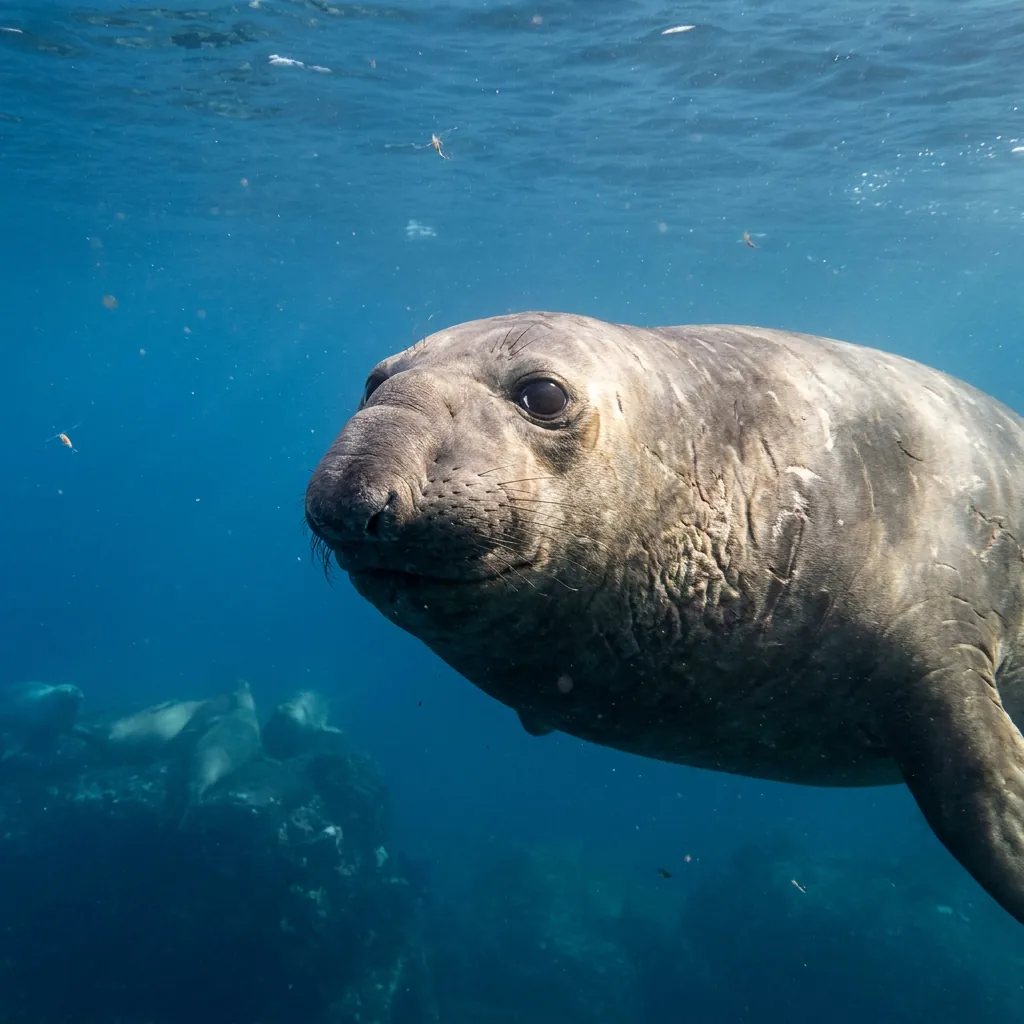
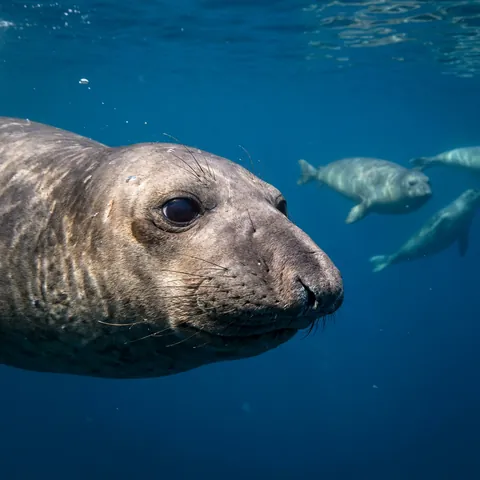
The southern elephant seal is the largest of all seals, a massive, deep-diving animal that spends most of its life alone at sea and only comes ashore to breed and moult. Males can grow to about 685 cm and weigh up to 5,000 kg, dwarfing the females.
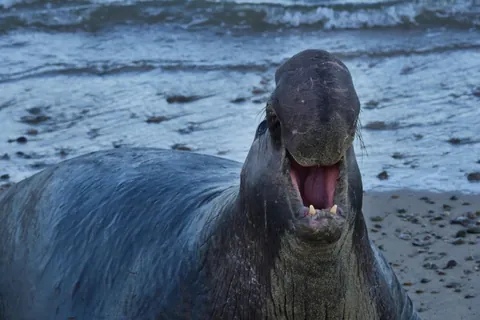
Its huge size alone sets it apart from almost every other seal. The male's short, trunk-like proboscis is the clearest single mark, absent in females and in most other seal species.
Males and females look very different in size, with bulls many times heavier than females. Adult males have a short, trunk-like snout, called a proboscis, and bend their backs upward when fighting, making them look even taller.
It lives mostly in the open Southern Ocean, feeding near the edge of Antarctica, and comes ashore only on subantarctic islands and a few coastal sites to breed, moult, or rest.
Bull males arrive at breeding colonies first and fight for control of harems of several dozen females, using their weight and canine teeth against rivals. A dominant male may go months without eating while defending his territory, living off stored fat. Males also make a loud, coughing roar used to signal size and identity to rivals.
It hunts squid and fish on long, deep dives, spending only a few minutes at the surface to breathe between dives that each last more than 20 minutes. Its dives can reach a depth of 8,000 m, typically between 1,000 and 5,000 m, making it one of the deepest-diving air-breathing animals.
Listed as Vulnerable. The species was hunted close to extinction in the 19th century and has since recovered, though some of its main population groups have been declining for unclear reasons, possibly linked to changes in food supply. Most breeding sites are now protected.
Bulls can go without eating for more than three months while guarding their territory on land, surviving entirely on their stored blubber.
Describe what you saw and we name it, then keep every species you find in your Oceandex.