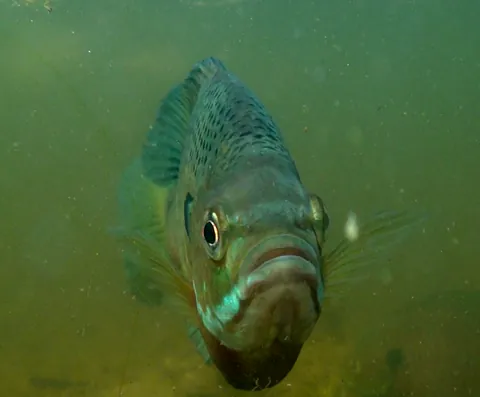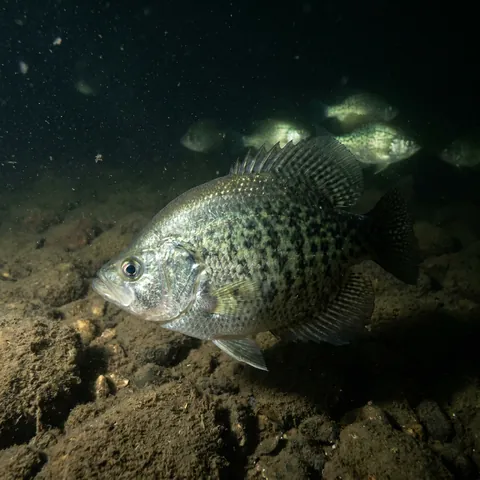
Black Crappie
Pomoxis nigromaculatus
Micropterus dolomieu
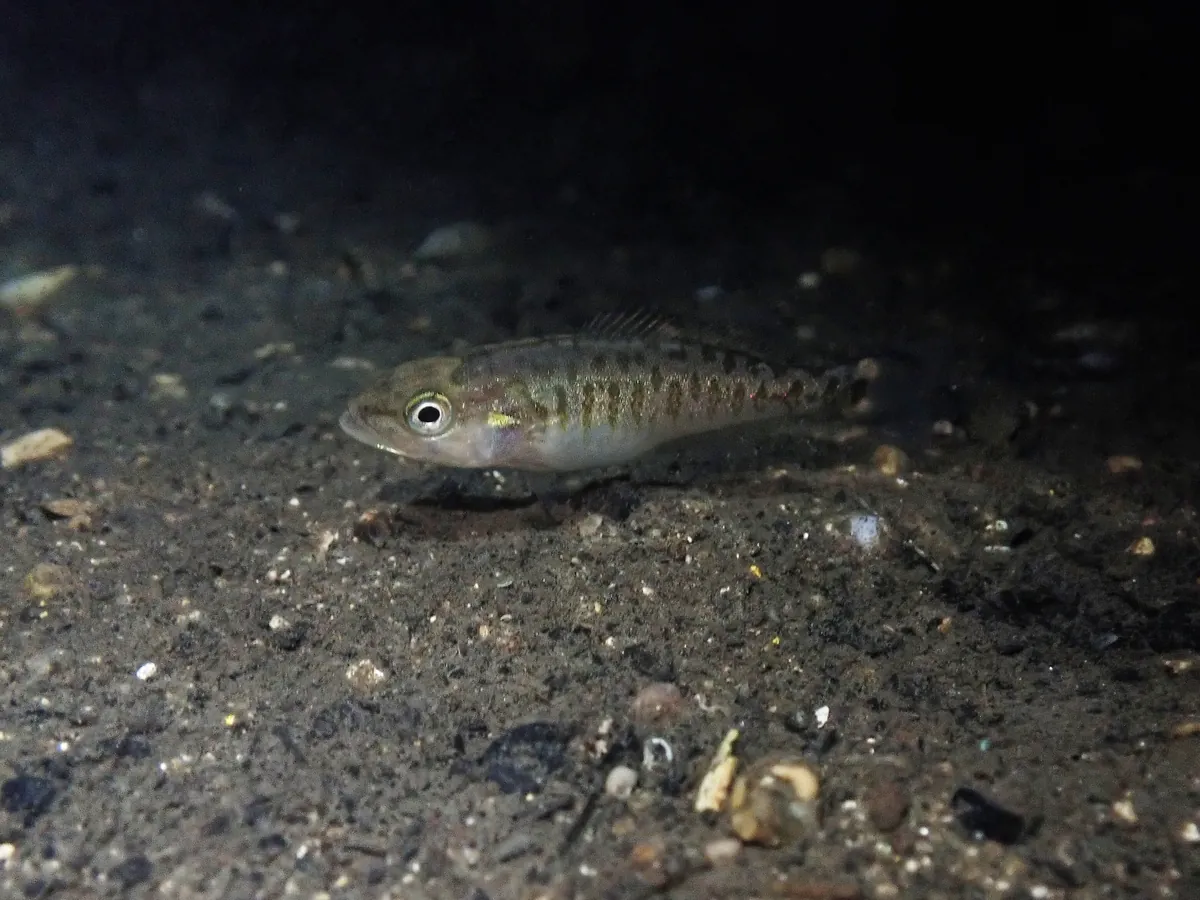
The smallmouth bass is a lean, muscular hunter of clear rivers and lakes, built for short bursts of speed when it ambushes prey. Anglers rate it among the hardest-fighting freshwater fish they can hook.
Also known as: small-mouth black bass, smallmouth, smallie, smallmouth black bass, swago bass, bronzeback, redeye, brown bass, bareback bass, gold bass, green bass, jumper, streak-cheeked river bass, trout bass, white trout
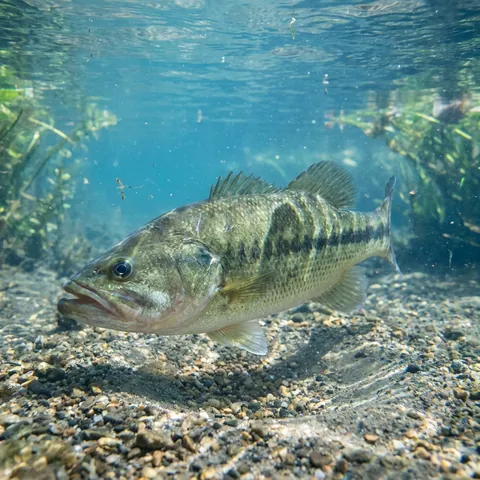
It closely resembles the largemouth bass. The clearest check is the jaw: a smallmouth's upper jaw ends below or before the eye, while a largemouth's reaches well past it.
Its body is slender but powerfully built, coloured golden-olive to dark brown on the back and fading to yellowish white underneath. Dark brown bars or blotches run down the sides, with more dark bars crossing the head. The eyes are red or brown, and the jaw is fairly short, not reaching back past the eye. It has two dorsal fins joined by a shallow notch. Fish from rivers tend to be longer, slimmer and darker, while those from lakes are shorter, deeper-bodied and paler.
It lives in clearer water than its cousin the largemouth bass, favouring streams and rivers as well as rocky, stump-strewn or sandy areas of lakes and reservoirs. It can hold its own in stronger current than most black bass. Because it needs cooler water, it moves into deeper, faster-flowing water during hot summer weather, and its intolerance of pollution makes it a useful sign of a healthy river or lake.
When water turns cold, smallmouth bass move into deeper pools and slow down into a semi-hibernation, feeding very little until warmer weather returns. Spawning happens in spring or early summer, and the male needs clean stone, rock or gravel on the bottom to build a nest. Adults are carnivores that will even eat the young of other smallmouth bass.
Adult smallmouth bass will cannibalise the young produced by other parents in the same water.
Describe what you saw and we name it, then keep every species you find in your Oceandex.