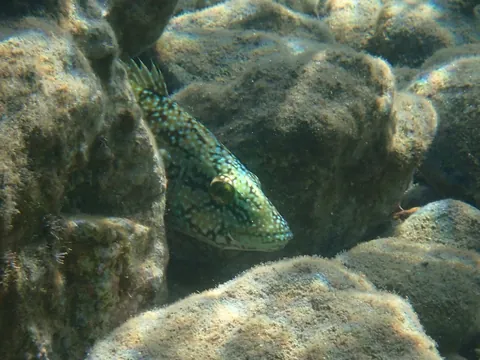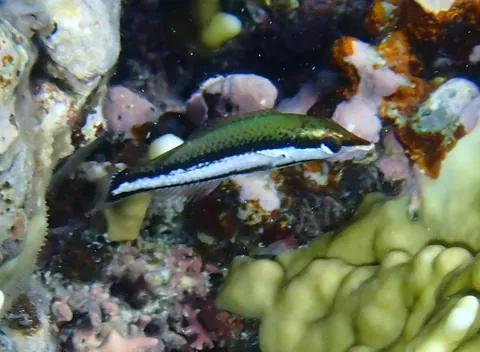
Bird wrasse
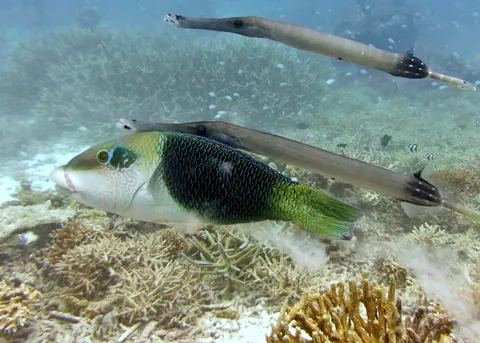
Gomphosus varius
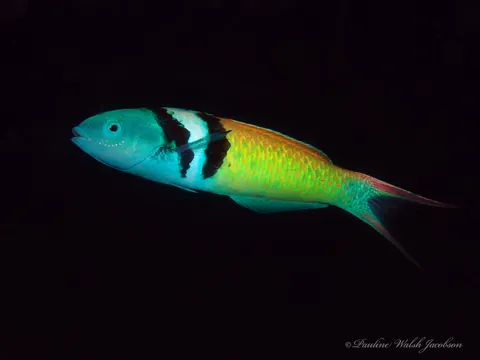
Epibulus insidiator
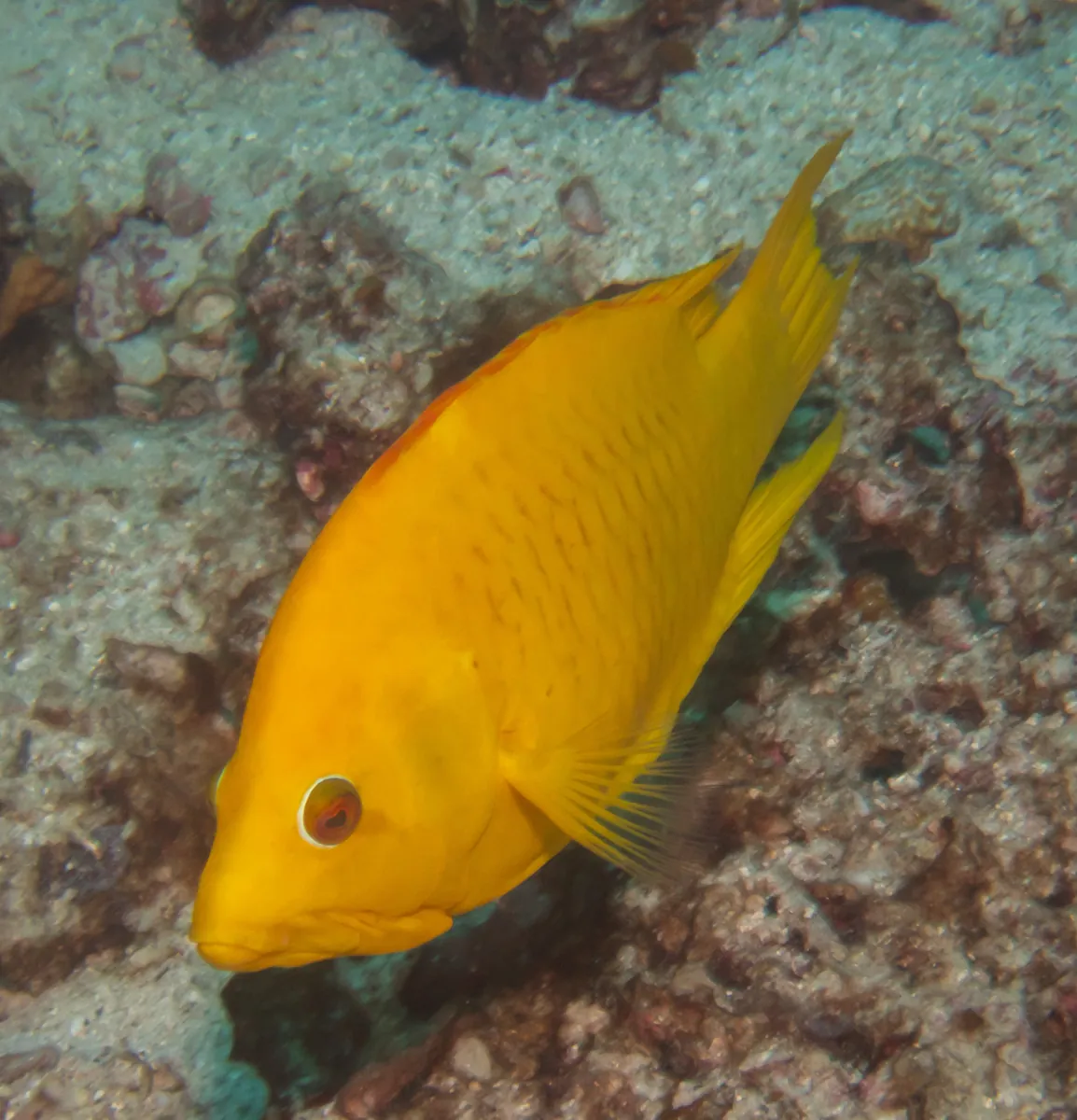
The sling-jaw wrasse is a coral reef fish famous for its jaw, which shoots forward to grab prey hiding in tight spaces. It lives on Indo-Pacific coral reefs and is sometimes kept in aquariums.
Also known as: sling-jaw wrasse, slingjaw wrasse, telescopefish, longjawed wrasse, sling-jaw wrasse, sling-jaw wrasse, wrasse, telescope fish, jawslinger, slingjaw wrasse, slingjaw, slingjaw wrasse
The clearest sign is the jaw itself: when feeding, it shoots its mouth forward into a long tube, far more than any other wrasse can manage. At rest, look for the pointed, elongated face shape that makes this possible.
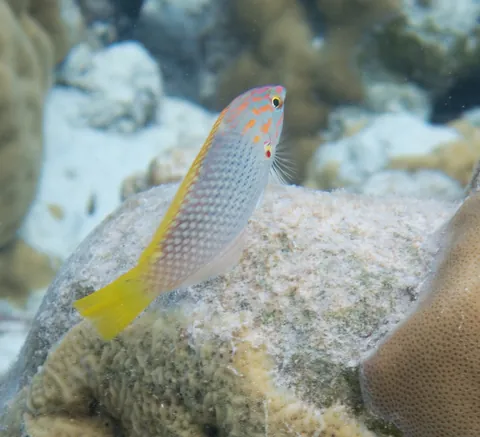
Colour varies a lot with age and sex. Juveniles are brown with thin white bars and white lines radiating from the eyes. Females are either bright yellow or dark brown. Males are greyish-brown with an orange back, a yellowish bar on the side, and a pale grey to white head marked with a thin black stripe through the eye. It can grow up to 54 cm long.
It lives on coral-rich lagoon and seaward reefs across the tropical Indo-Pacific, from East Africa to the Pacific islands. Adults are usually found along reef slopes or near drop-offs.
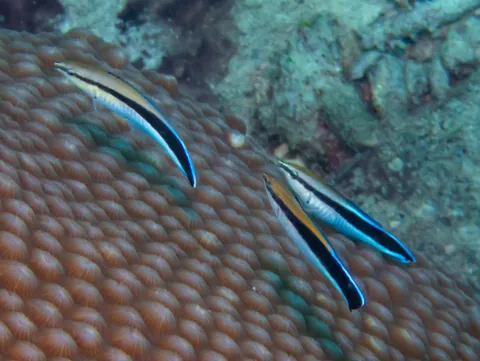
It hunts small crustaceans and fish hiding in coral. To sneak up on prey, it can change colour to match and swim alongside schools of sailfin tangs, hiding among them as they graze. It also visits cleaning stations, holding its mouth open for cleaner fish to pick over.
This species starts life as a female and some individuals later become male. A male holds a territory that overlaps the home ranges of several females. During courtship his colour becomes more intense, and spawning takes place around high tide, with the pair rising up together into the water column.
To ambush prey, it disguises itself as part of a different species: it changes colour to match passing schools of sailfin tangs and swims among them, copying their grazing movements to get close to small fish before striking.
Describe what you saw and we name it, then keep every species you find in your Oceandex.