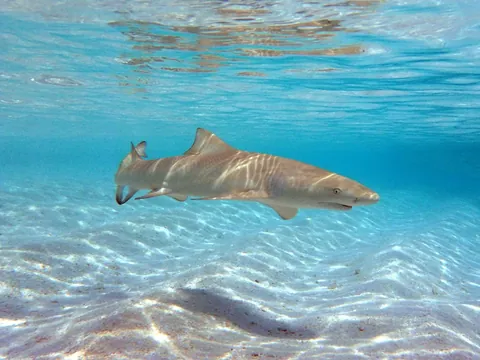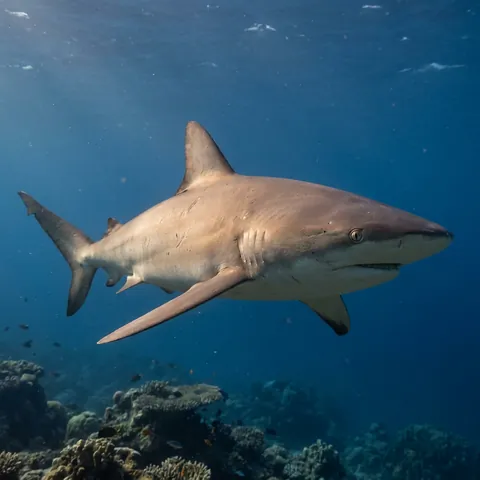
Blacktip reef shark
Carcharhinus melanopterus
Carcharhinus falciformis
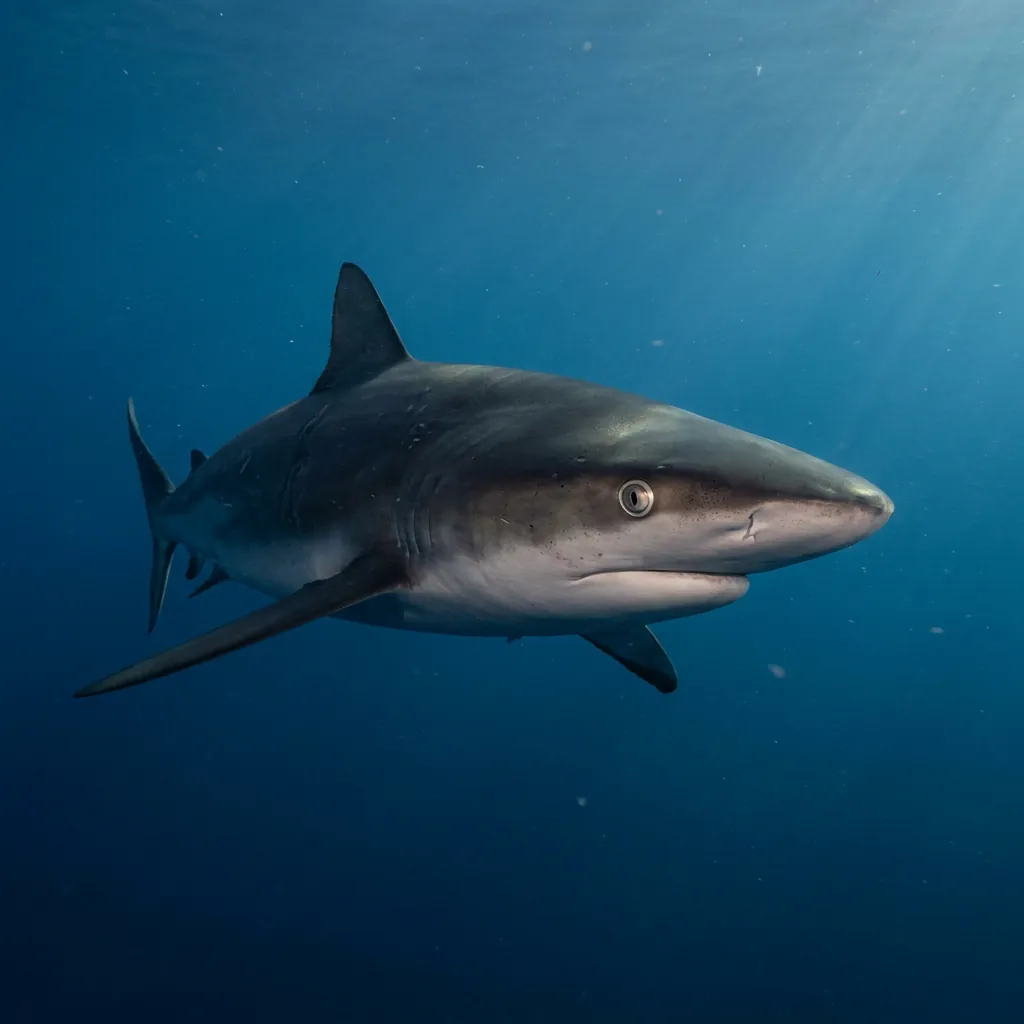
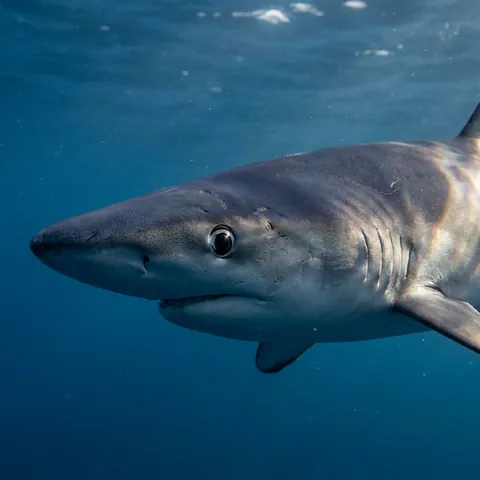
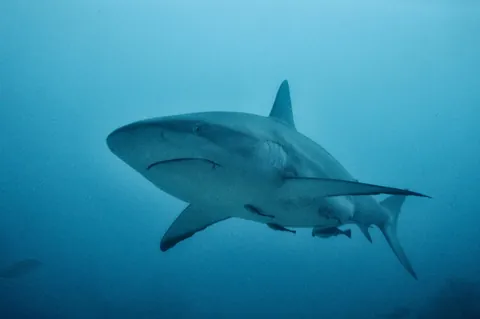
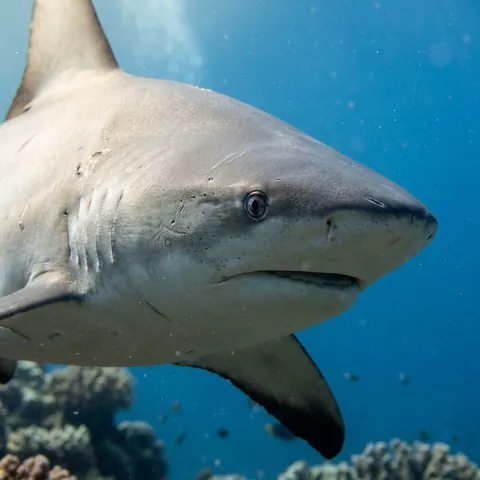
The silky shark is one of the most common large sharks in the open ocean, named for the smooth feel of its skin. It reaches up to 350 cm, with most adults closer to 250 cm.
Also known as: carcharhinus falciformis, blackspot shark, gray reef shark, grey whaler shark, olive shark, reef shark, ridgeback shark, shark, sickle shark, sickle silk shark, sickle-shaped shark, silk shark, silky whaler
It can be mistaken for other slim grey requiem sharks. The second dorsal fin's unusually long trailing tip, described above, is not found on similar sharks and is a quick giveaway even from a distance.
This is a slim, streamlined shark with a long, rounded snout and round eyes. Its first dorsal fin is small and rounded, set well back from the pectoral fins, while the second dorsal fin is tiny but trails a long, drawn-out tip that can be up to three times as long as the fin itself. A low ridge runs along the back between the two dorsal fins.
It lives in warm water in tropical seas worldwide. It stays mostly within the upper 500 m of the water column, though it can dive as deep as 4,000 m, and is often found near continental shelf edges, drop-offs, and floating objects like logs.
The silky shark is active, curious, and quick to react, though it often looks lazy at first, circling slowly and swinging its head as it checks out something new. Younger sharks form loose groups, sometimes over a thousand strong during migrations.
It feeds on a wide range of fish from tuna and mackerel to sardines, groupers, and eels, plus squid and swimming crabs. Groups sometimes work together to herd small fish into a tight ball near the surface before charging through to feed.
generally not aggressive but a large open-water shark — observe with caution
The silky shark is listed as Vulnerable. Once thought too abundant to be affected by fishing, it is now known to have declined sharply worldwide, since its reproductive rate is too slow to keep pace with heavy bycatch in tuna fisheries.
The silky shark was first described from a tiny, 53 cm baby shark. Adults looked so different that scientists spent decades believing they were a separate species, Carcharhinus floridanus, until the two were shown to be one and the same in 1964.
Describe what you saw and we name it, then keep every species you find in your Oceandex.