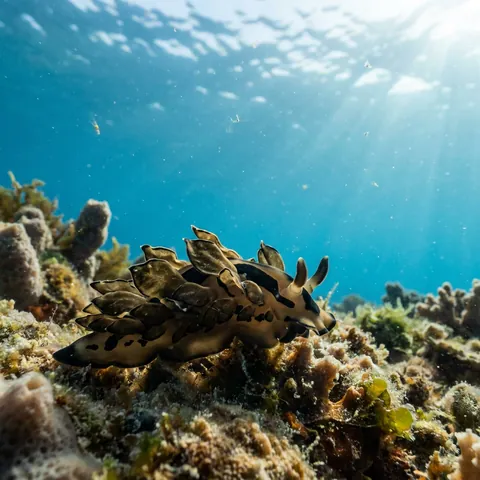
Black-banded sea slug
Cyerce nigricans
sea_slugs_g348
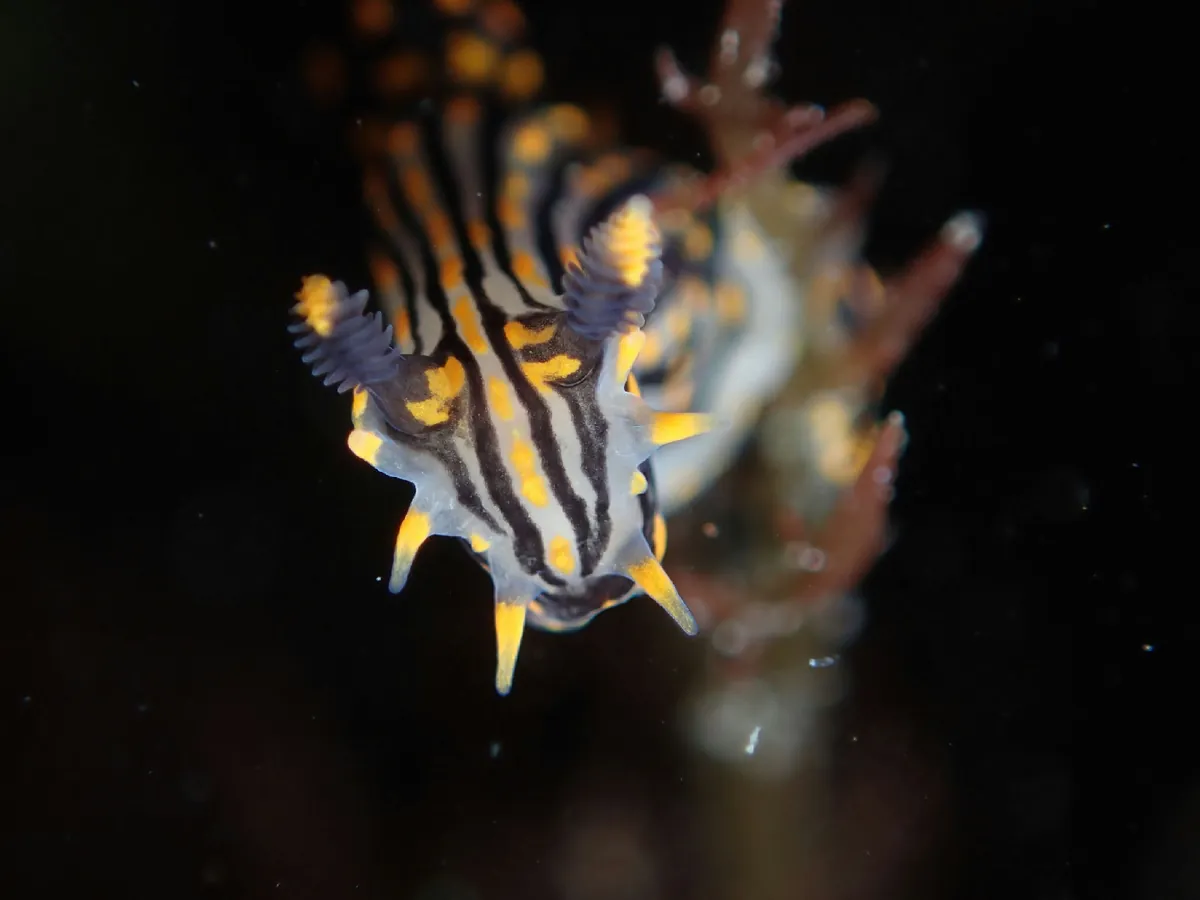
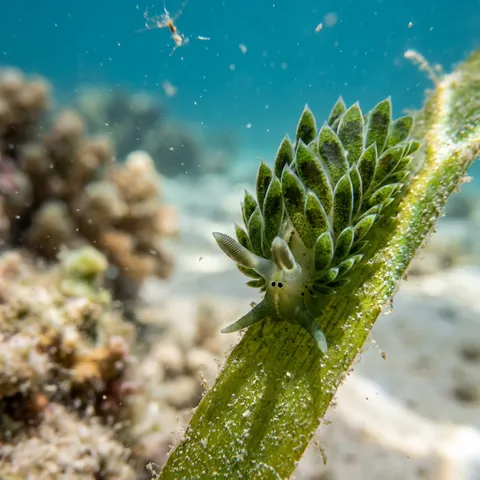
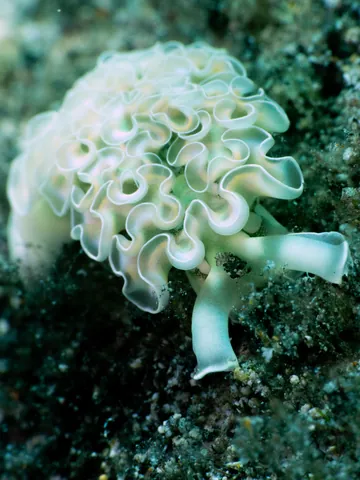
Sea slugs are soft-bodied sea snails that have lost their shell over time, often in bright warning colours. In this app the group includes the lettuce sea slug, the leaf sheep, and the black-banded sea slug.
Look for a soft body with no shell, paired feelers on the head, and often striking colour, to know you have a sea slug rather than a shelled sea snail. To tell members apart, look at overall shape, colour pattern, and any special features such as ruffled or leaf-like structures on the back.
Sea slugs have a soft body with no visible shell, and come in an enormous range of shapes, colours, and sizes. Many are partly see-through, and bright colours often warn predators of a bad taste or stinging cells. Most have a pair of small feeler-like horns on the head, called rhinophores, with a tiny eye at the base of each one. Many also have feathery gill structures on their back, often in a contrasting colour.
Sea slugs live in oceans worldwide, mostly on reefs and the sea floor, though some spend their whole life drifting in open water. A few unusual species have even moved into freshwater streams or onto land.
Some sea slugs, like headshield slugs, dig into the sand using a shovel-shaped head and spend most of their time buried, with a shield that keeps sand out of the body. Bright colours in this group often serve as a warning to predators rather than camouflage.
Each sea slug species depends on one type of food, such as a certain jellyfish, sea anemone, plankton, or alga. Some species that eat algae can store the alga's living cells and use them to make food from sunlight, much like a plant.
Some sea slugs steal living solar-powered cells from the algae they eat and keep them working inside their own body to make food from sunlight.
Describe what you saw and we name it, then keep every species you find in your Oceandex.