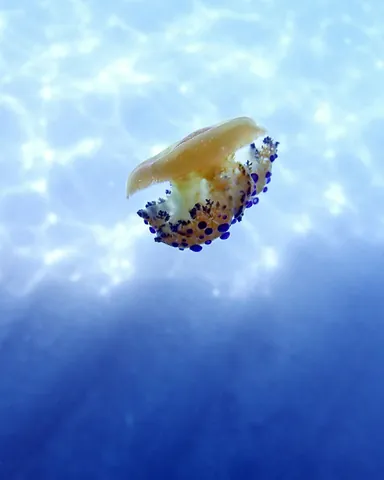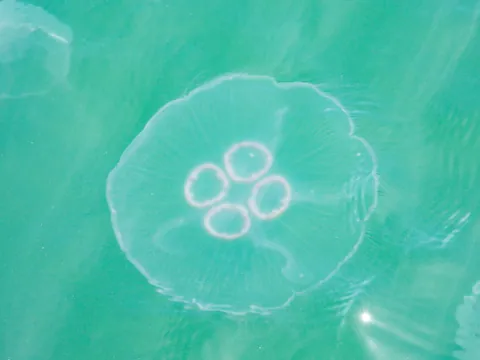
Asian moon jelly
Aurelia coerulea
Chrysaora fuscescens
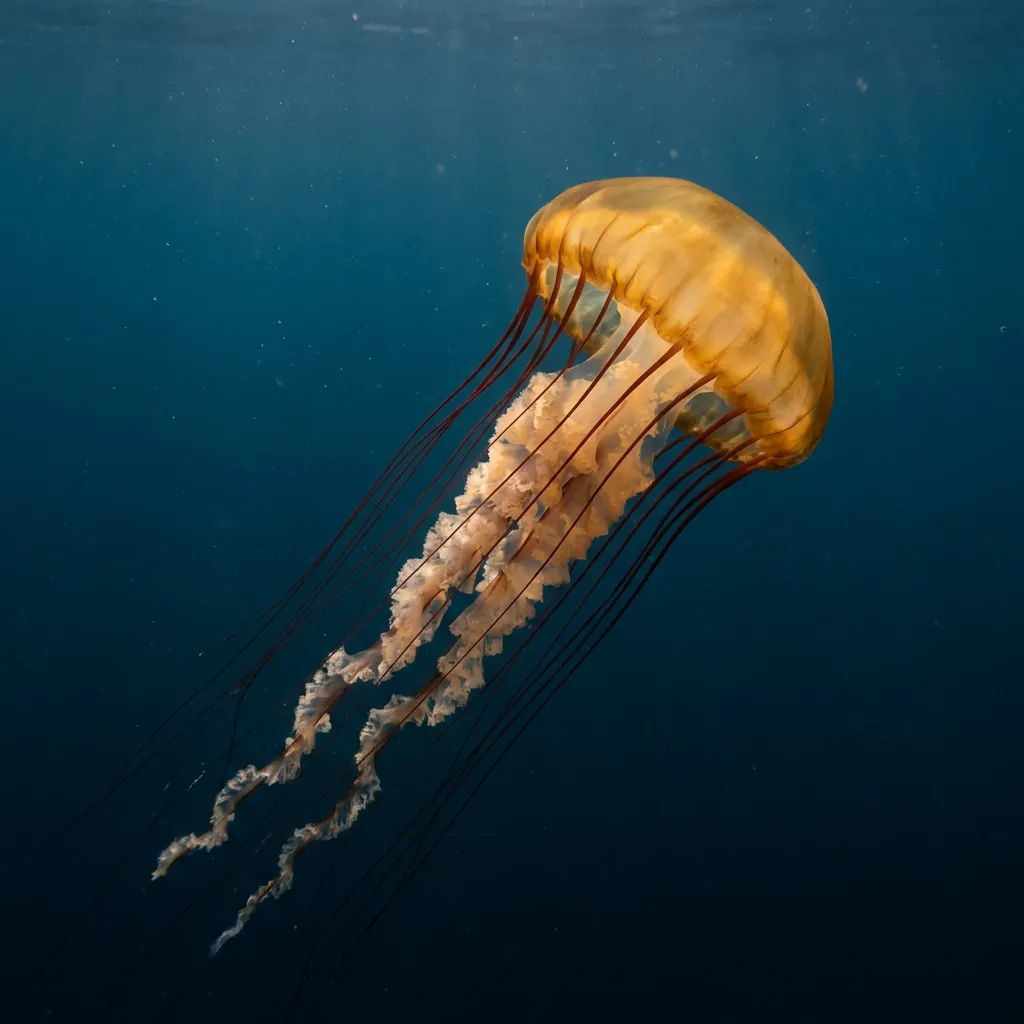
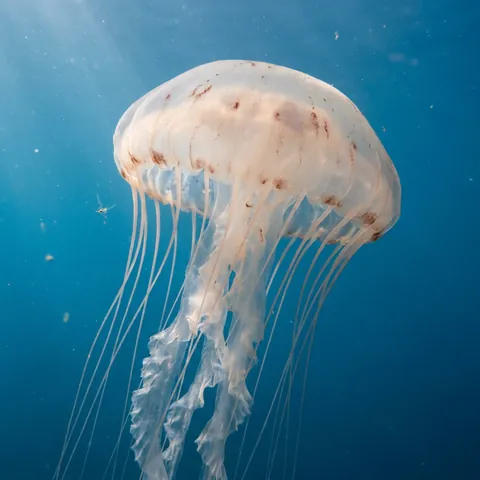
The sea nettle drifts through the open water on the current, trailing long tentacles behind it like a curtain built to snare anything that brushes past.
Also known as: chrysaora fuscescens, pacific sea nettle
Other jellyfish drift in the same water, but the sea nettle's golden-brown, reddish-tinted bell and long trailing maroon tentacles set it apart from paler or clear-bodied species nearby.
This jellyfish has a golden-brown bell with a reddish tint, reaching up to 30 cm across. Long, whitish, spiralling oral arms hang beneath it, along with 24 maroon tentacles that trail well behind the bell as it drifts.
It lives along the coast from southern British Columbia and Washington down through Oregon and California to Baja California, with some drifting north to Alaska or west to Japan. Numbers build up most in late summer, often near areas where nutrient-rich runoff feeds the plankton it depends on.
It mostly floats with the current, but can swim by squeezing its bell to push water behind it, letting it move against the flow when needed. Light-sensing organs called ocelli help it move between deeper water and the surface. Small fish and crabs sometimes shelter inside its bell, picking at it for food.
It cannot chase prey, so it spreads its tentacles like a net and waits for food to drift into them. Stinging cells on the tentacles fire barbed threads that inject venom, and its oral arms carry the catch to its mouth. It feeds on zooplankton, small crustaceans, salps, small fish and their eggs, and other jellyfish, with copepods and fish eggs making up much of its diet.
Leatherback turtles seek this jellyfish out as a favourite food, along with some seabirds and large fish, despite its sting.
Describe what you saw and we name it, then keep every species you find in your Oceandex.