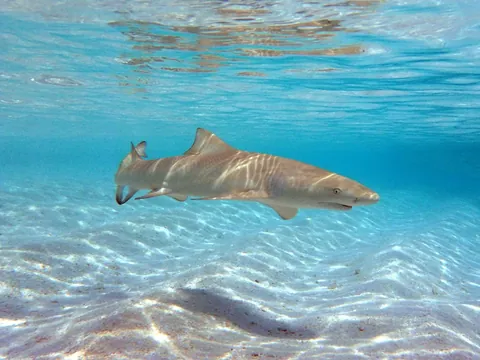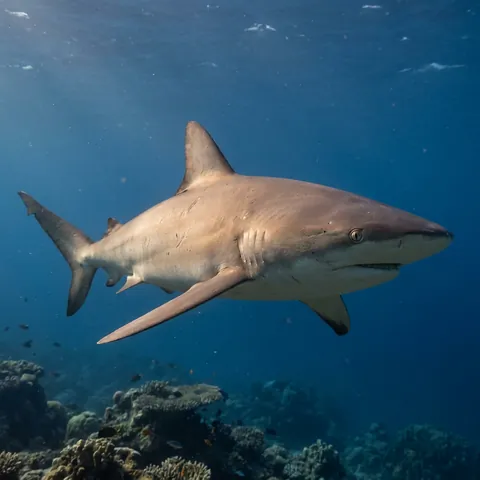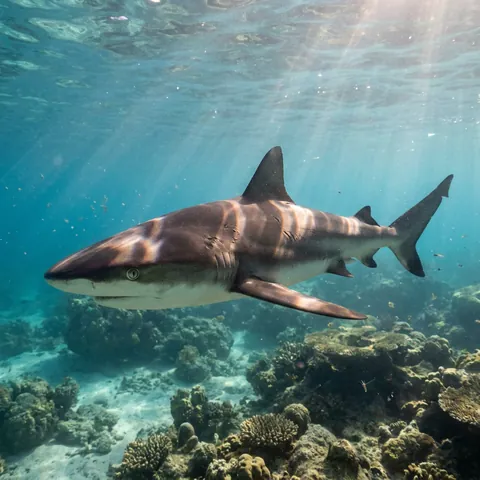
Blacktip reef shark
Carcharhinus melanopterus
Carcharhinus plumbeus
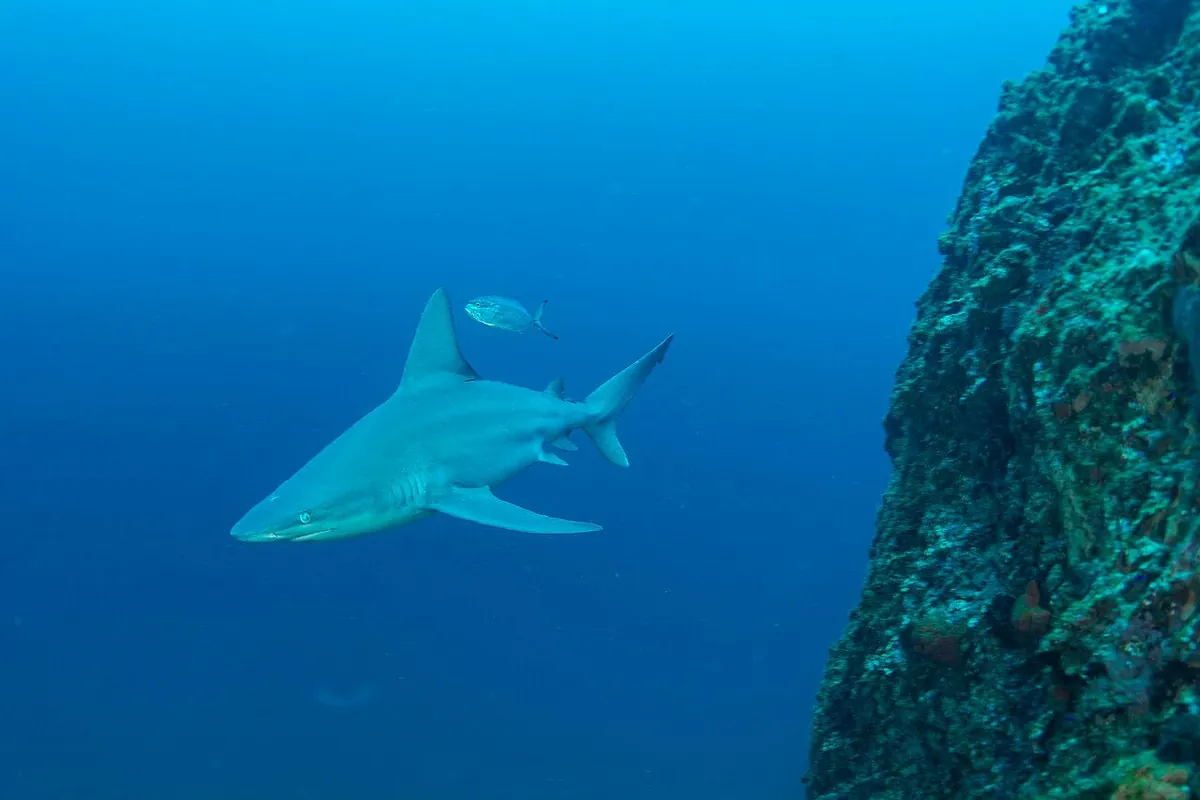
The sandbar shark is one of the largest coastal sharks in the world, a heavy-bodied hunter of sandy shallows and deeper shelf waters. It commonly reaches around 2 metres long.
Also known as: sand shark, northern whaler shark, thickskin shark
It is often mistaken for a bull shark at a glance. Look at the first dorsal fin: the sandbar shark's is unusually tall and upright, set well forward, while a bull shark's is shorter and less pronounced.
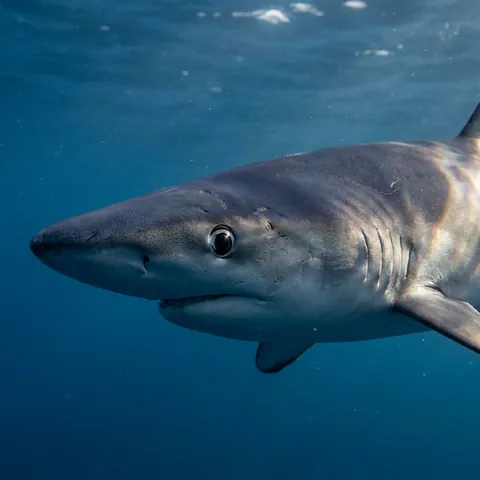
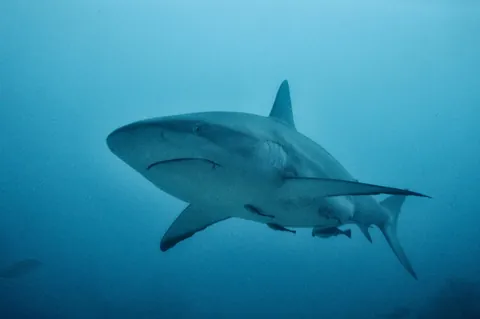
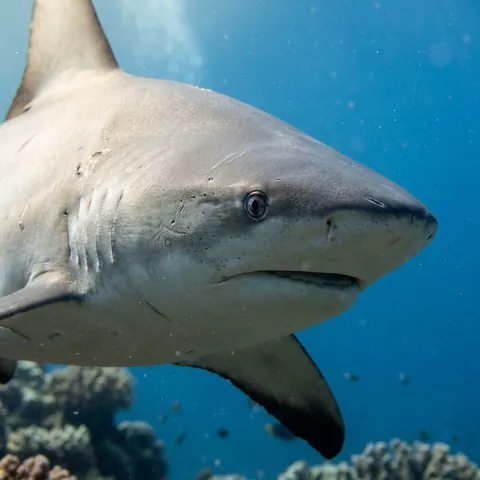
This shark has a stout body and a short, rounded snout compared to most sharks. Its first dorsal fin is very tall and triangular, and its pectoral fins are notably long. A ridge runs along the back between the first and second dorsal fins, and the second dorsal fin is about the same height as the anal fin. Its upper teeth have broad, uneven, saw-like edges. Body colour ranges from blue-brown to grey or bronze, with a pale white underside and fins that are plain or only faintly dusky-tipped. It commonly grows to about 2 metres and can weigh close to 118 kg.
It favours muddy or sandy bottoms in shallow coastal waters such as bays, estuaries, harbours, and river mouths, though it also ranges into deeper water down to 500 metres, usually staying between 20 and 65 metres. It lives in tropical to temperate seas worldwide, and in the western Atlantic ranges from Massachusetts to Brazil. Young sharks gather in shallow nursery grounds, such as Chesapeake Bay, before moving into deeper water as adults.
It hunts fish, rays, crabs, and mollusks, with bony fish, octopus, squid, and cuttlefish making up much of its diet in some regions. Young sharks feed heavily on crabs and mantis shrimp. As a top predator in its habitat, it has few natural enemies, though tiger sharks and, occasionally, great white sharks will take one.
This shark is viviparous, with pups nourished inside the mother through a placental yolk-sac connection rather than an egg. Many females breed every two or three years, returning to the same coastal site each time to give birth.
This shark has an unusually high ratio of fin weight to body weight, which made it a prime target for U.S. commercial fin fisheries. Overfishing became so severe that U.S. regulators banned all commercial landings of the species in 2008.
Describe what you saw and we name it, then keep every species you find in your Oceandex.