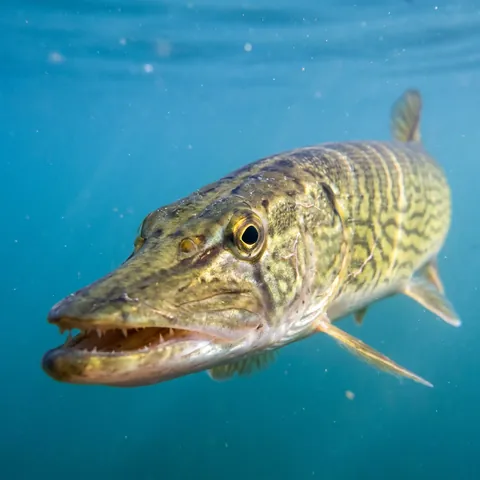
American Pickerel
Esox americanus
Esox lucius
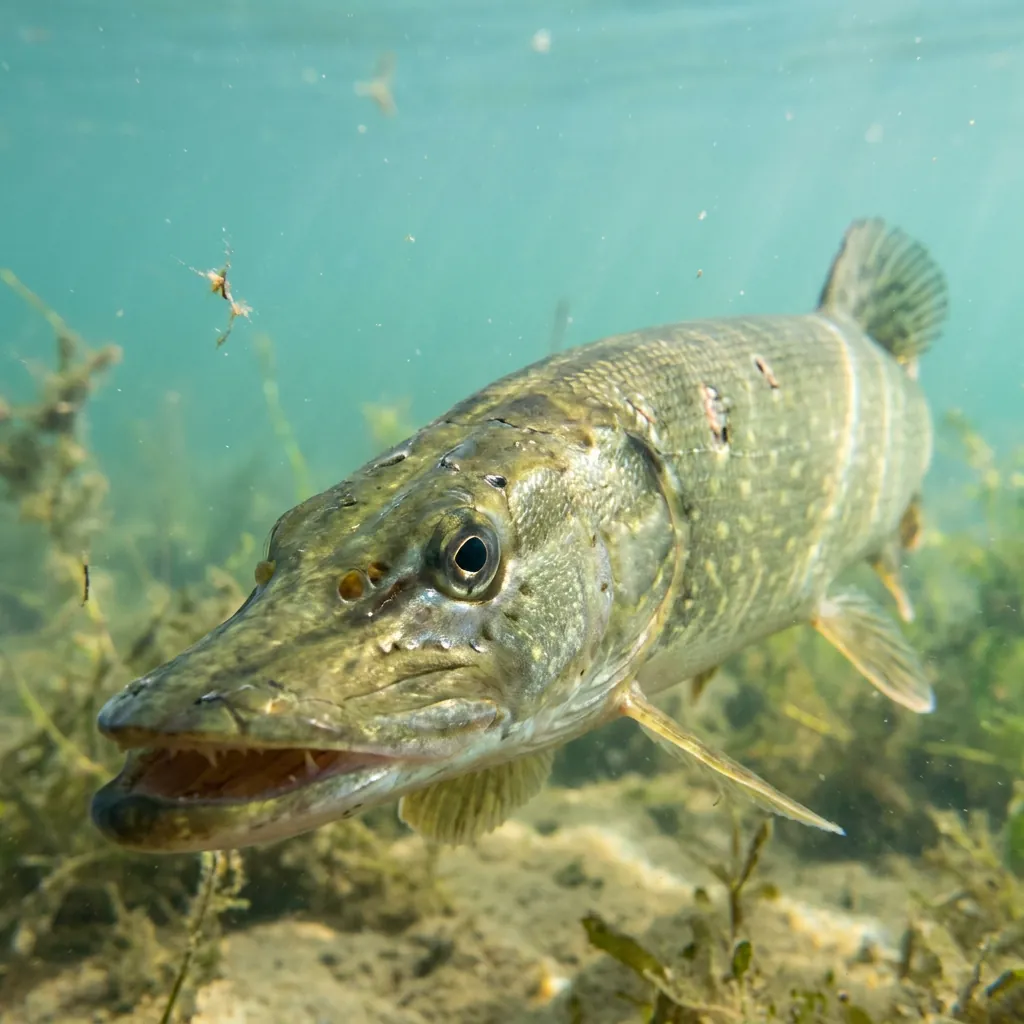
The pike is a patient ambush hunter that can sit motionless for long stretches before exploding into a strike. It commonly grows to about 40 cm, though the largest reach over a metre.
Also known as: esox lucius, american pike, common pike, great lakes pike, great northern pickerel, great northern pike, jack, jackfish, northern pike, pickerel, snake, wolf
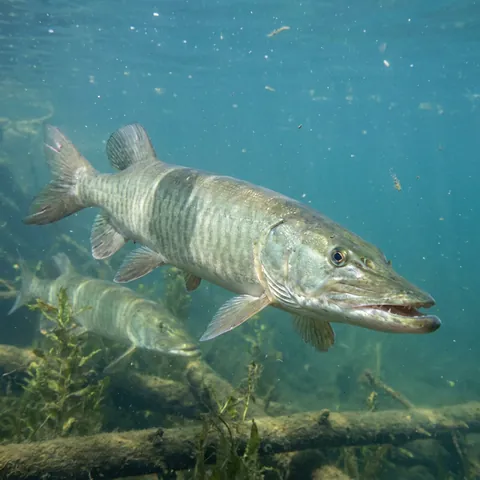
Pike look similar to the muskellunge, a closely related species. The easiest check is the colour pattern: pike show light spots and bars on a dark body, while muskellunge show dark markings on a lighter body.
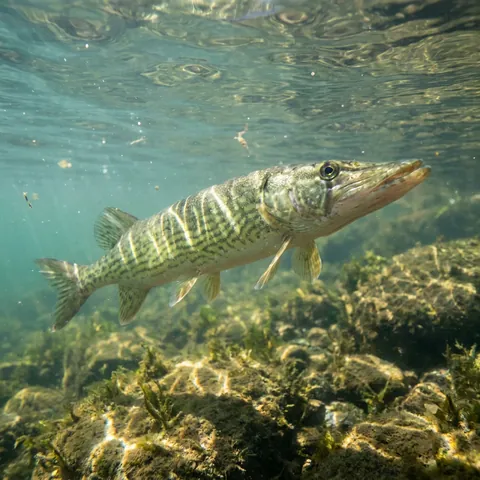
The pike has a long, torpedo-shaped body built for a sudden burst of speed, with its dorsal and anal fins set far back near the tail. It is usually olive green, fading to yellow or white on the belly, with short light bars and spots along its flanks and sometimes reddish fins. Young pike show yellow stripes on green that break up into spots as they age.
Pike live in slow streams and weedy, shallow lakes and reservoirs across the Northern Hemisphere, as well as cold, clear rocky waters. They rely on thick underwater plants for both hunting cover and shelter for their young, usually staying in water no deeper than about 5 metres.
Pike are solitary, territorial ambush hunters that hold perfectly still, using small fin movements to stay in place before darting out at prey. They defend their space and can be aggressive toward other pike, especially when food is scarce, which sometimes leads to cannibalism among young fish.
Young pike start on tiny invertebrates before moving on to small fish once they reach about 4 to 8 cm long. Adults eat mostly fish and frogs, grabbing prey sideways in their sharp teeth before turning it head-first to swallow, and will also take insects, crayfish, and leeches.
Pike breed in spring, once the water first warms to around 9°C. Females release large numbers of eggs, likely because so few young survive their first year. Eggs that are shed will not hatch if the water then drops back below 6°C.
harmless to humans (sharp teeth — handle with care)
Other fish are known to avoid pike droppings, since they contain alarm pheromones that warn nearby fish a predator is close.
Describe what you saw and we name it, then keep every species you find in your Oceandex.