Bannerfish
bannerfish
Heniochus acuminatus
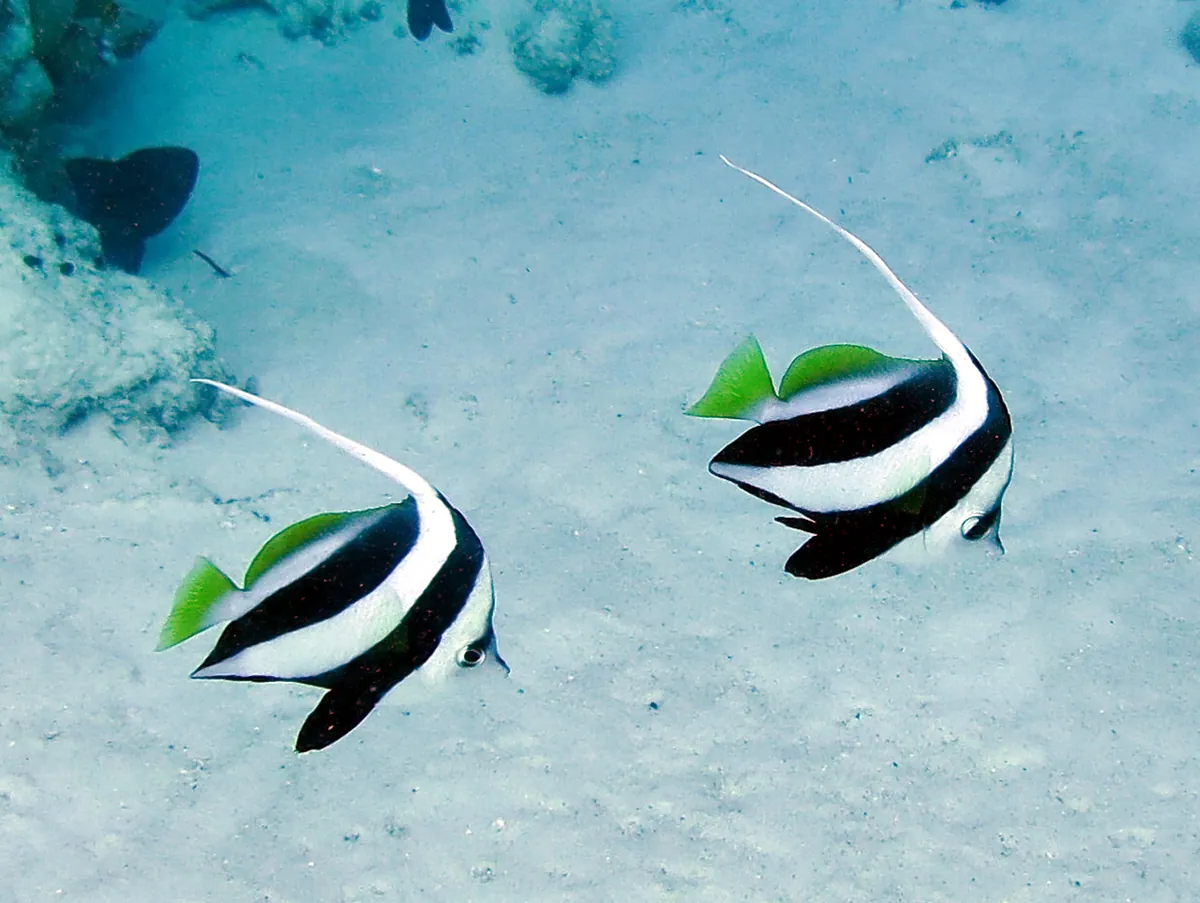
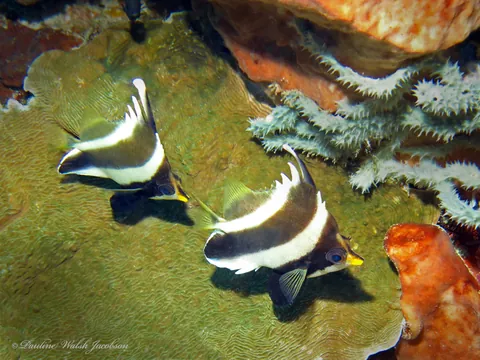
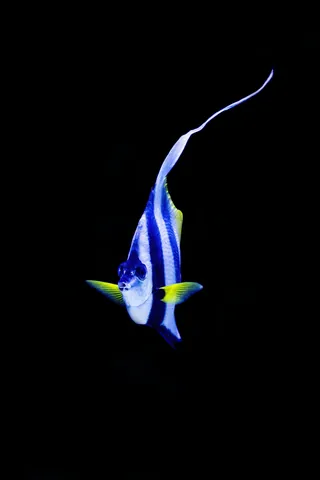
The pennant coralfish, also called the longfin bannerfish or coachman, is a black, white, and yellow butterflyfish found across the Indo-Pacific. It gets its name from the long, flag-like filament trailing from its dorsal fin.
Also known as: heniochus acuminatus, angelfish pennant, bannerfish, butterflyfish, coachman, common bannerfish, feather-fin bullfish, featherfin bullfish, featherfin coralfish, longfin bannerfish, pennant bannerfish, pennant corafish, pennant coral fish, reef bannerfish, wimple fish
Look for a white fish crossed by two broad black diagonal bands, with a long white filament streaming back from the front of the dorsal fin like a flag.
Its body is flattened side to side and mostly white, crossed by two broad black diagonal bands. Past the second band, the dorsal and tail fins turn yellow, as do the pectoral fins. The head is white, with black eyes linked by a black band, and the snout is somewhat elongated with a small mouth that can extend forward. The first rays of the dorsal fin stretch out into a long white filament, or pennant. It reaches a maximum length of 25 cm, though most adults are closer to 15 cm.
This species lives throughout the tropical and subtropical Indo-Pacific, favouring relatively deep water: protected lagoons, channels, and the deeper parts of outer reef slopes, typically between 15 and 75 m.
harmless
Globally the pennant coralfish is listed as Least Concern, though some local populations are declining. In the Persian Gulf, for example, it is under pressure because coral reefs there have been badly damaged and broken up.
Young pennant coralfish sometimes act as cleaners, nibbling parasites off the skin of other reef fish, a habit they grow out of as they mature into paired, plankton-feeding adults.
Describe what you saw and we name it, then keep every species you find in your Oceandex.