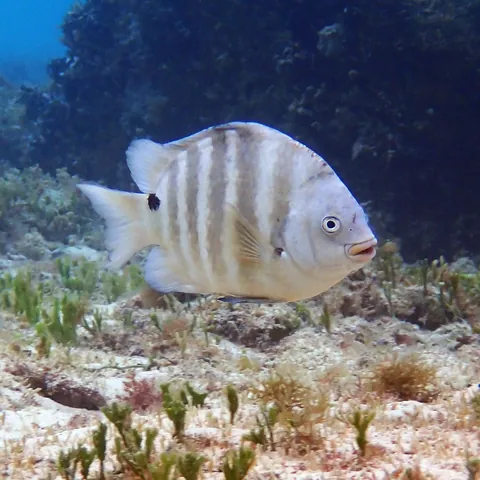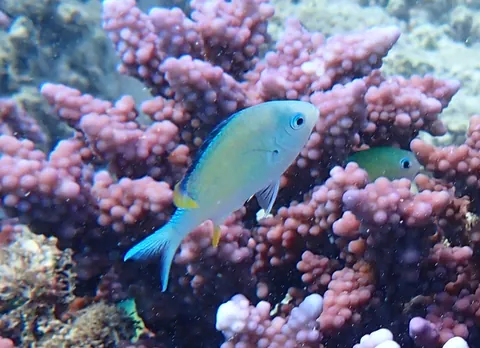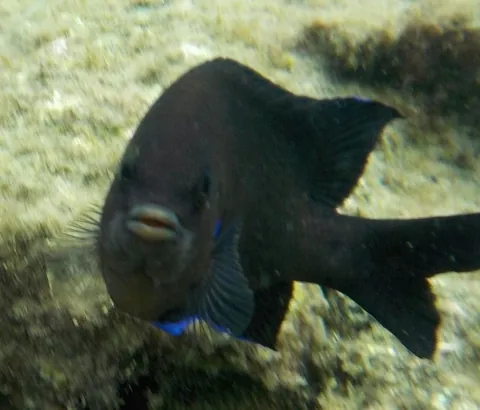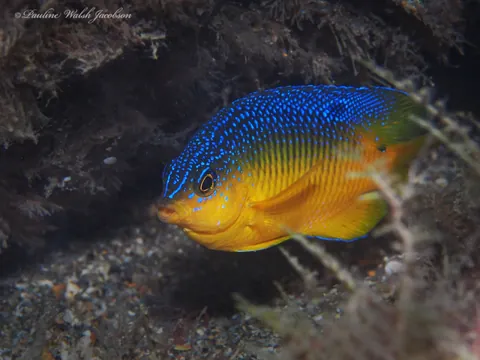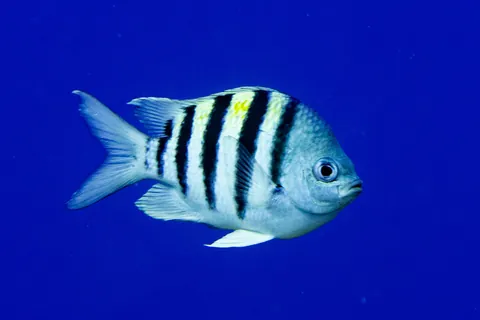
Atlantic Sergeant Major
Abudefduf saxatilis
Abudefduf troschelii
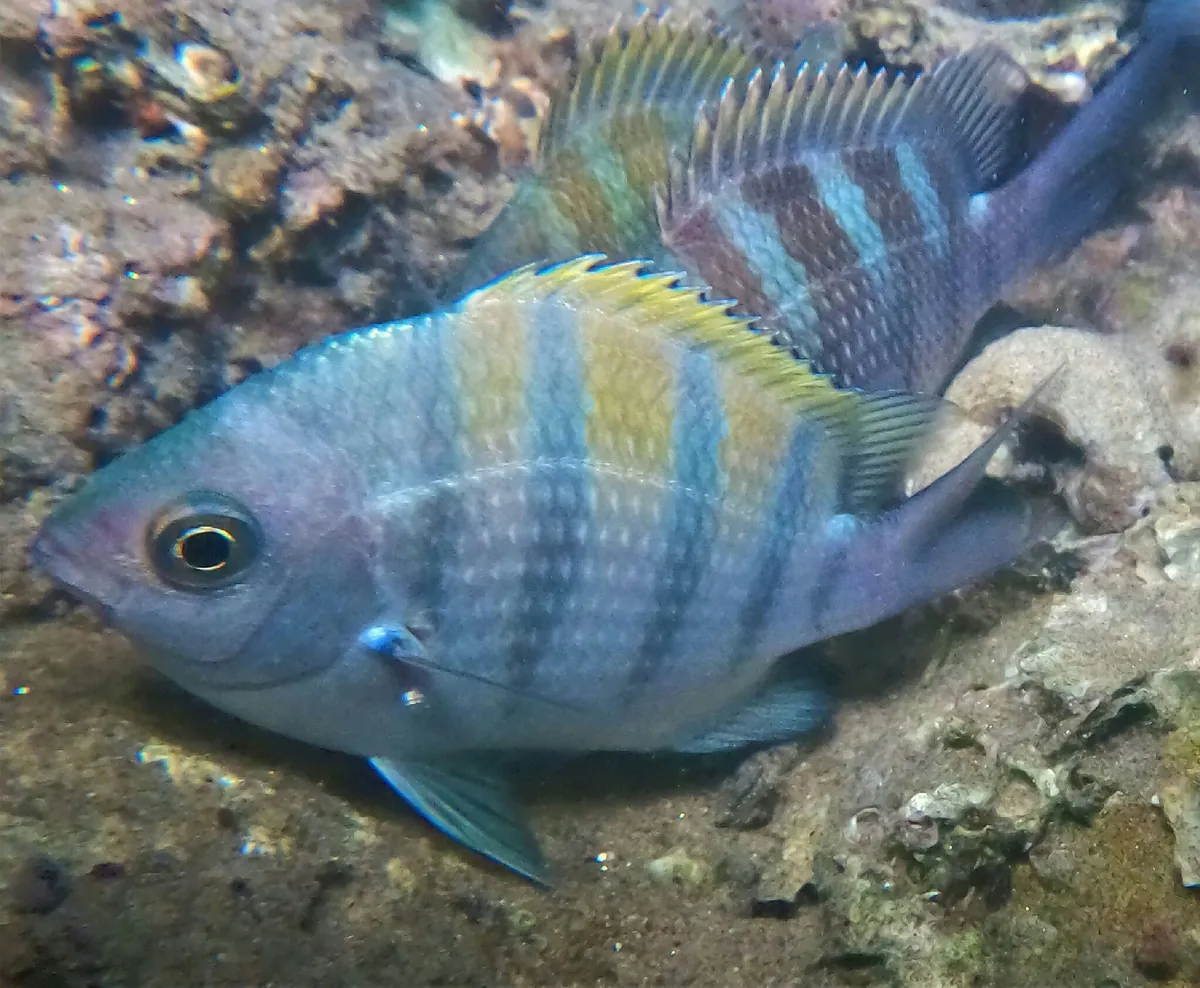
The Panamic Sergeant Major is a striped, fast-swimming damselfish found only along the eastern Pacific coast. It grows up to 20 cm, though most divers see fish closer to 10 cm.
Also known as: panama sergeant major, pacific sergeant major
Several sergeant major species share the same black-and-yellow striped pattern. The small black spot at the base of the pectoral fin, noted above, is the extra mark that confirms this species.
Its body carries five dark bands running down the sides, with yellow spaces between them, and the bands spread onto the belly as black stripes. There is a small black spot at the base of each pectoral fin. The pectoral fins themselves are long, slender, and paddle-shaped, built for quick bursts of speed and sharp turns around reef structure. Compared to other damselfish, it has relatively large eyes, a long, angular head, and a mouth set higher on the face, suited to picking plankton from open water.
This species is endemic to the eastern Pacific, found along the coast from the United States down through Central America to Peru. It gathers in large groups over coral and sandy bottoms and around rocky reefs and tide pools, usually in shallow water from 1 to 12 m deep, and also ranges into open water near reefs to feed on plankton.
The Panamic Sergeant Major gathers in large aggregations on the reef. It faces some predation pressure from the yellow snapper and from groups of neotropical Pacific wrasse, which can overwhelm a guarding male and raid unprotected eggs.
It feeds mainly on plankton drifting in open water and mid-water, but also grazes on small invertebrates and algae growing on the reef, making it an omnivore active during the day.
Spawning is timed to the days around the new moon, with eggs hatching about four days later, in the hour after sunset. A male clears and defends a spawning site on dead coral or rock, where one or more females lay adhesive eggs that he then guards. Spawning cycles run about three to four days in the wet season but can stretch to around eight days in the dry season.
Second-year juveniles of this species have been seen cleaning schools of mullet, halfbeaks, and needlefish, a job usually left to dedicated cleaner fish.
Describe what you saw and we name it, then keep every species you find in your Oceandex.