Pacific nurse shark
Ginglymostoma unami
Ginglymostoma cirratum
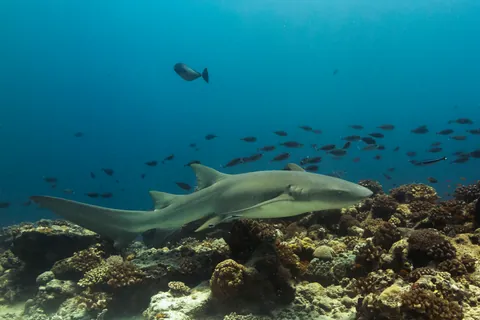
Often mistaken for a rock on the seabed, the nurse shark is a slow, sedentary shark that can grow to 430 cm, though most divers meet ones closer to 304 cm.
Also known as: ginglymostoma cirratum, carpet shark, cat shark, dogfish, sand shark
Most sharks seen inshore have pointed fins and no barbels. The nurse shark's combination of rounded fins and a pair of barbels by the nostrils sets it apart at a glance.
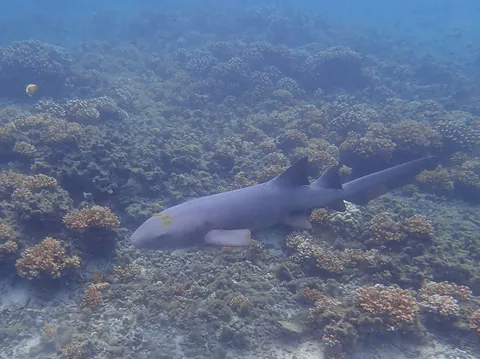
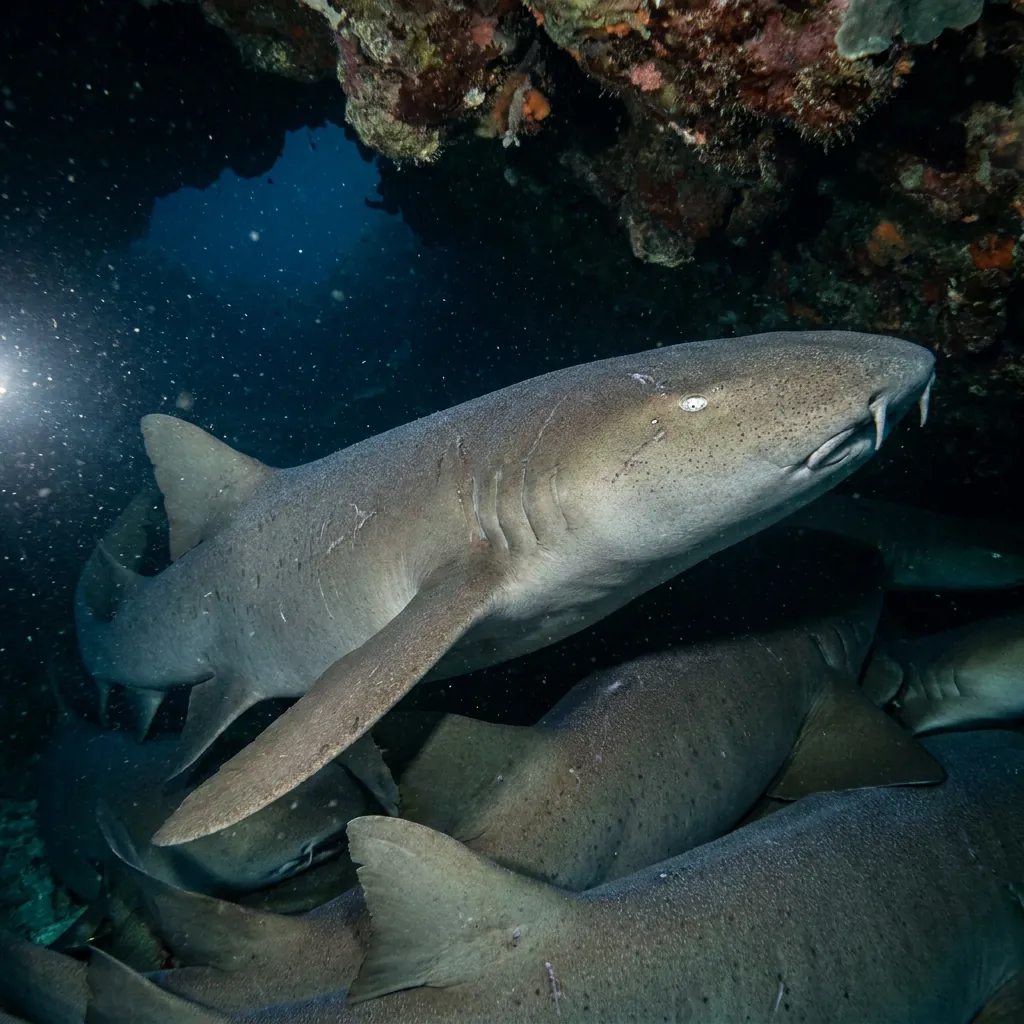
This shark has a broad, blunt head with a mouth set low and well forward of the eyes, flanked by a pair of barbels, whisker-like feelers, between the nostrils. Two rounded dorsal fins sit along its back, the pectoral fins are also rounded, and the tail fin is long. Adults are yellow-brown to grey-brown, sometimes with small dark spots or faint saddle-shaped markings. Newborn pups are strongly spotted, a pattern that fades as they grow, and some individuals show patchy, speckled pigment loss.
It is a bottom-dwelling shark of tropical and subtropical coastal waters, from 1 down to 130 metres, though it is usually found between 1 and 35 metres. Young sharks stay on shallow coral reefs, seagrass flats and around mangroves, while larger adults move to deeper reefs and rocky areas, sheltering in crevices and under ledges by day.
The nurse shark is nocturnal and solitary in its hunting, rooting through sand and sediment at night to feed, but it often rests in groups on the bottom by day. It is unusually sedentary for a shark, staying loyal to the same shelter sites and even returning to the same breeding grounds year after year. It feeds by powerful suction, among the strongest recorded in any aquatic animal, and can suck prey in and spit it out again or shake its head violently to break food apart.
Nurse sharks give birth to live young that develop inside eggs hatched within the mother's body. Genetic studies have found that pups from a single litter can have more than one father, a result of multiple males mating with the same female in one season.
generally harmless if left alone — do not touch or provoke
The nurse shark feeds by suction, and the force it can generate is among the strongest ever measured in any aquatic animal.
Describe what you saw and we name it, then keep every species you find in your Oceandex.