Anchovies
anchovies_g293
Engraulis mordax
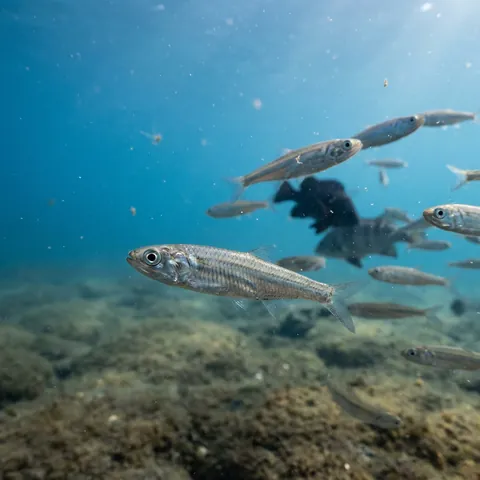
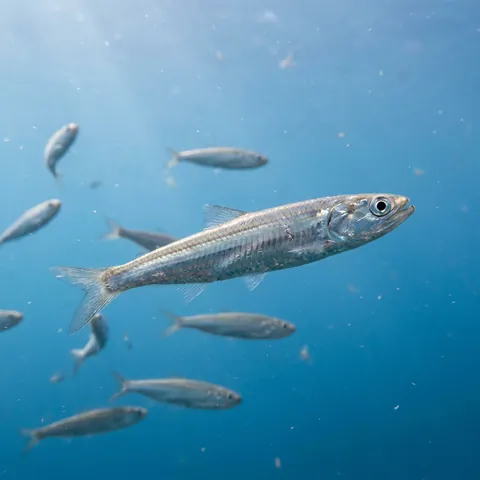
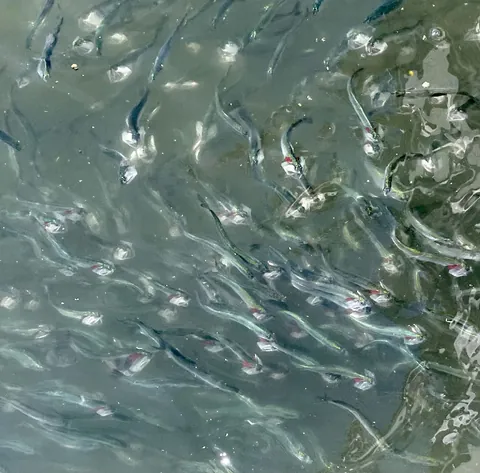
Alone, a northern anchovy is an unremarkable little fish. In its thousands, it becomes a shimmering wall that can fill a diver's entire field of view, turning and flashing as one.
Also known as: californian anchovy
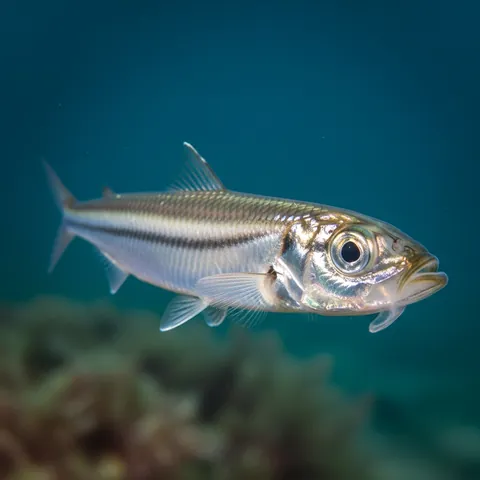
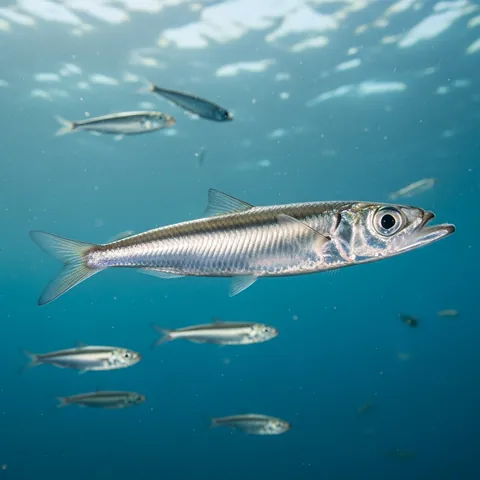
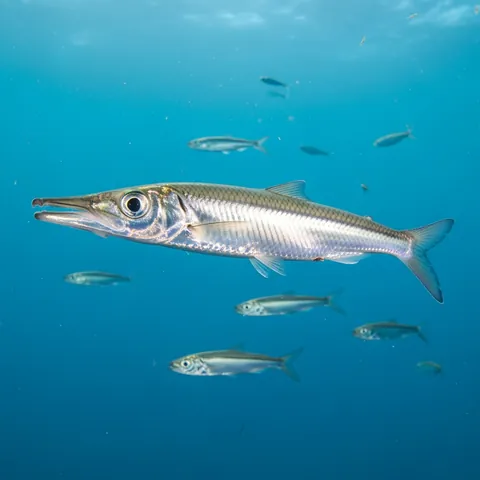
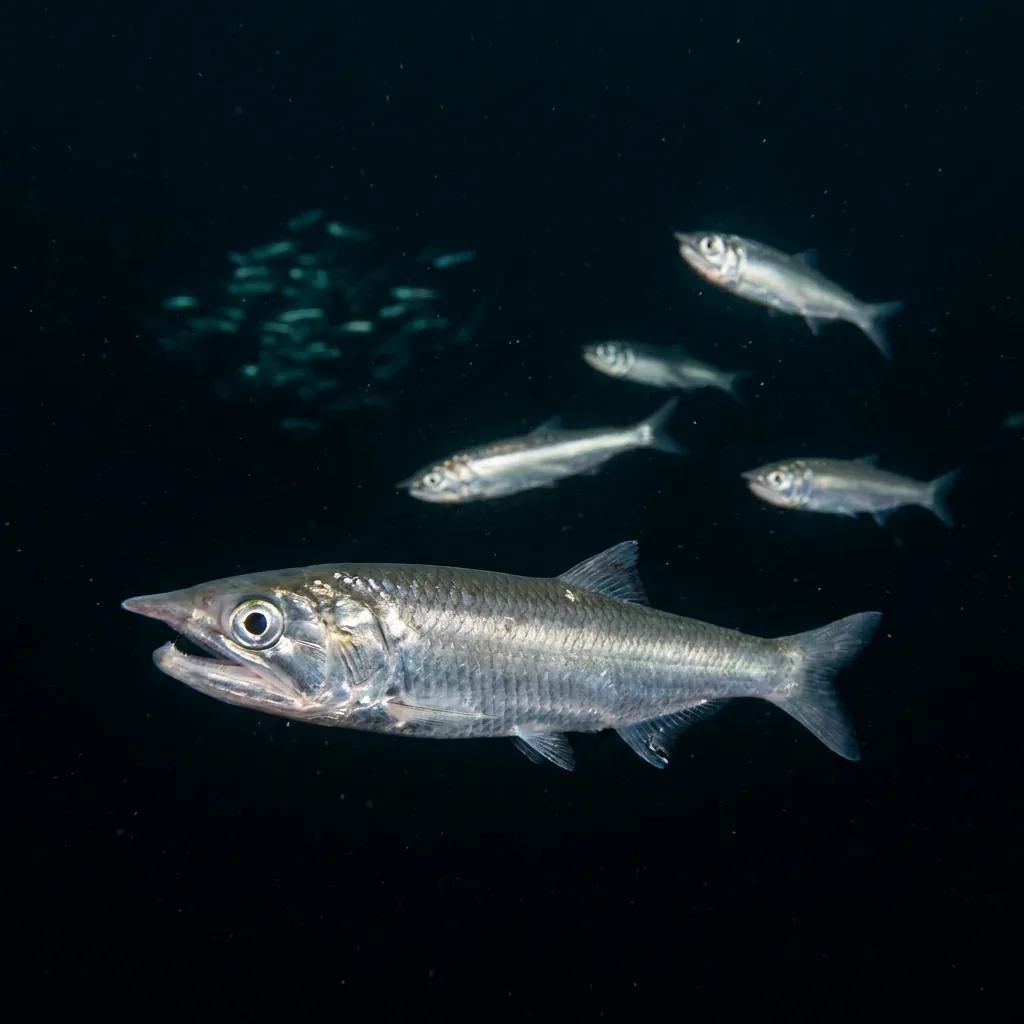
Anchovies are easy to confuse with young sardines or herring. The giveaway is that long mouth: it reaches back past the eye, while sardines and herring have shorter mouths that stop at or before it.
This is a small, slender fish with the classic anchovy shape: a compressed, elongated body, a single dorsal fin set in the middle of its back, and a forked tail. Its large mouth reaches back past the eye, and it has no visible lateral line, the sensory stripe some fish show along their side. Weak, shiny scales give it a silvery, countershaded sheen that helps it blend into open water.
It lives along the eastern Pacific coast, ranging from British Columbia down to the Gulf of California, in nearshore coastal waters and large estuaries such as San Francisco Bay and the Salish Sea.
Northern anchovies hatch in coastal waters or estuaries, with spawning happening year-round though it peaks in late spring. As larvae they drift with the currents, then grow into large schools of sub-adults that move into saltier, open water. Adult schools rise and fall between deeper and shallow water each day to feed on plankton, and they typically live four to seven years, spawning every year once mature.
The IUCN lists the northern anchovy as Data Deficient. Its numbers naturally boom and bust with water temperature and ocean upwelling, but its biomass has fallen this century, and climate change may make these swings sharper and more frequent. A crash like the mid-20th-century collapse of Pacific sardines would put many predators that depend on anchovies at risk.
Anchovies in Monterey Bay have been found with unusually high levels of microplastics in their gut, mistaking the particles for food, though their low position in the food chain means less of it builds up in their body than in predators like lingcod or striped bass.
Describe what you saw and we name it, then keep every species you find in your Oceandex.