Blue dog
Squalus acanthias
Squalus suckleyi
The North Pacific spiny dogfish is a small, slender shark found on the seafloor across the Pacific Ocean. It lives longer than any other dogfish shark, with some individuals reaching a very old age.
Also known as: pacific dogfish, spiny dogfish, grayfish
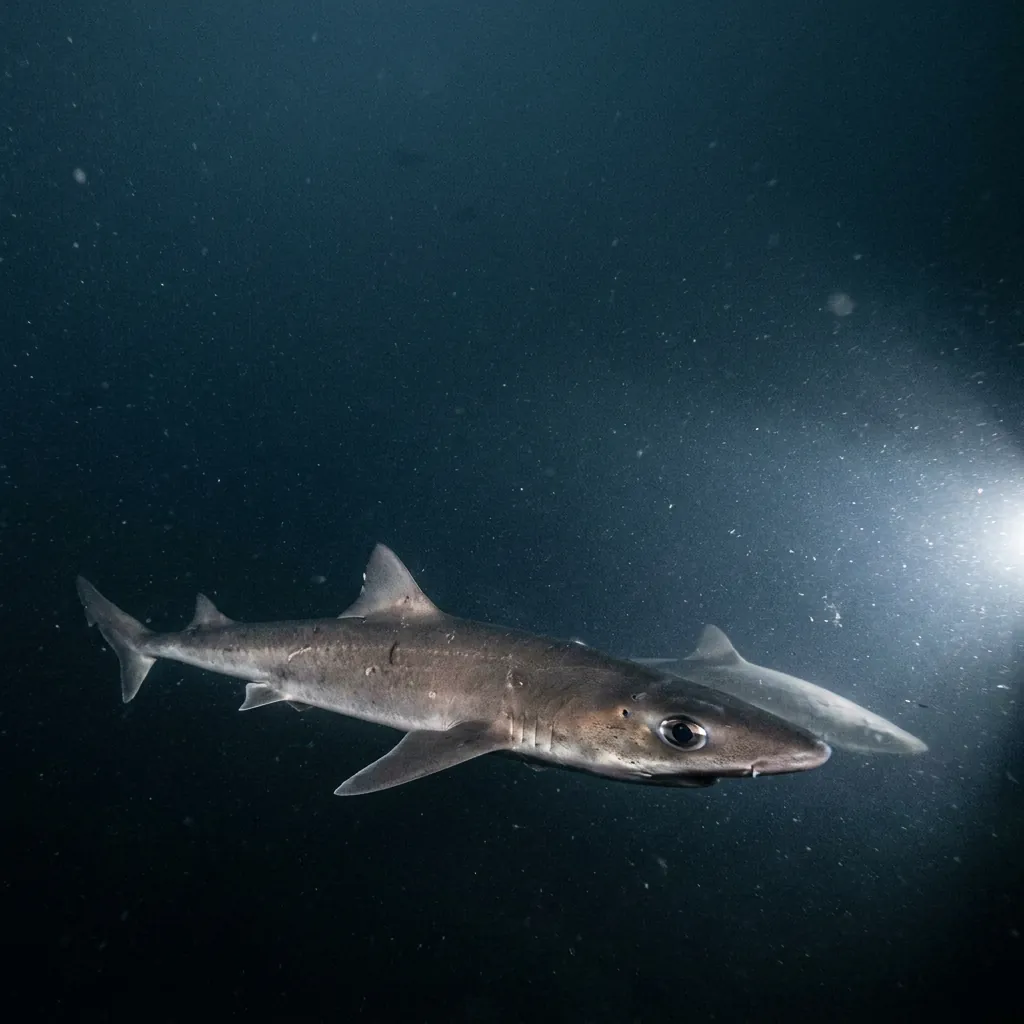
Small grey sharks can look alike throughout the Pacific, but the scattered white spots along this one's grey back set it apart from plainer dogfish species.
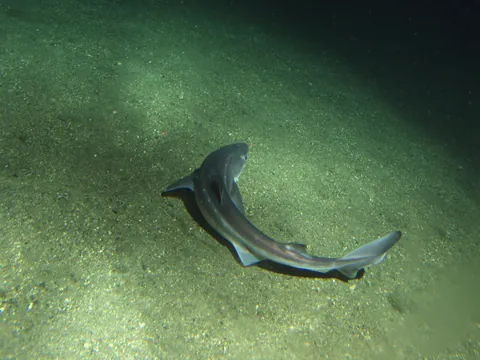
This shark has a torpedo-shaped body, a pointed snout, large eyes, and a flat head. Its back is grey with scattered white spots, fading to white or light grey underneath. A spine sits in front of each of its two dorsal fins as a defence. Its skin feels like sandpaper, covered in tiny tooth-like scales called dermal denticles, and its teeth are shaped for grinding rather than tearing.
It lives mainly in salt water, from shallow bays down to deep offshore water as deep as 1,244 metres, though it can also tolerate brackish water where rivers meet the sea. Adults tend to settle near the bottom along the edge of the continental shelf, while young dogfish swim higher up in open water offshore.
This shark makes long seasonal migrations, moving north and south along the coast of the United States and Canada. A few tagged individuals have turned up near Japan, suggesting some cross the open Pacific rather than following the coast. It often swims and hunts in groups, though it can also be solitary.
The Pacific spiny dogfish is a meat eater with sharp, angled teeth built for cutting prey. It feeds mainly on squid, krill, shrimp, and other crustaceans, along with small fish and even smaller sharks. It hunts along the sea floor, scanning for prey rather than chasing it down in open water.
Females carry their pups inside them and give birth to live young instead of laying eggs. Pregnancy lasts far longer than in most sharks, and this species takes many years to reach sexual maturity. Females grow larger than males, likely because their bodies need room to carry developing pups.
The IUCN lists this species as Least Concern. Its spines make it an unappealing meal, so it has few natural predators, though killer whales, seals, larger sharks, big bony fish, and even the giant Pacific octopus will take one when they can.
This shark is thought to be the longest-living of all dogfish sharks, with some individuals surviving to a very old age.
Describe what you saw and we name it, then keep every species you find in your Oceandex.