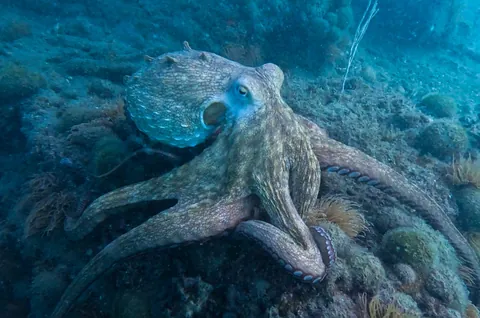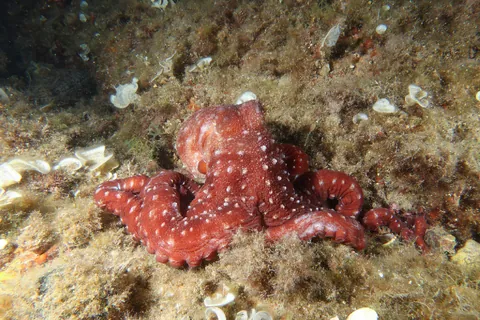
Atlantic White-spotted Octopus
Pinnoctopus macropus
Thaumoctopus mimicus
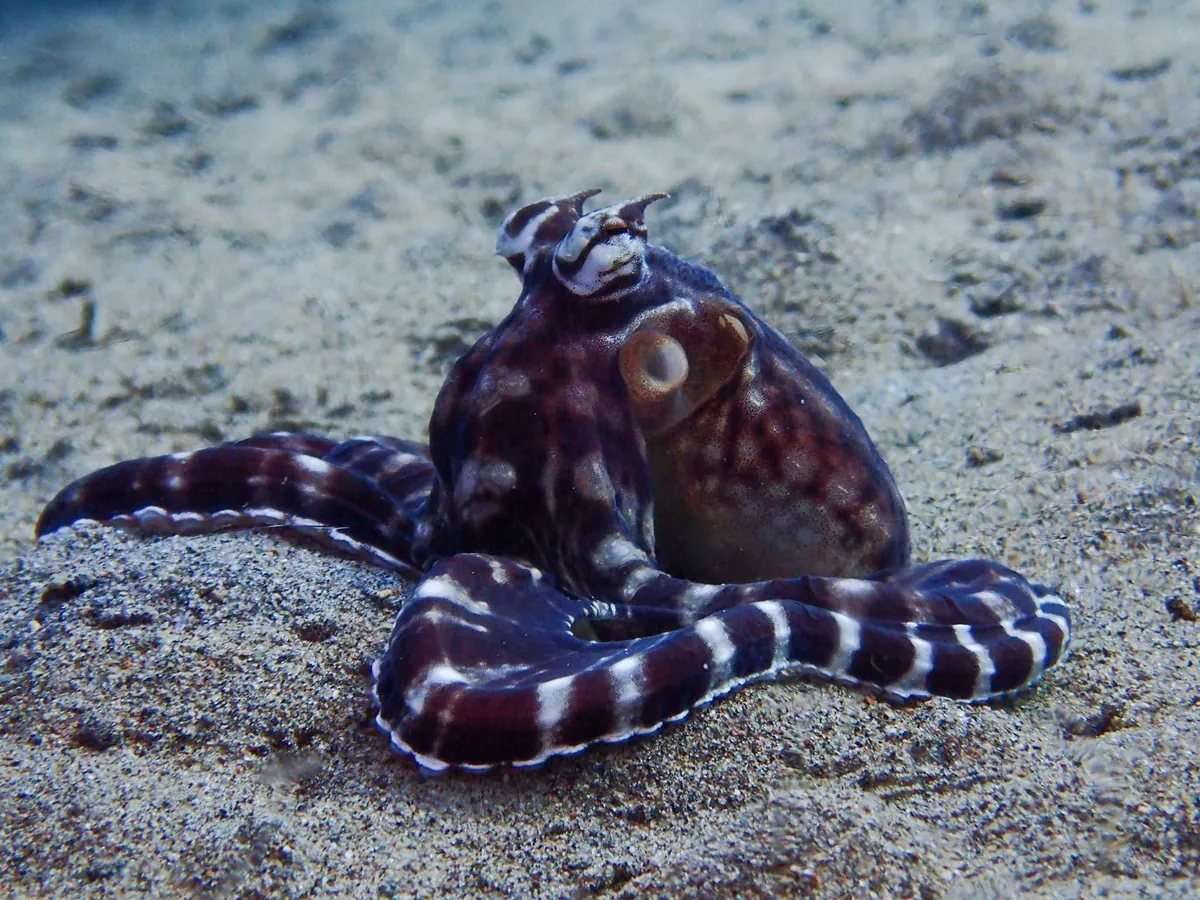
The mimic octopus is famous for a trick no other octopus is known to pull off: copying the look and movement of other animals to avoid being eaten. It glides over sandy river mouths and muddy estuaries across the Indo-Pacific, growing up to 48 cm long.
Also known as: george cloney, thaumoctopus mimicus, thaumoctopus mimicus norman & hochberg, 2005
If you see a lionfish, sea snake, or flatfish moving oddly out on open sand, away from shelter, look again - it may be a mimic octopus in disguise.
Its natural colour is a plain light brown or beige, with small horn-like points above each eye and long, slender arms about as wide as a pencil. When threatened, it usually switches to a bold pattern of white and brown stripes, a warning colour that helps it pass for a more dangerous animal.
It lives across the tropical Indo-Pacific, from the Red Sea to the western Pacific, most often reported around Indonesia. It favours sand or silty mud in river mouths and estuaries, where rivers meet the sea, rather than on reefs, down to depths of 37 m. It will often move into a burrow left behind by another animal.
This octopus glides over the sand by jetting water from its funnel, hunting mostly by day. Its signature trick is mimicry. It can flatten out and trail its arms behind it to look like a swimming flatfish. It can also spread its arms out to copy a venomous lionfish, or hide six arms while holding two out stiffly to pass for a sea snake. It can even mimic still animals such as sponges and tube worms, and blends into sand, coral, or algae without moving at all.
It hunts and forages for small fish, crabs, worms, and other crustaceans, reaching into crevices and burrows with its arms to pull out prey. It is a strict carnivore and makes several hunting trips a day.
One mimic octopus was bothered by damselfish guarding their territory. It fought back by copying a banded sea snake, a known enemy of damselfish, as if it knew exactly which disguise would scare them off.
Describe what you saw and we name it, then keep every species you find in your Oceandex.