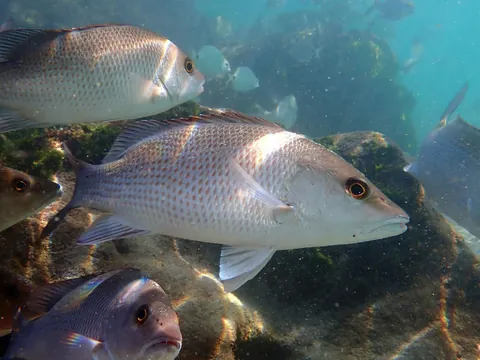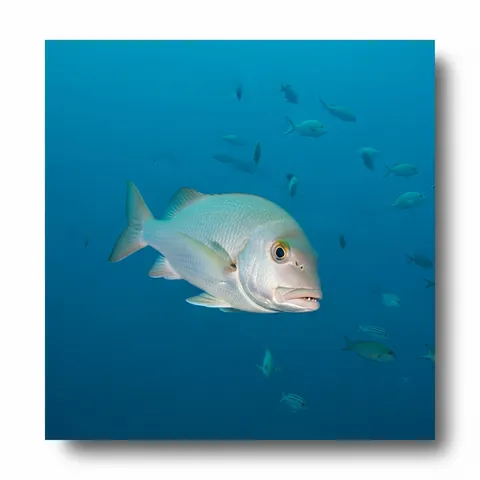
African forktail snapper
Apsilus fuscus
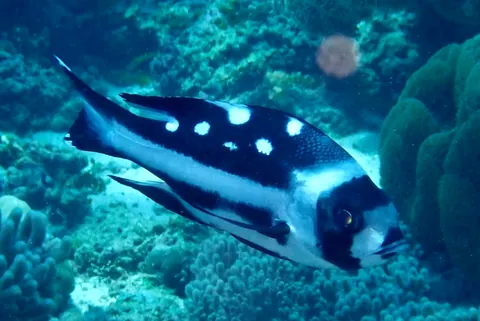
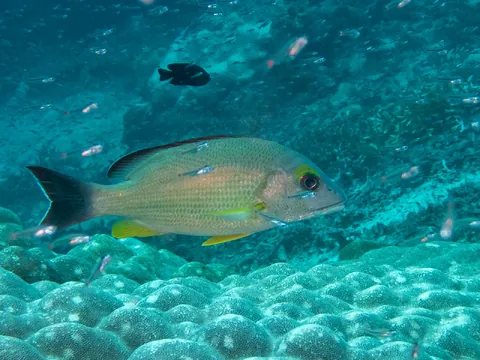
Macolor macularis
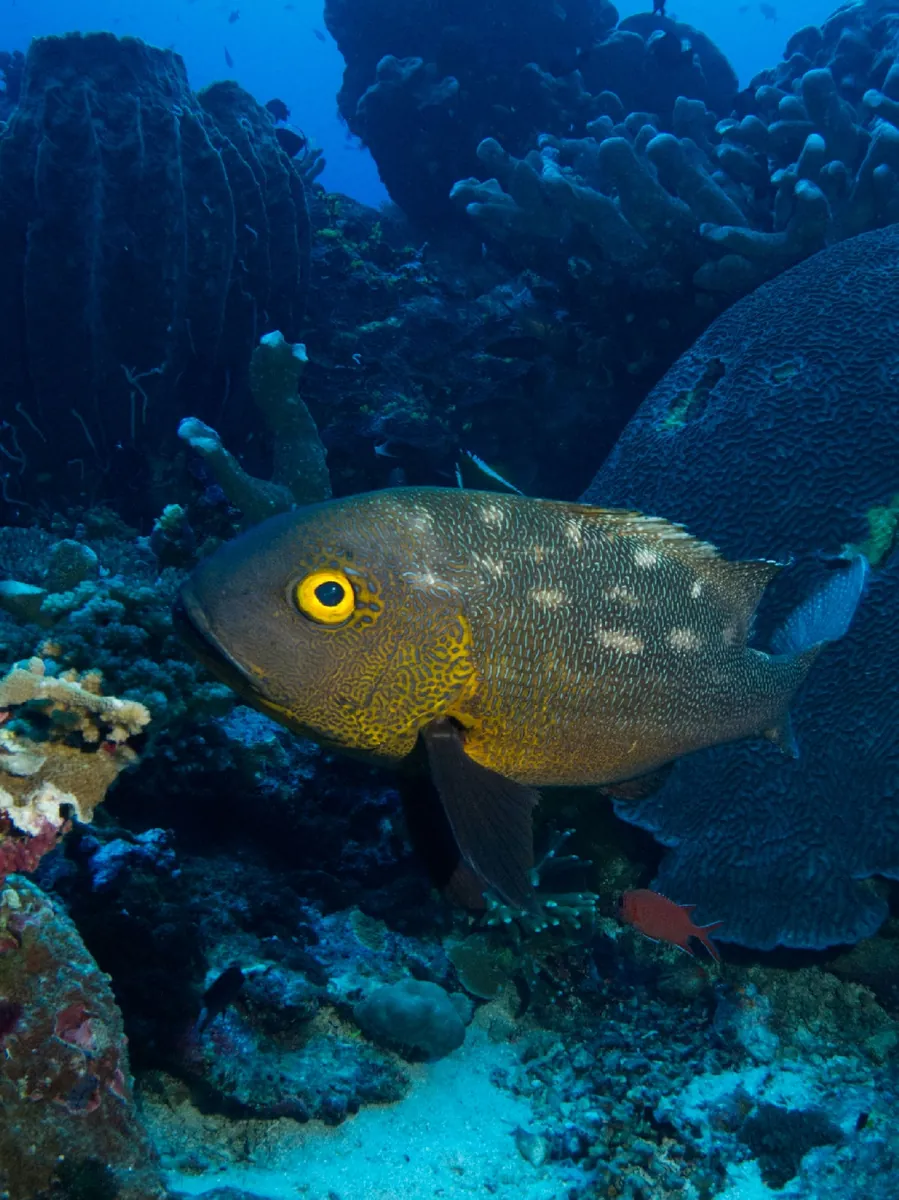
The midnight snapper changes a lot as it grows. It starts as a black-and-white young fish hiding in coral. It grows into a deep-bodied, dark grey-brown adult that hunts on reef slopes at night.
Also known as: black and white snapper, black-and-white snapper, midnight seaperch, black and white snapper, snapper, black-and-white snapper, midnight seaperch
Young fish are easy to confuse with the closely related black and white snapper, which sometimes swims in the same school. Count the white spots on the back: young midnight snappers have five spots in their black-and-white pattern.
Adults are dark grey-brown on top, turning yellow on the head and lower body. They have thin blue lines and small spots on the head, and blue dashes on their scales. Young fish look completely different: black and white, with five white spots down the back. As they grow older, they get even more white spots, then slowly settle into the adult colours. Small adults still show a few traces of the young fish's pattern. It grows up to 60 cm long.
This fish lives across the Indian and western Pacific Oceans. Adults prefer steep slopes on lagoon, channel, and seaward reefs, often on deep reef slopes. Young fish live alone on sheltered reef slopes, among feather stars, staghorn coral, or large sponges.
The midnight snapper hunts at night. It feeds on large zooplankton, fish, and crustaceans. It may be alone or in schools, sometimes mixed with the closely related black and white snapper.
This fish can live a very long time. Many reach 40 to 50 years old.
Describe what you saw and we name it, then keep every species you find in your Oceandex.