Iguanas
iguanas_g387
Amblyrhynchus cristatus
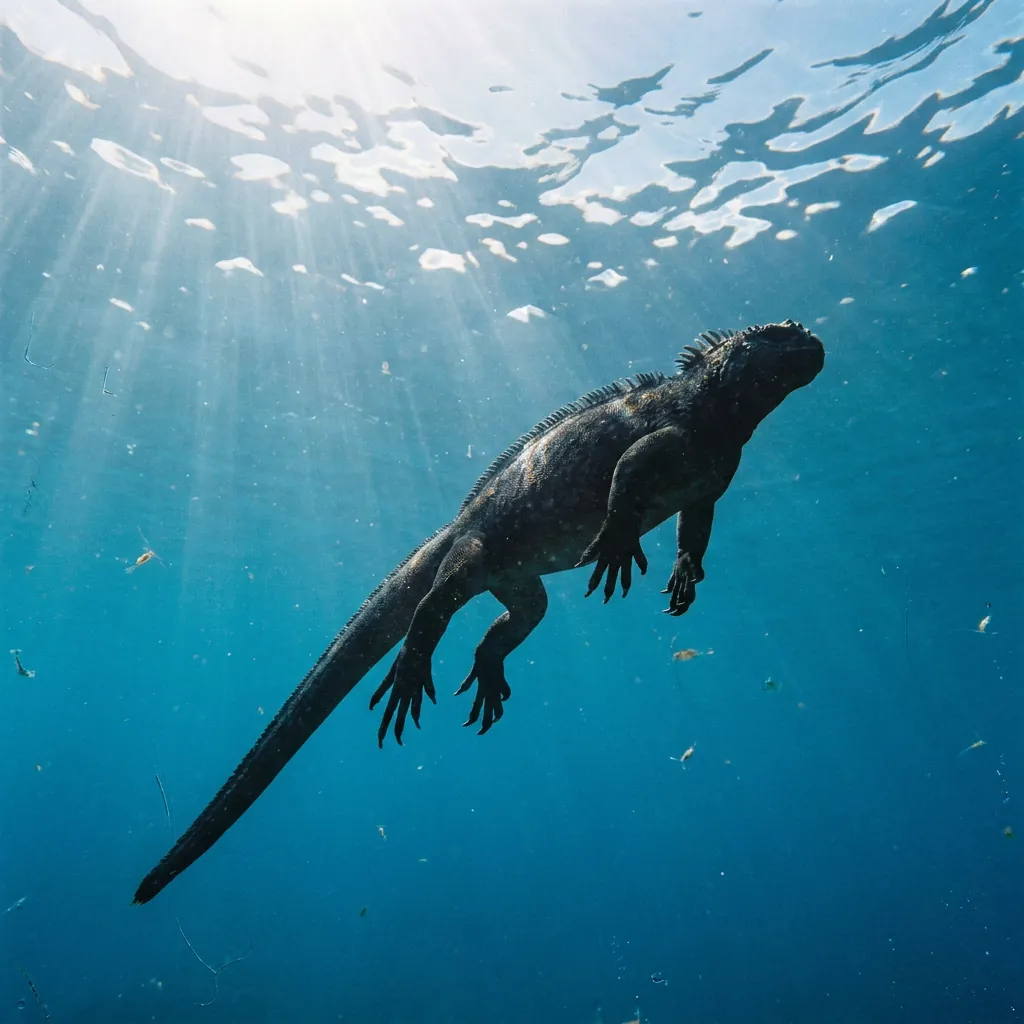
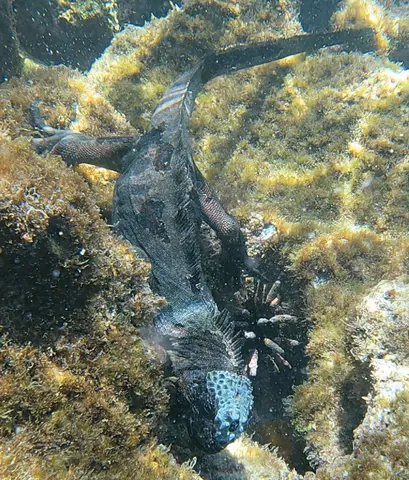
The marine iguana is the only lizard in the world that feeds in the sea, diving off the black lava rocks of the Galapagos Islands to graze on algae. Early visitors called it ugly; divers today find it one of the strangest sights on a Galapagos reef.
Also known as: amblyrhynchus cristatus, galápagos marine iguana
No other lizard swims or dives in the sea, so any lizard seen foraging underwater or diving off rocks in the Galapagos is a marine iguana.
This iguana has a thickset body and short, sturdy limbs, built more for gripping rock than for speed. A row of spines runs from the back of its neck down to its tail, longer in males than in females. Its skin is dark, almost black, which helps it soak up heat after a swim. It can reach up to 130 cm long and weigh as much as 1.5 kg.
It dives to feed on algae in cold water, then hauls out to bask on rocks and warm back up, since it cannot regulate its own body heat. While it is cold and sluggish after a dive, it defends itself with aggressive bluffing and biting rather than fleeing. It sleeps in coastal colonies, sometimes on rocks and sometimes up in mangrove trees.
The marine iguana grazes almost entirely on red and green algae growing on rocks between the tides and just below the surface. It avoids algae species with strong chemical defences, and struggles to digest brown algae, so it rarely eats them by choice.
Breeding runs from December to March, with nesting from January to April, timed to the cold, dry season and local algae growth. Most adults breed only every other year, though a female may breed yearly if food is plentiful. Iguanas nest and rest together in coastal colonies.
The IUCN lists the marine iguana as vulnerable. It lives only in the Galapagos and nowhere else, and colonies stay close to the shoreline, which naturally limits how far it can spread. Some island populations, including those on San Cristobal, Santiago, and Genovesa, are considered more at risk than the species as a whole.
Marine iguanas let reef fish such as Pacific sergeant majors pick moulting skin off their bodies underwater, and they will casually crawl over resting Galapagos sea lions, with neither animal reacting to the other.
Describe what you saw and we name it, then keep every species you find in your Oceandex.