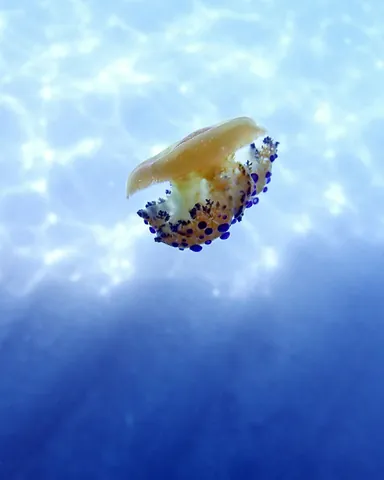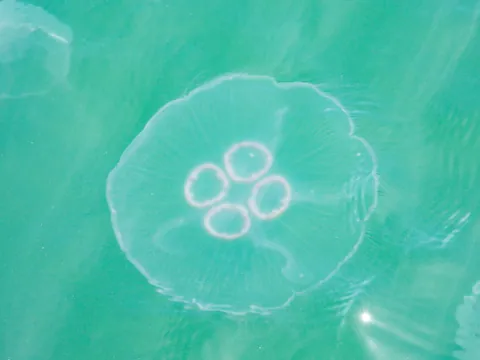
Asian moon jelly
Aurelia coerulea
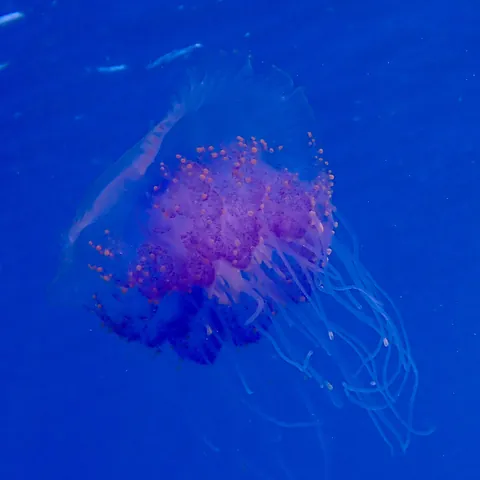
Cyanea capillata
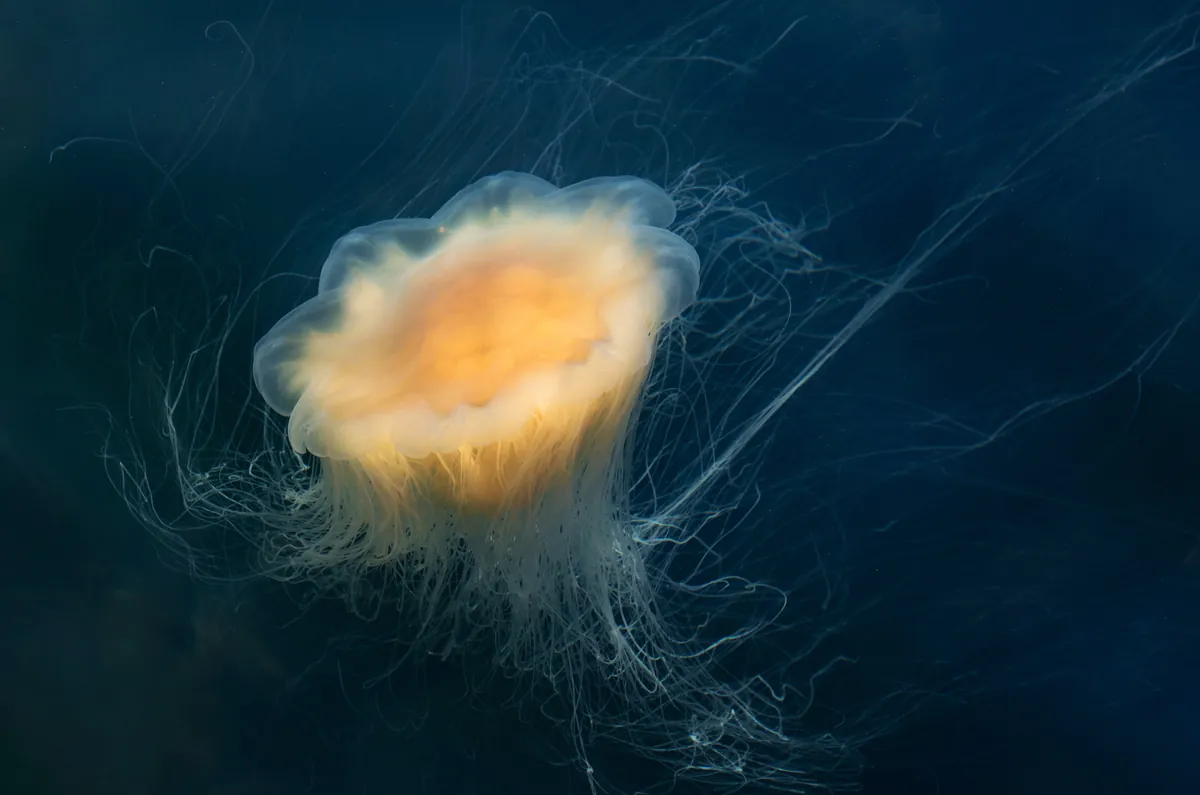
The lion's mane jellyfish is one of the biggest jellyfish in the ocean, trailing a mass of hair-like tentacles behind a broad, star-shaped bell. It drifts alone through cold northern seas, a slow but striking sight for any diver.
Also known as: cyanea capillata, cyanea capillata (linnaeus, 1758), giant jellyfish, hairy stinger, lion's mane, lion's mane jelly, lion's mane yellyfish, lions mane jellyfish, lion's mane, lion's mane jellyfish
The star-shaped, eight-lobed bell described above sets it apart from round-bellied jellyfish like moon jellies. Colour alone is not reliable, since it darkens with age, but the lobed shape holds steady throughout its life.
Its bell is split into eight lobes, giving it a star-like outline rather than a simple circle. Each lobe carries dozens of thin, trailing tentacles, and frilly oral arms hang from the mouth at the centre. Young jellyfish are pale orange or tan and darken to red or purple as they grow. The bell can reach up to 228.6 cm across in the largest animals.
This jellyfish stays close to the surface and swims weakly, pulsing its bell just enough to help ocean currents carry it along. It is solitary and rarely seen in groups, unlike many other jellyfish. It feeds by trailing its stinging tentacles through the water to catch fish, zooplankton, and smaller jellyfish.
A lion's mane jellyfish's tentacles can still sting even after they break off. Some detached tentacles have been found able to keep stinging for up to 25 days.
Describe what you saw and we name it, then keep every species you find in your Oceandex.