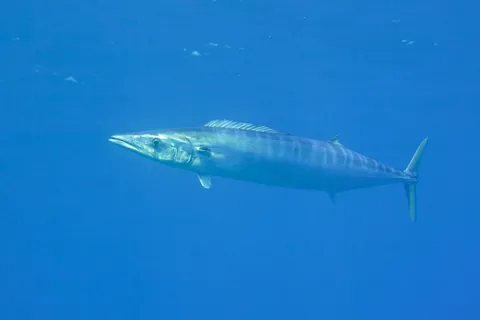
Atlantic Mackerel
Scomber scombrus
Rastrelliger kanagurta
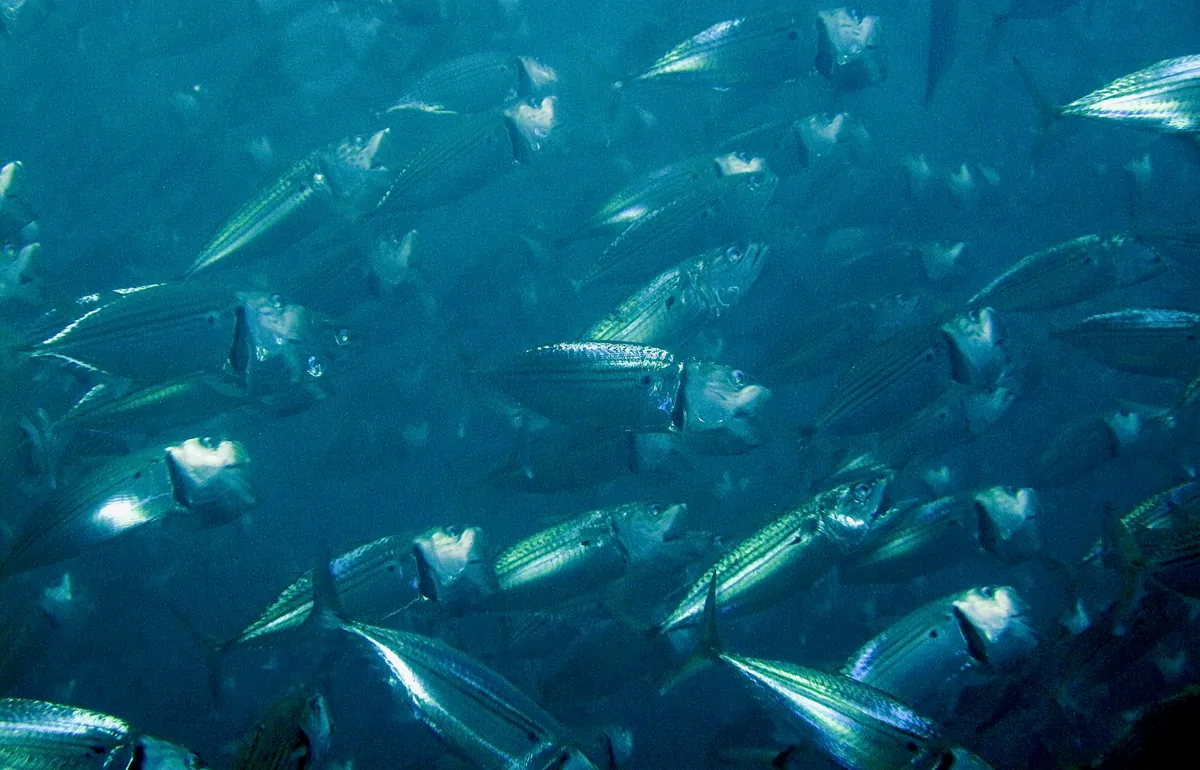
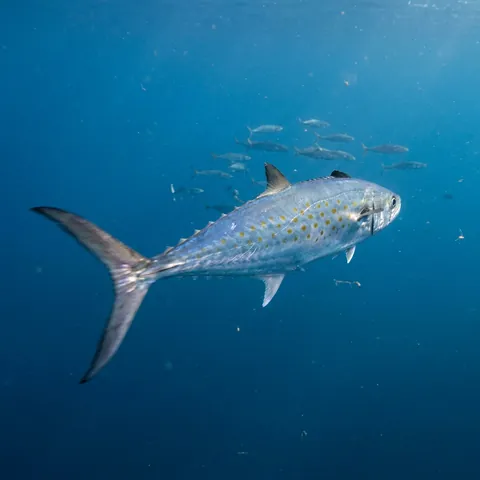
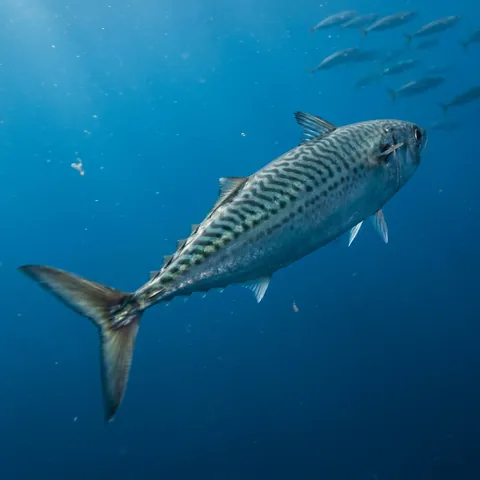
The Indian mackerel is a familiar sight along coastal reefs, moving in from open water to feed in plankton-rich currents. It usually reaches around 25 cm, wearing a subtle mix of gold stripes and yellow fins.
Also known as: longjawed mackerel, rakegilled mackerel, striped makerel, mouth mackerel, mackerel, longjaw mackerel, rake-gilled mackerel, striped mackerel, colombo cure, short mackerel, rake gilled mackerel, rake gillat mackerel, long-jawed mackerel, chub mackerel, longjaw mackerel, striped mackerel, rake-gilled mackerel, mouth mackerel, long-jawed mackerel
Many mackerel look similar at a glance: streamlined, silvery, and striped. The small black spot near the base of the pectoral fin on this species is the mark to check, since it stays fixed in place even as body colour can vary between individuals.
This fish has a moderately deep body and a head that is longer than the body is tall. Thin dark stripes run along the upper part of the body, often looking golden on a living fish, and there is a small black spot on the body near the base of the pectoral fin, the fin just behind the gill cover. The dorsal fins are yellowish with black tips, the tail and pectoral fins are yellowish, and the rest of the fins are a duller, dusky shade.
Look for it in warm, shallow coastal waters, including bays, harbours, and deep lagoons, especially in turbid water rich in plankton.
This species spawns in batches, releasing eggs and sperm directly into the water rather than pairing off, and does not guard its eggs afterward. The timing of the spawning season shifts with the hemisphere, happening at a different time of year on either side of the equator.
As Indian mackerel grow from juveniles into adults, their gut actually shortens, matching a shift in diet from tiny drifting plankton to larger prey like shrimp and fish larvae.
Describe what you saw and we name it, then keep every species you find in your Oceandex.