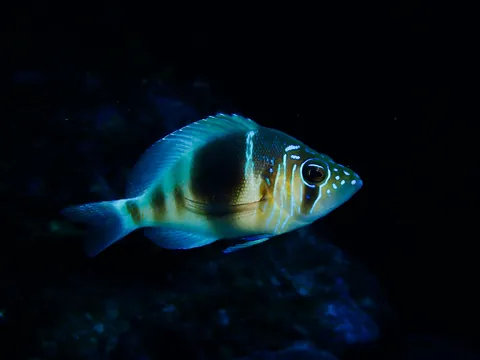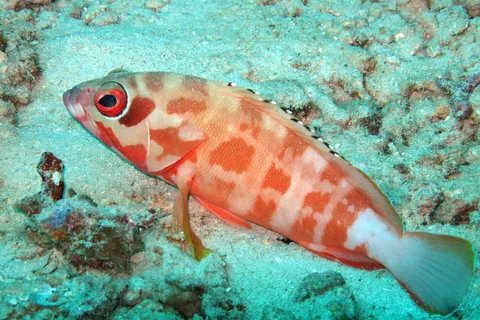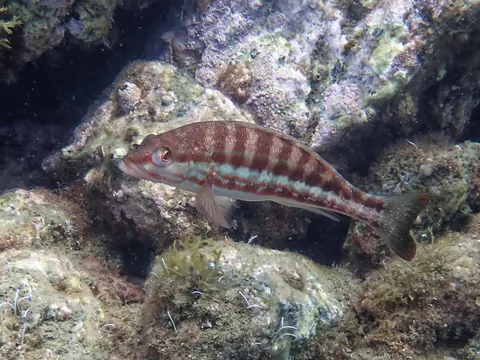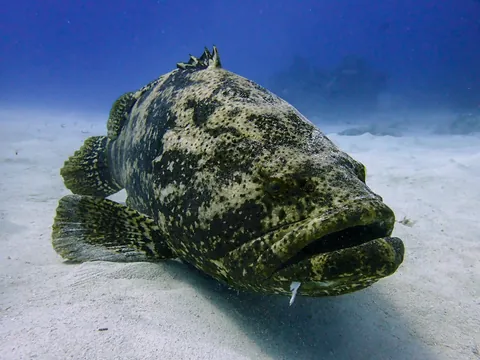
Atlantic goliath grouper
Epinephelus itajara
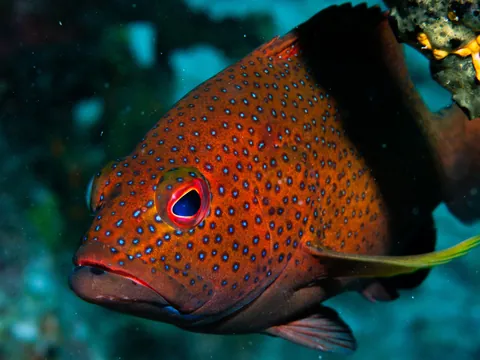
Epinephelus merra
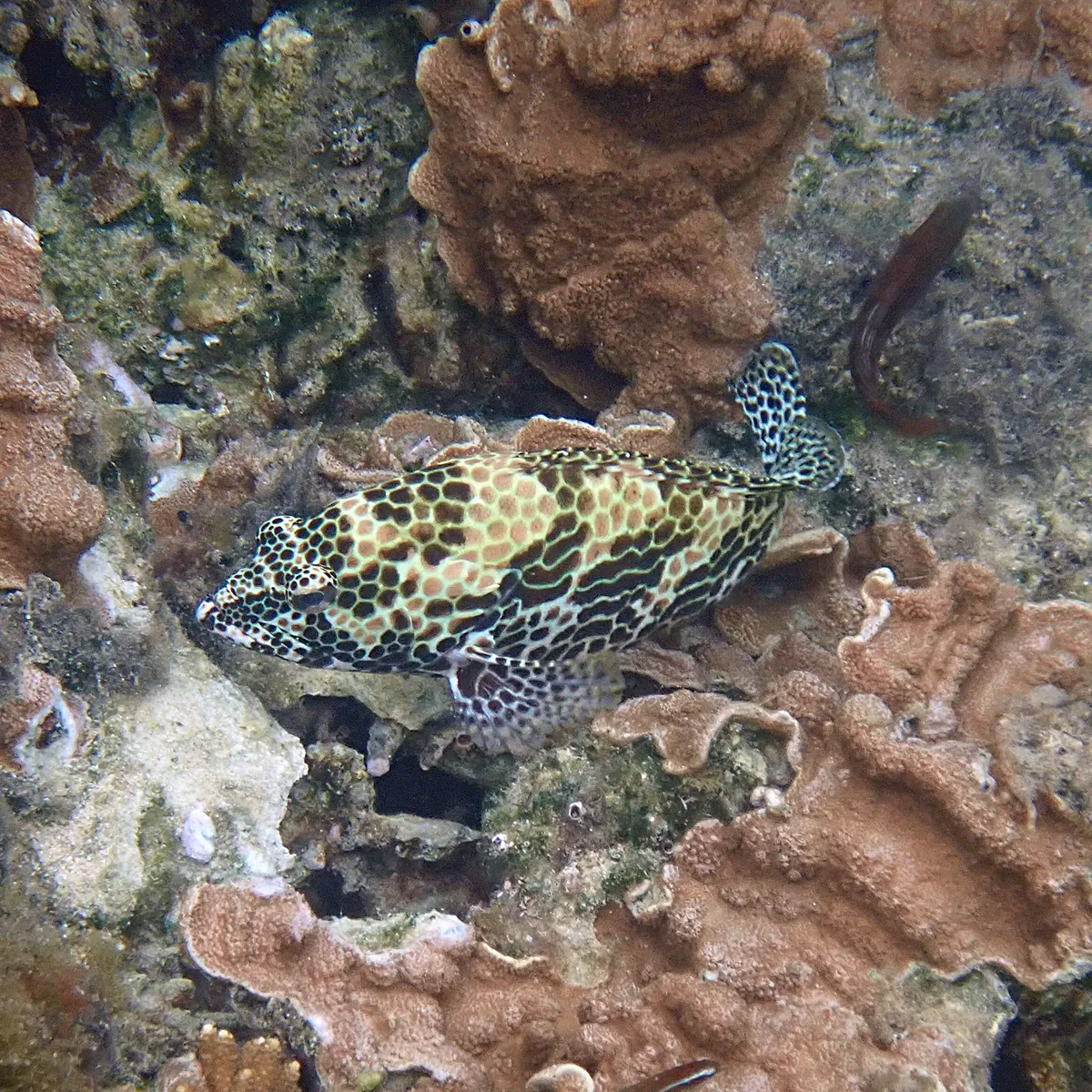
The honeycomb grouper is one of the smaller groupers, reaching about 32 cm. It is a stocky, oval fish with a rounded tail and a lower jaw that sticks out past the upper one. It is one of the most common small groupers of the Indo-Pacific and sits still on the bottom for long periods, so it is easy to approach.
Also known as: honeycomb cod, honeycomb grouper, wire-netted reefcod, honeycomb sea bass, rockcod, wirenetting cod, honeycomb rock-cod, dwarf spotted grouper, coral cod, common birdwire rockcod, birdwire rockcod, wire-netting cod, honeycombe grouper, dwarf spotter grouper, honeycomb rock cod, honeycomb grouper, wire-netted reefcod, reef cod, black-spotted rock-cod, honeycomb cod, wire-netting rock-cod, dwarf spotted rockcod, honeycomb rockcod, dwarf-spotted rockcod, birdwire rockcod, wire-netting rock-cod, wire-netting cod, honeycomb rock-cod, dwarf spotter grouper, dwarf spotted rockcod, black-spotted rock-cod, common birdwire rockcod
Look for the net. Small brown six-sided spots with pale gaps cover the whole fish, and, crucially, they run onto the fins and the rounded tail as well as the body. A grouper with the pattern carried right out to the fin edges, on shallow reef, is this species. You do not need to judge its size.
The body is ochre to light brown and is covered with small brown six-sided spots separated by pale gaps, so the fish looks as though it is wrapped in netting. The spots line up along faint darker diagonal bands. The same spotting continues onto all the fins, including the rounded tail. The eyes are round and bulging, with red-brown to black pupils.
It lives across the tropical Indo-Pacific, on coastal and offshore reefs, in shallow lagoons and on semi-protected seaward reefs. Most sightings are shallower than 20 m, though it goes down to about 50 m. Young fish shelter in thickets of branching staghorn coral.
Adults live alone and hold a spot on the reef rather than roam. They hunt fish, crabs, shrimps and cephalopods such as small octopus and squid, and they take more fish as they grow older and larger. Like other groupers in its genus, it starts adult life as a female and can later turn into a male; this change usually happens outside the breeding season and can be triggered by age, growth, body size or by the other fish around it.
Spawning in this grouper is tied to the moon. It breeds in the first months of the year, and each spawning starts a few days before the full moon and runs for only a few days, so the same reef can look empty of courting fish one week and busy the next.
Describe what you saw and we name it, then keep every species you find in your Oceandex.