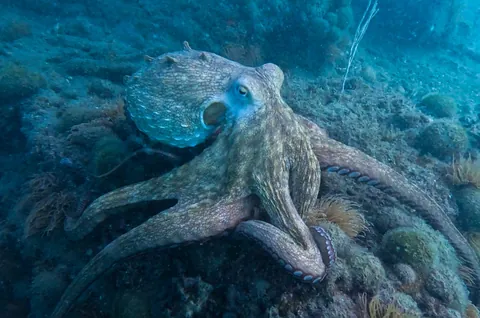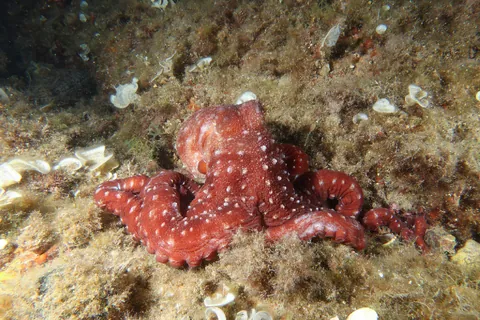
Atlantic White-spotted Octopus
Pinnoctopus macropus
Hapalochlaena lunulata
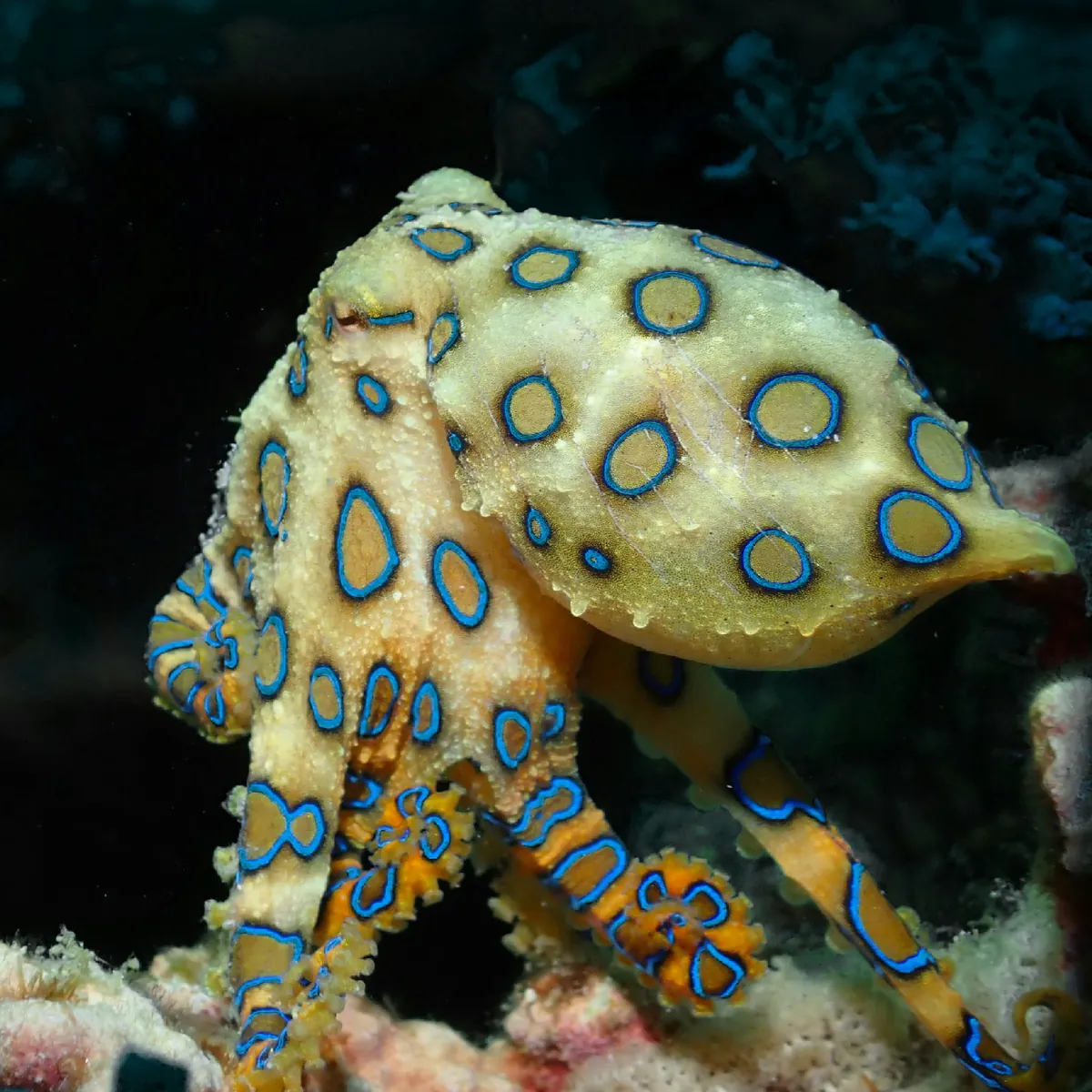
The greater blue-ringed octopus is a tiny, quiet-looking animal that hides a warning few divers should ignore: dozens of electric-blue rings that flash bright when it feels threatened.
Also known as: blue-ringed octopus, hapalochlaena lunulata, hapalochlaena lunulata (quoy & gaimard, 1832)
Other blue-ringed octopus species share the same reefs and warning colours. This species can be told apart by its rings, which are noticeably larger than those of its relatives.
This octopus grows to no more than 12 cm, arms included, with a flattened, pointed head and short arms. Its base colour shifts from yellow ochre to light brown or pale white depending on its surroundings and activity. Many blue rings, each bordered in black, are scattered across its skin, standing out sharply against the base colour.
It lives on the seabed across the tropical and subtropical Indo-West Pacific, from Sri Lanka to the Philippines and from Australia to Papua New Guinea, the Solomon Islands, and Vanuatu, down to about 20 m. It favours shallow mixed ground of rubble, reef, and sand, sheltering alone in a burrow marked by a scatter of empty shells outside the entrance.
It spends most of its time hidden in its burrow, only coming out to hunt or find a mate. When threatened, it flashes its blue rings as a warning, a brief display that signals danger to anything nearby.
This octopus makes its own deadly nerve poison, called tetrodotoxin, but a small change in its own nerve cells stops that poison from harming its own body.
Describe what you saw and we name it, then keep every species you find in your Oceandex.