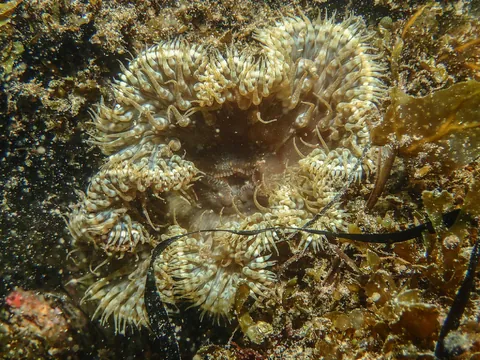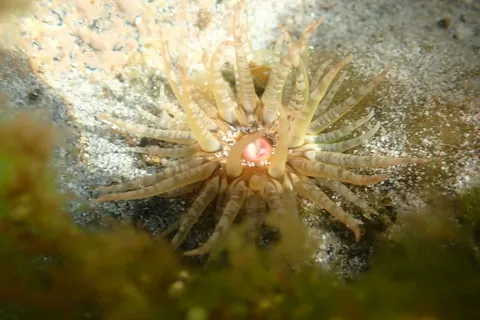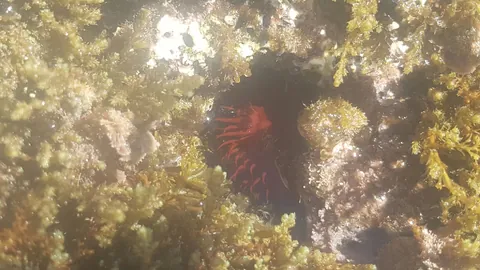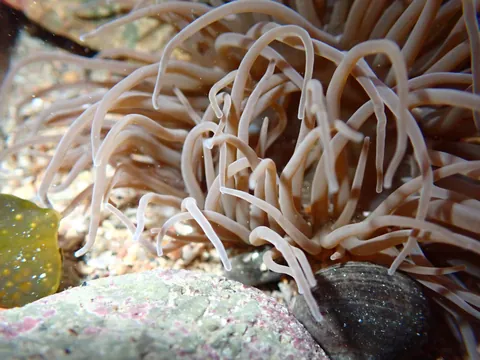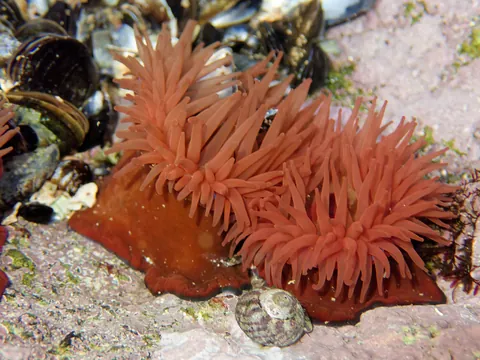
Atlantic Beadlet Anemone
Actinia equina
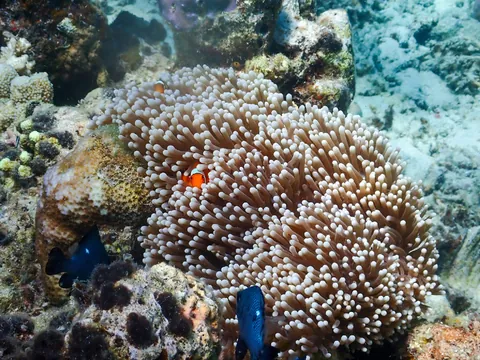
Condylactis gigantea
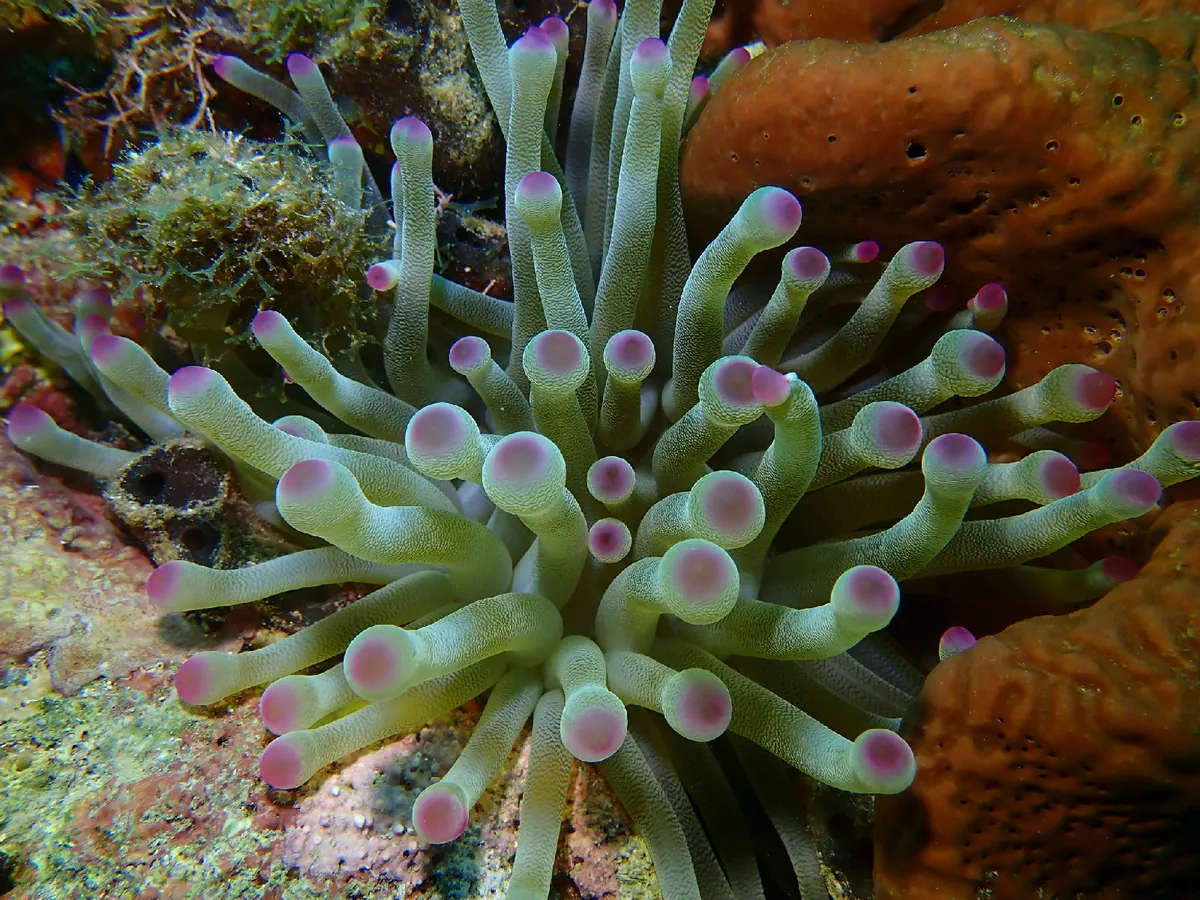
The giant anemone looks more like a plant than an animal, its crown of long tentacles swaying gently in the current. Look closer and it reveals itself as a skilled predator, and a landlord to a whole community of reef life.
Also known as: pink-tipped anemone
Several large Caribbean anemones look alike underwater. This one is best told apart by its tentacle tips, which are often coloured pink or purple, though on some individuals they simply fade paler than the rest of the tentacle.
This is a large, column-shaped anemone whose body can be white, light blue, pink, orange, pale red, or light brown. Its mouth is ringed by 100 or more long, tapering tentacles, usually shades of brown or green, with a base firmly fixed to the reef or rock below.
It lives wedged into crevices of rock walls and attached to rock, shell, or coral, on both forereef slopes and in shallow lagoons, and it also turns up on mangrove roots. It favours water with strong, steady seawater flow rather than areas cut off at low tide.
When threatened, it draws its tentacles inward and shrinks its body, making itself a smaller target. The tentacle tips carry stinging cells called nematocysts that inject a paralysing toxin, a defence painful enough to deter most predators. It also acts as a cleaning station, hosting cleaner shrimp and small fish that other reef fish visit to be groomed, and it can be aggressive toward other invertebrates that encroach on its space.
It is a carnivore that catches fish, mussels, shrimp, zooplankton, and marine worms. Its stinging tentacles paralyse prey, then draw it to the mouth to be swallowed whole.
Unlike most sea anemones, which stay rooted to one spot for life, this species can slowly crawl across the seabed using its muscular base.
Describe what you saw and we name it, then keep every species you find in your Oceandex.