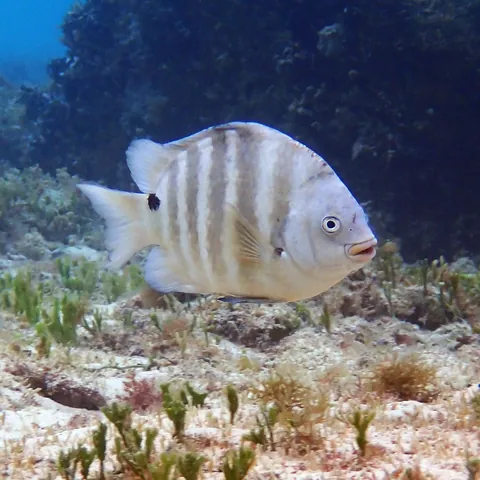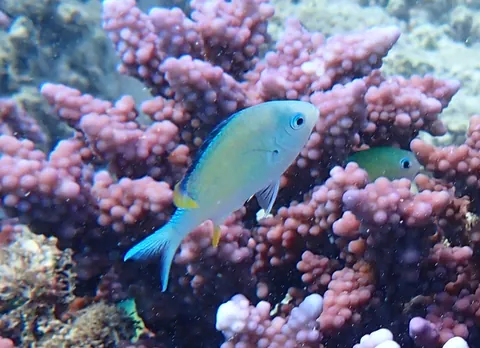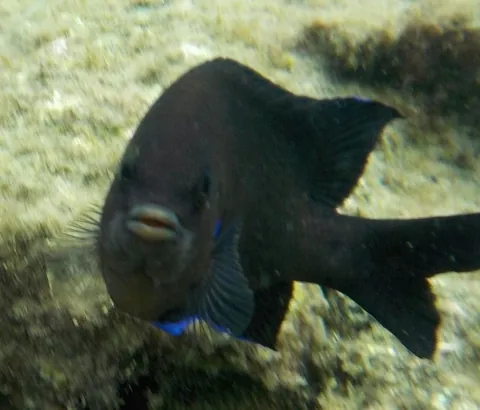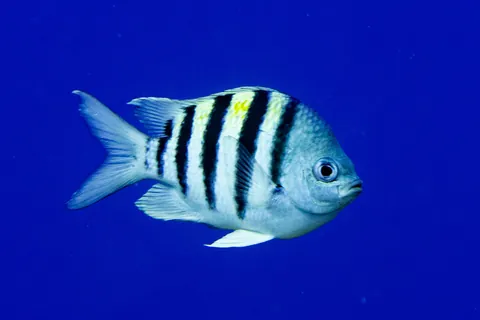
Atlantic Sergeant Major
Abudefduf saxatilis
Hypsypops rubicundus
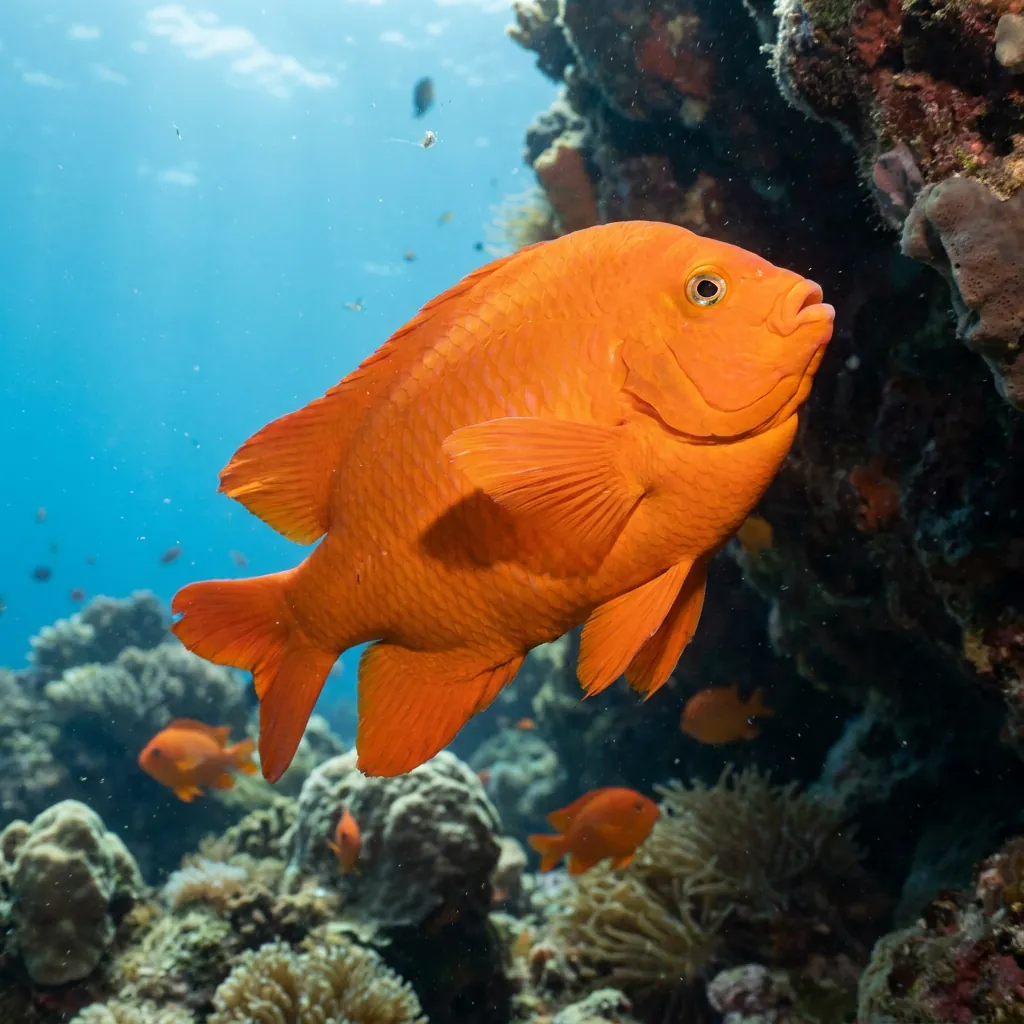
The Garibaldi is the largest damselfish, a deep-bodied, solid orange fish that guards its own patch of rocky reef off the California coast. Adults reach up to 30 cm and are hard to miss against the kelp and rock.
Also known as: garibaldi, hypsypops rubicundus
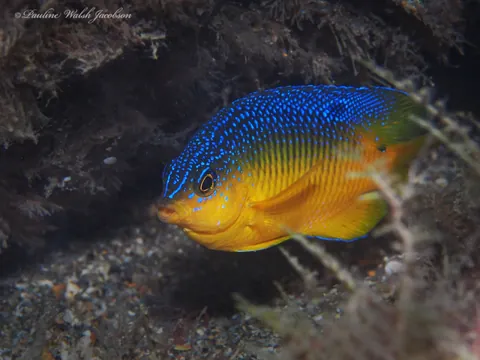
A small orange fish covered in blue spots is not a separate species; it is a Garibaldi juvenile, which loses its spots and turns plain orange as it grows.
Adults are a deep-bodied fish covered in coarse scales, uniformly bright orange all over with no other markings. Males average slightly larger than females, which is unusual for a damselfish. Juveniles look very different: a deeper, more reddish orange, covered in small iridescent blue spots and stripes that fade as the fish matures.
It lives over rocky bottoms on exposed or sheltered coasts with clear water, crevices, and small caves for cover, sometimes among kelp. It stays in water down to about 30 m, from Monterey Bay south to Guadalupe Island, Baja California.
Adults hold and defend a home territory on the reef, chasing off other fish that come too close. During the breeding season, a male clears a nest site within his territory and guards it closely once eggs are laid.
The Garibaldi is a generalist omnivore, picking invertebrates such as polychaete worms, anemones, and sponge fragments off the rocks. It also eats algae, especially fleshy red algae, and will occasionally eat its own eggs.
Breeding runs from around March to July. A male clears a nest site and a female lays bright yellow eggs there, which turn grey after about five days. The male then guards and aerates the eggs until they hatch, 19 to 21 days later.
harmless
The Garibaldi is widespread and common across its range, with no major threats or signs of population decline.
Garibaldi eggs hatch on a strict daily clock, bursting open within two hours after sunset, likely to help the larvae slip past predators under cover of darkness.
Describe what you saw and we name it, then keep every species you find in your Oceandex.