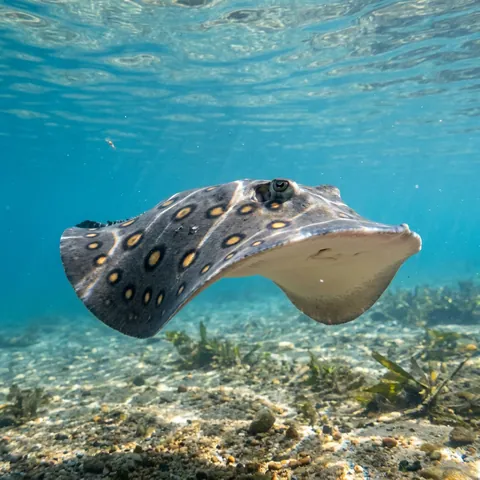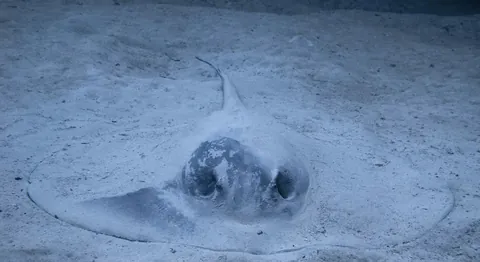
Caribbean Whiptail Stingray
Styracura schmardae
fresh_stingray
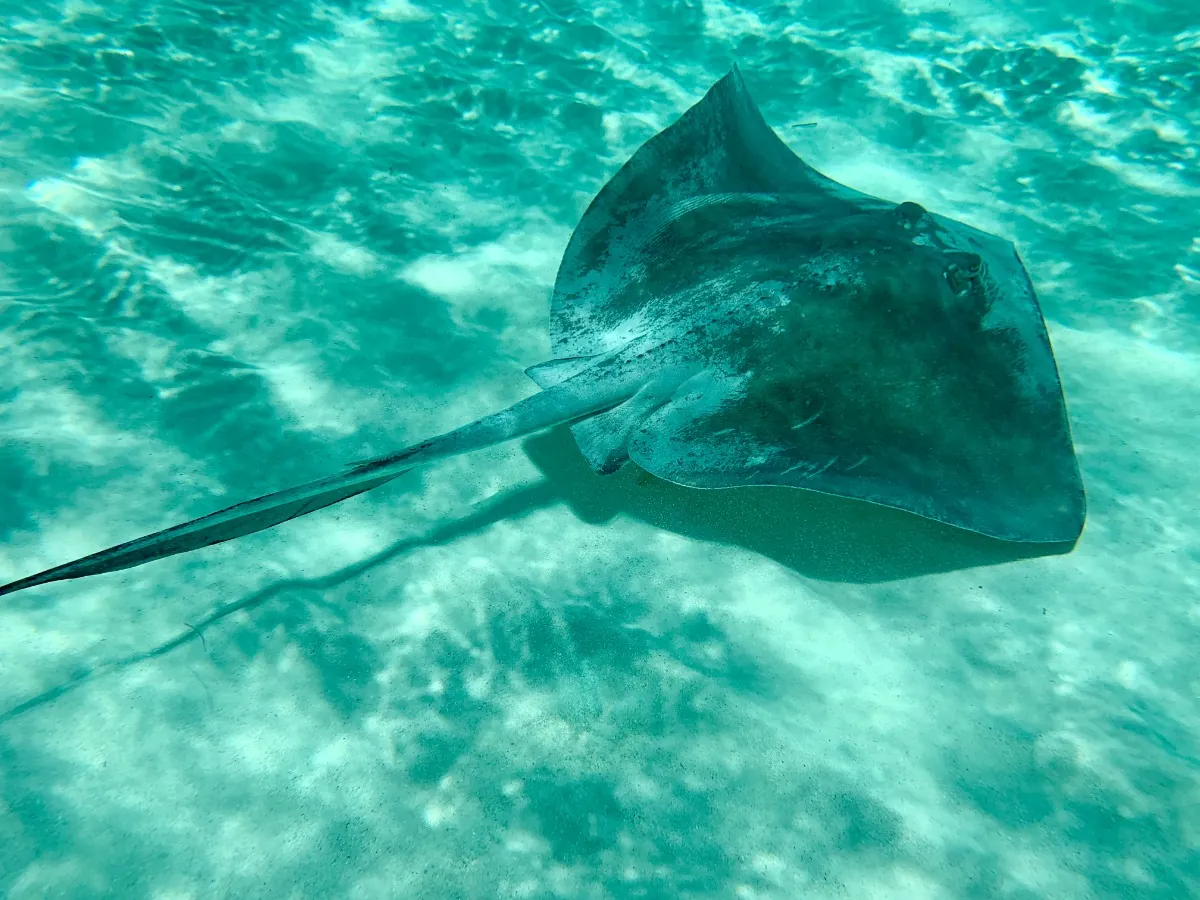
Freshwater stingrays are round, flat rays that live in South American rivers instead of the sea. In this app the group includes the Peacock River Stingray and the Caribbean Whiptail Stingray.
Look for the round, flat disc shape typical of stingrays, found here in rivers rather than the sea. Tell members apart mainly by the pattern of spots or mottling on the back and by overall size.
These rays have an almost round, flat disc. Sizes vary a lot, from small species under a foot wide to species over a metre and a half wide. Most are brownish or greyish with spotted or mottled patterns, though young rays can look different from adults.
Freshwater stingrays live in rivers of tropical and subtropical South America, from the Caribbean coast down to Argentina. They are found in many kinds of freshwater, from still lakes to fast-flowing rivers, and over sand or rock bottoms.
These rays are generally calm and not aggressive, using the venomous stinger on their tail only in self-defence. Some species are active by day and others by night.
These rays hunt insects, worms, snails, crabs, and fish on the river bottom. Some species eat almost anything they find, while others specialise in one type of prey, such as snails or crabs.
Males have a pair of claspers used for mating, and females give birth to live young rather than laying eggs. Depending on the species, pregnancy lasts 3 to 12 months and litters have between 1 and 21 young.
venomous tail spine — give a wide berth; never step on or handle
This is the only family of rays that lives mainly in fresh water, spending its whole life in rivers rather than the sea.
Describe what you saw and we name it, then keep every species you find in your Oceandex.