Northern Elephant Seal
Mirounga angustirostris
sea_elephant
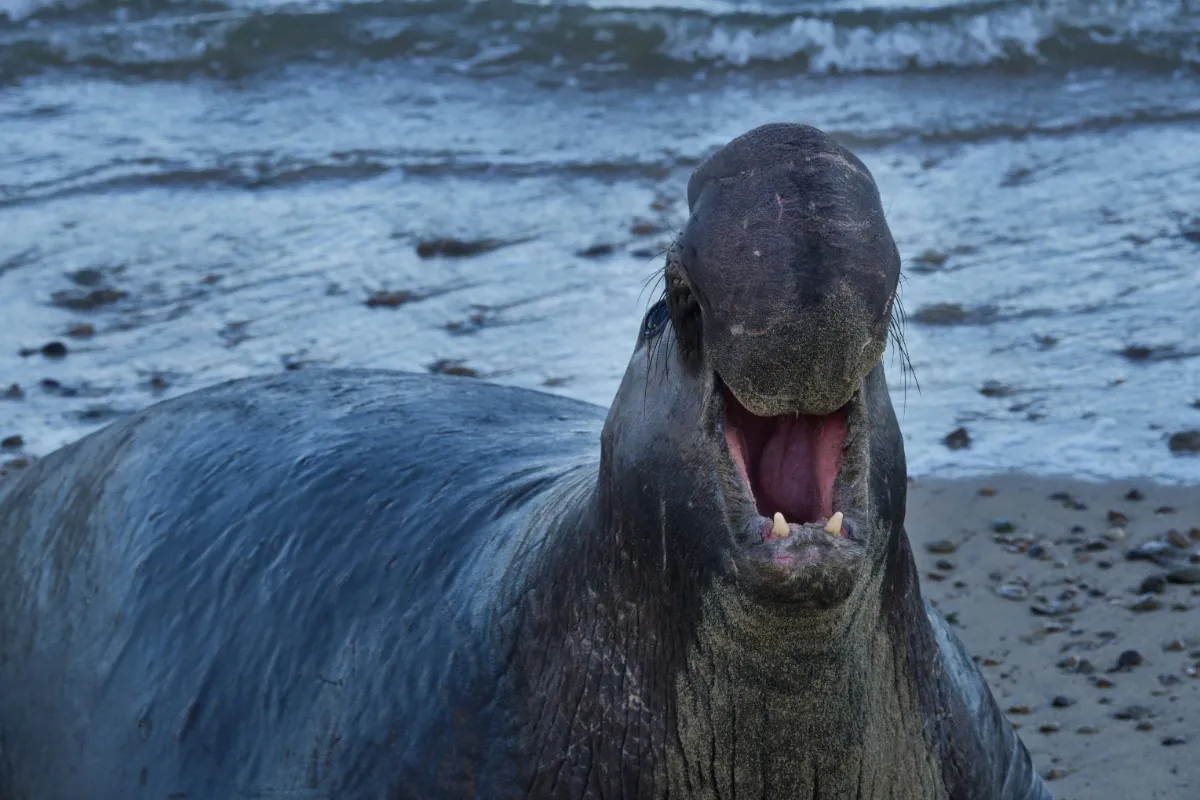
Elephant seals are huge, deep-diving seals named for the male's large trunk-like nose. They spend most of their lives far out at sea, only coming ashore to breed and moult.
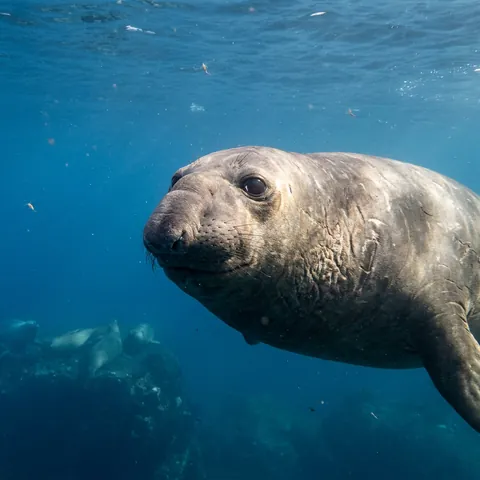
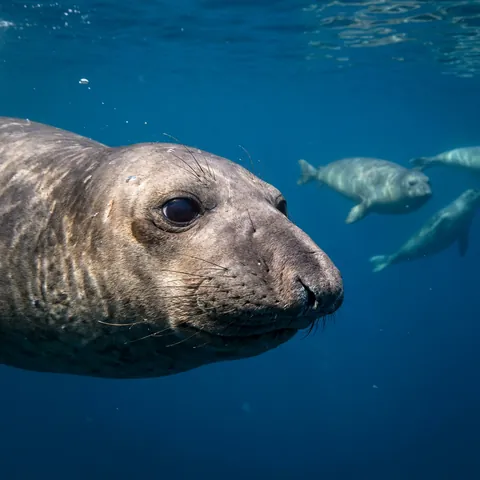
Look for the huge size, small flippers, and lack of visible outer ears; adult males are further marked by the large trunk-like nose. Sex and age are the main way to tell individuals apart, since males, females, and pups differ greatly in size.
Elephant seals have no outer ear and small flippers, which make them fast in water but clumsy on land. Males are far larger than females, up to ten times heavier, and grow a large drooping nose that gives the group its name. Newborn pups can weigh up to 36 kg and reach 122 cm long.
Elephant seals live mainly in the open ocean, spending about 90% of their lives underwater far from shore. They come ashore only to breed and to moult, resting in groups on beaches called haul-outs.
Elephant seals dive very deep, regularly reaching 300 to 600 metres and sometimes over 1,500 metres, while hunting for food. They can hold their breath for more than 100 minutes and rest at the surface for only a few minutes between dives.
Elephant seals hunt skates, rays, squid, octopuses, eels, small sharks, and large fish.
Males fight for control of the beach and gather large groups of females called harems. Mothers give birth quickly, then fast while nursing their pup for about a month before mating again and returning to sea.
generally harmless (breeding males are large and can be aggressive on land)
Elephant seals can hold their breath for more than 100 minutes, longer than any other mammal apart from whales and dolphins.
Describe what you saw and we name it, then keep every species you find in your Oceandex.