Black Scorpionfish
Scorpaena porcus
Scorpaenopsis diabolus
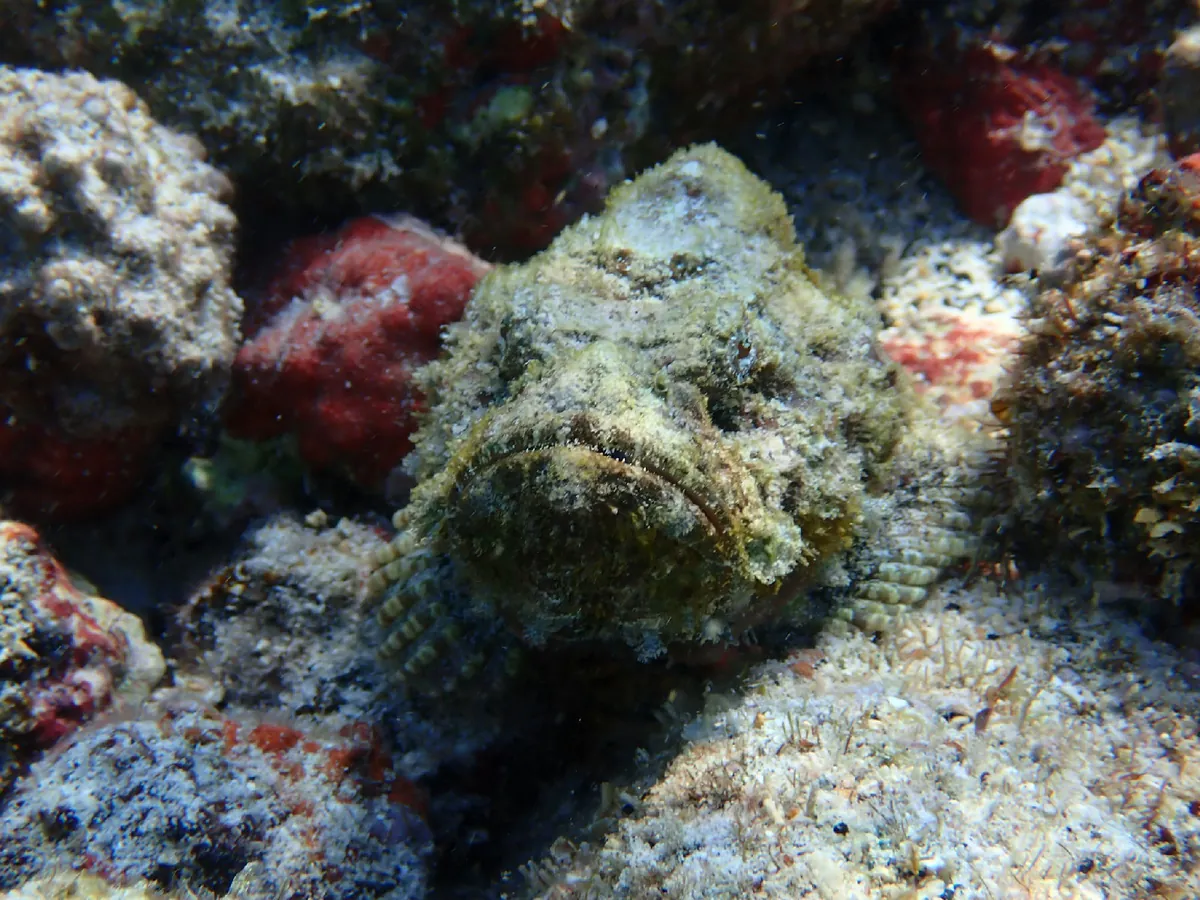
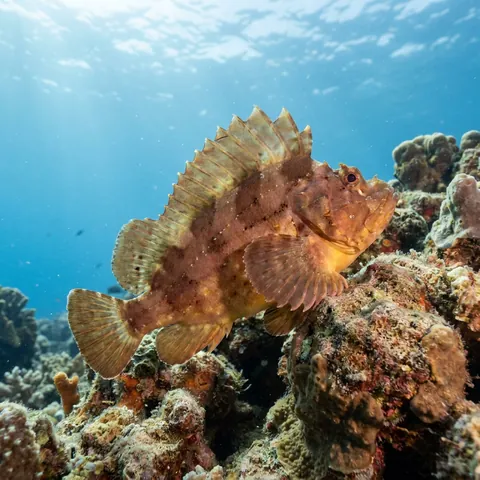
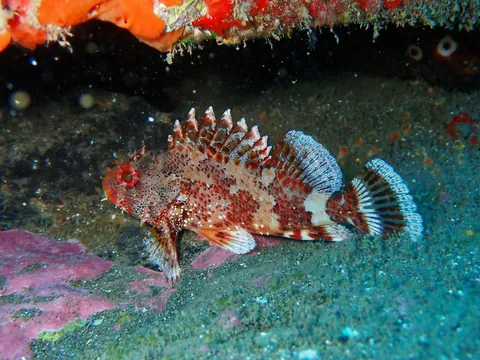
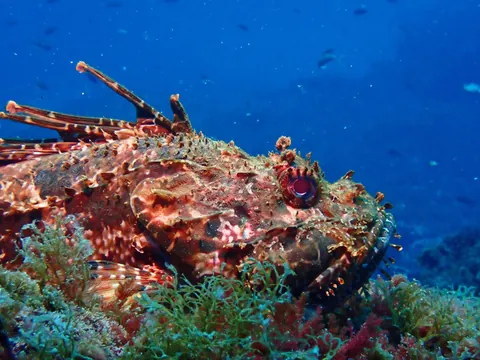
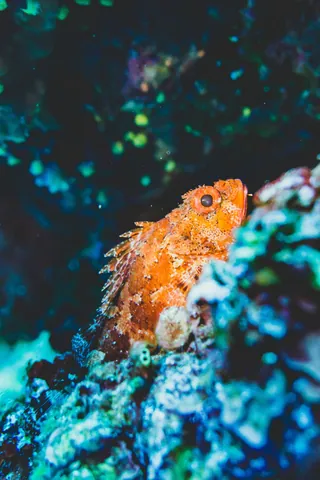
A rock that isn't a rock: this scorpionfish's lumpy, camouflaged body lets it vanish among stones and rubble until something edible swims too close.
Also known as: false stonefish
It is often mistaken for the more dangerous reef stonefish. The best confirming clue is the flash of orange, black, and white it reveals on the underside of its pectoral fins when disturbed - worth checking before assuming it is the stonefish and giving it a wide berth either way.
It has a broad head with a wide mouth, a humped back, and a body that tapers toward the tail, growing up to 30 cm. The skin is rough, covered in low bumps, spines, and small fleshy tassels. Colouring is a mottled mix of grey, white, and reddish-brown blotches that blends into stone and coral. The undersides of its broad pectoral fins are patterned in orange, black, and white, which it can flash open as a warning.
It sits on the seabed among rubble, weed-covered rocks, or rock encrusted with coralline algae (a hard, pink, stony seaweed), on reef flats, in lagoons, and on seaward reef slopes. It is not commonly seen.
This is a bottom-dwelling ambush predator that lies still, sometimes half-covered in sediment, waiting to grab passing invertebrates and small fish. If disturbed, it flares its pectoral fins open as a warning, and its venomous dorsal spines can deliver a painful sting.
Its species name, diabolus, means "devil" - a nod to its venomous spines. Nineteenth-century naturalists recorded that fishing communities on Indonesia's Molucca Islands avoided the fish as a bad omen, after its sting was blamed for killing two people.
Describe what you saw and we name it, then keep every species you find in your Oceandex.