Devil ray
Mobula mobular
devil_rays_g409
Devil rays are the smaller cousins of manta rays: flat-bodied filter feeders with wing-like fins that often travel in schools through open water. In this app the group includes the devil ray of the Mediterranean and East Atlantic, the sicklefin devil ray, and Munk's pygmy devil ray.
Also known as: devil ray, mobula, mobula ray, pygmy devil ray, sicklefin devil ray
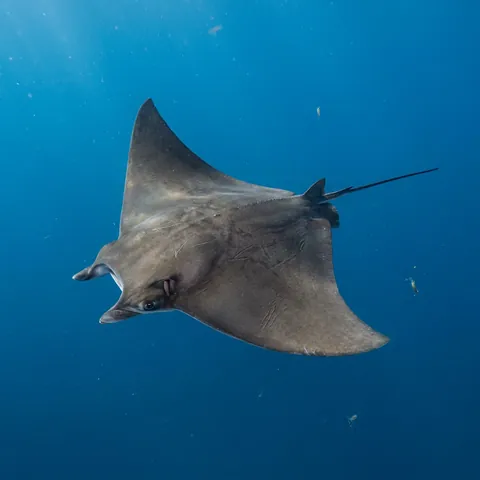
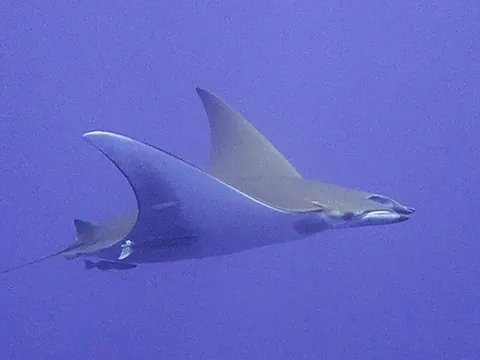
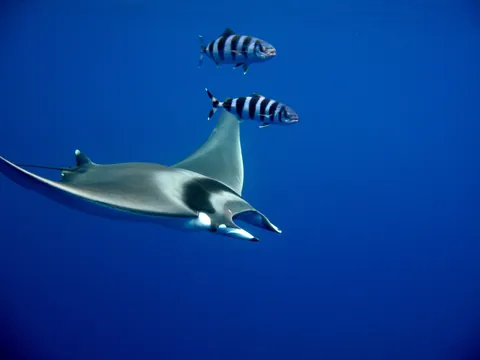
Look for the flat, diamond-shaped body, pointed wing-like fins and horn-shaped fins beside the mouth. Compared with manta rays, devil rays are smaller and their mouth sits on the underside of the head rather than at the front.
Like mantas they have a broad, diamond-shaped body with pointed, wing-like fins and two horn-shaped fins beside the mouth, but they are generally smaller, from about 1 metre across in the pygmy devil ray to over 3 metres in the larger species. Most are dark blue, grey or black on top and white underneath.
Devil rays live in warm and temperate seas, mostly in open water near the surface, from the Mediterranean and the Atlantic to the Pacific. Divers usually meet them passing by in blue water or near offshore reefs and seamounts.
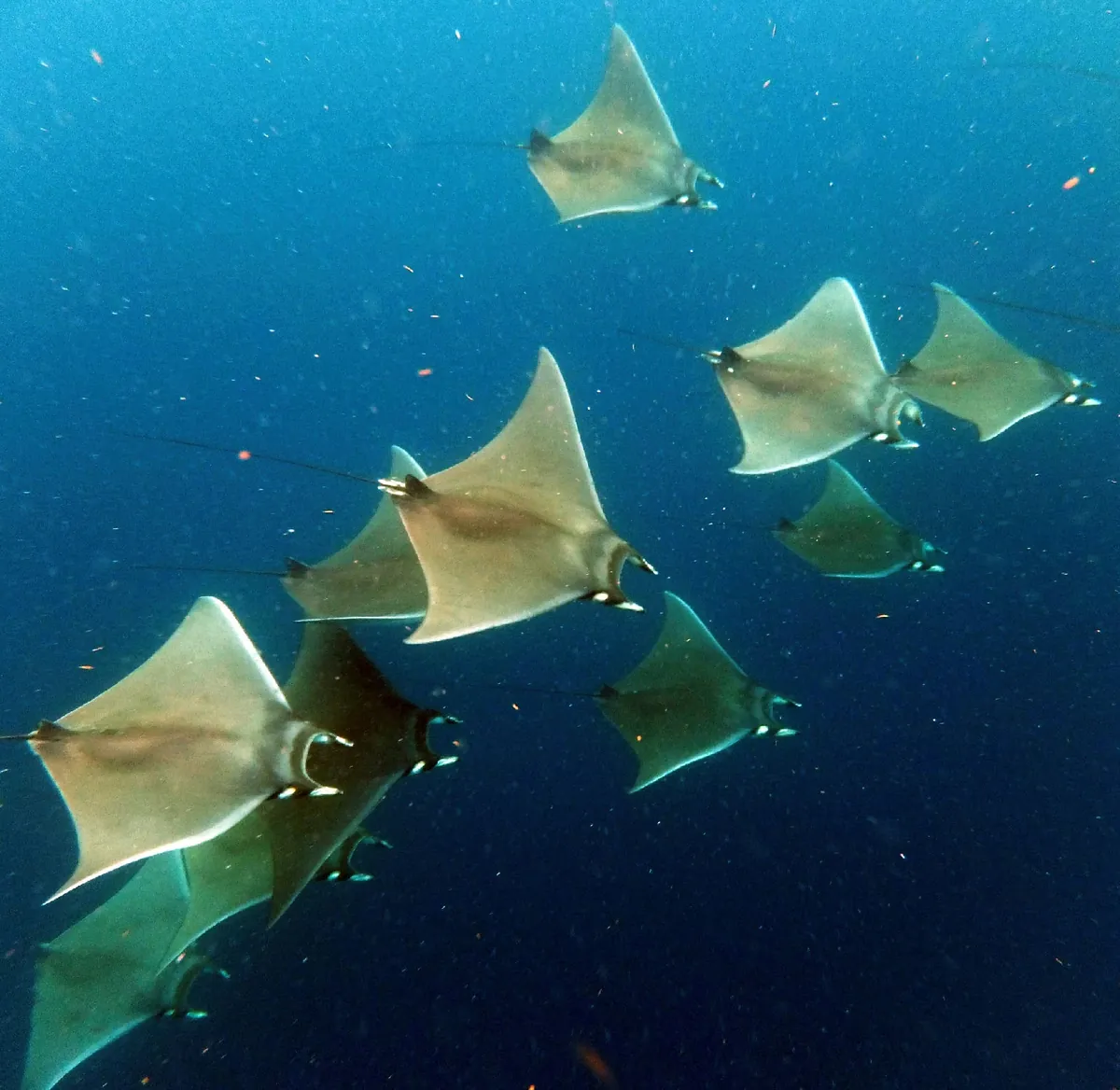
Devil rays often travel and feed in groups, sometimes in schools of hundreds, and are known for leaping high out of the water and landing with a loud slap.
Devil rays filter plankton such as krill and small shrimp from the water, and some also eat small schooling fish. They unroll the horn-shaped fins beside the mouth to funnel food in as they swim.
Munk's pygmy devil rays gather in schools of thousands in the Gulf of California and leap out of the water, earning them the nickname "flying mobulas".
Describe what you saw and we name it, then keep every species you find in your Oceandex.