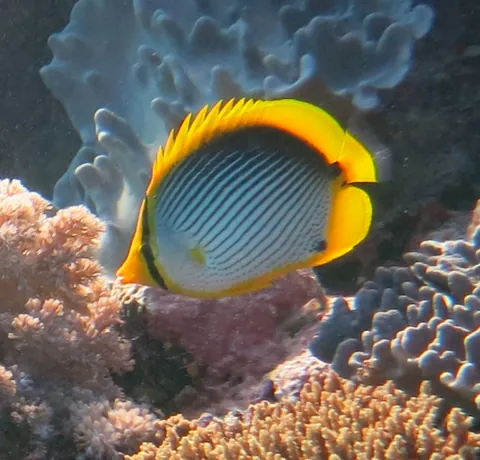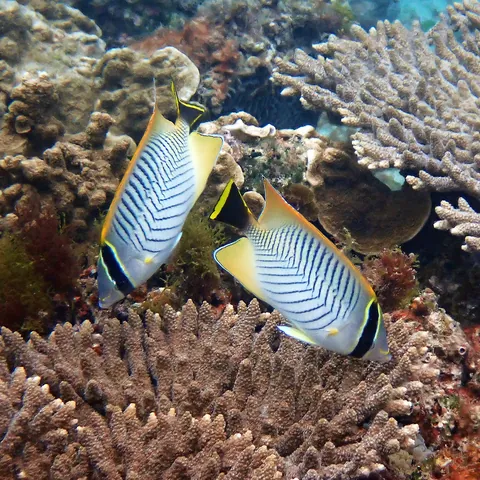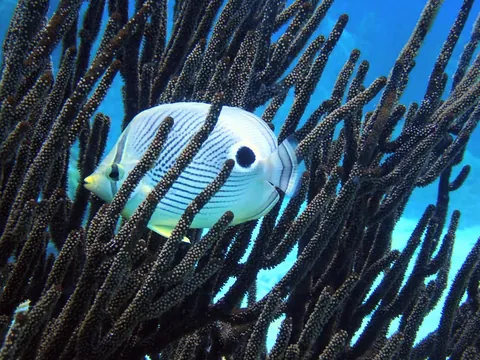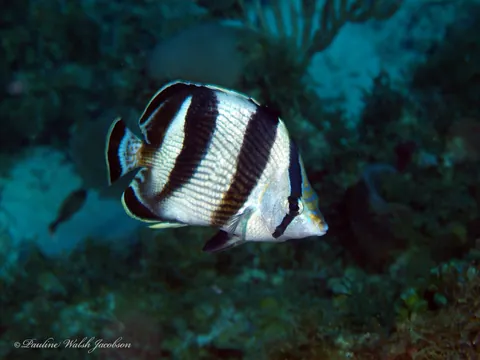
Banded Butterflyfish
Chaetodon striatus
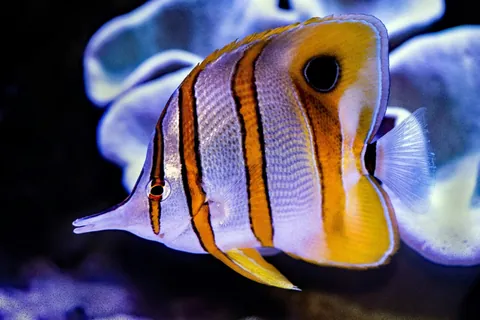
Chelmon rostratus
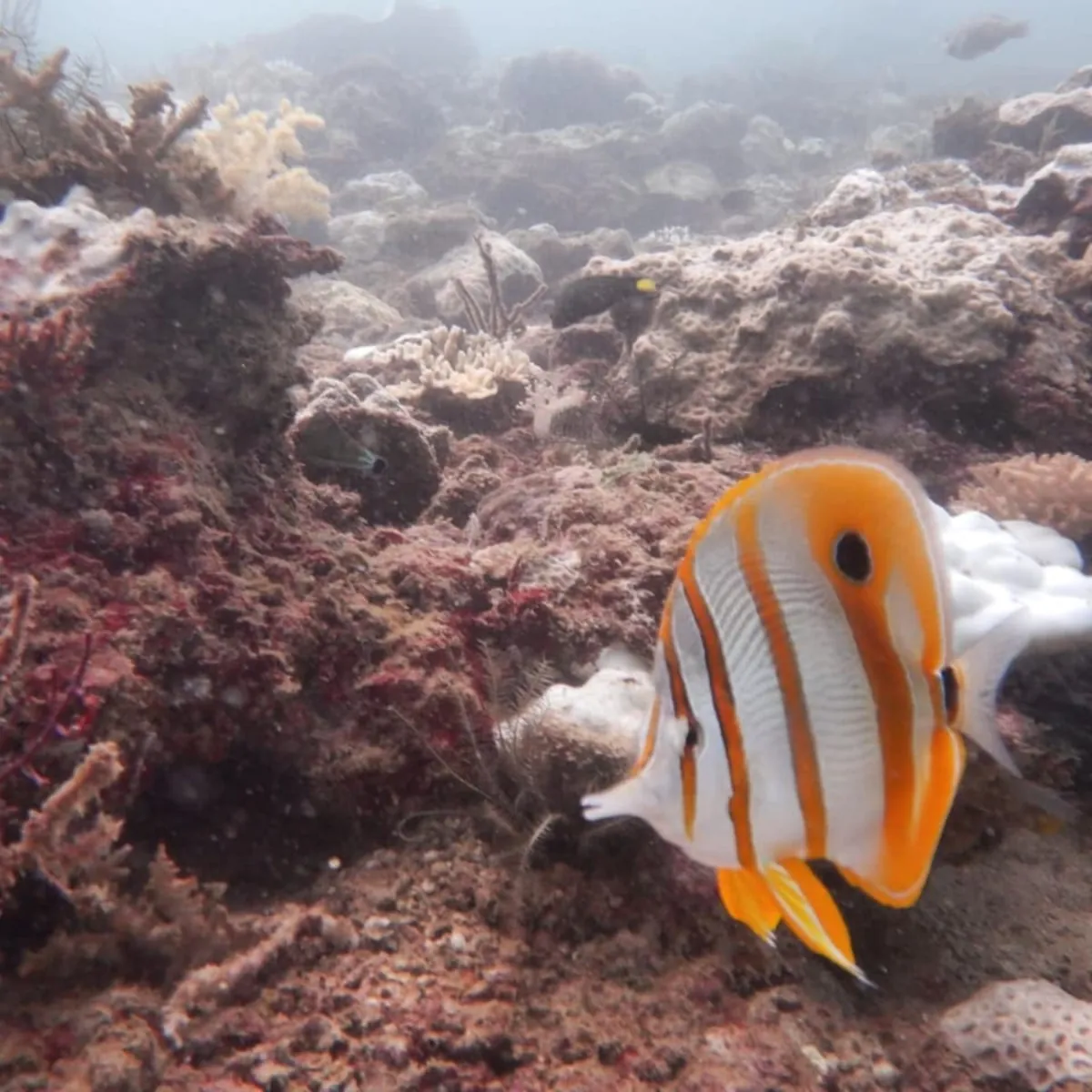
The copperband butterflyfish carries a long, tweezer-like snout for picking prey out of tight cracks in the reef. A false eye on its fin helps confuse anything trying to eat it.
Also known as: angelfish, banded longsnout butterflyfish, beaked butterflyfish, beaked coralfish, breaked coral fish, butterflyfish, chelmon rostratus, copper-banded butterflyfish, copperhand butterflyfish, longnose butterflyfish
This species closely resembles Chelmon marginalis, which shares the same long, slender snout. Check the dorsal fin: only the copperband carries a dark false eye-spot there.
This butterflyfish has a tall, flat, deep body that looks taller than it is long, growing up to 20 cm. Its white body carries four orange-yellow bars edged in black: one across the eye, two across the front half of the body, and a broader one further back. A dark band also crosses the base of the tail. The fins are yellow-orange, and a dark eye-spot sits on the rear of the dorsal fin, more noticeable than the fish's real, dark eye. Its snout is long and slender. Juveniles look much the same as adults.
It lives on coral reefs and rocky shorelines, and also turns up in estuaries and silty inner reefs, at depths from 1 to 25 m. It is usually seen alone or in a pair, holding a territory on the reef.
harmless
Aquarists often buy this fish hoping it will clear out pest glass anemones, but that is actually its least favourite food. Left with nothing else to eat, it will starve rather than settle for a diet of anemones alone.
Describe what you saw and we name it, then keep every species you find in your Oceandex.