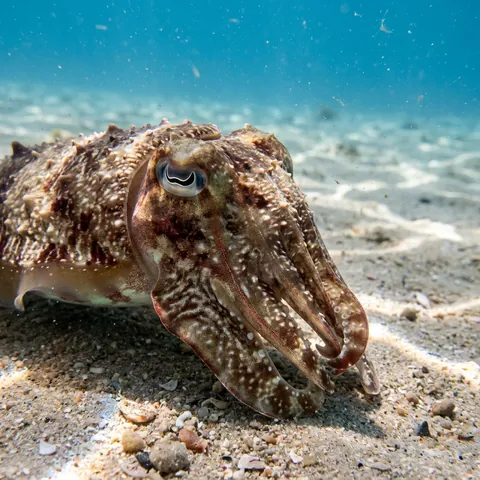
Australian Giant Cuttlefish
Ascarosepion apama
Sepia officinalis
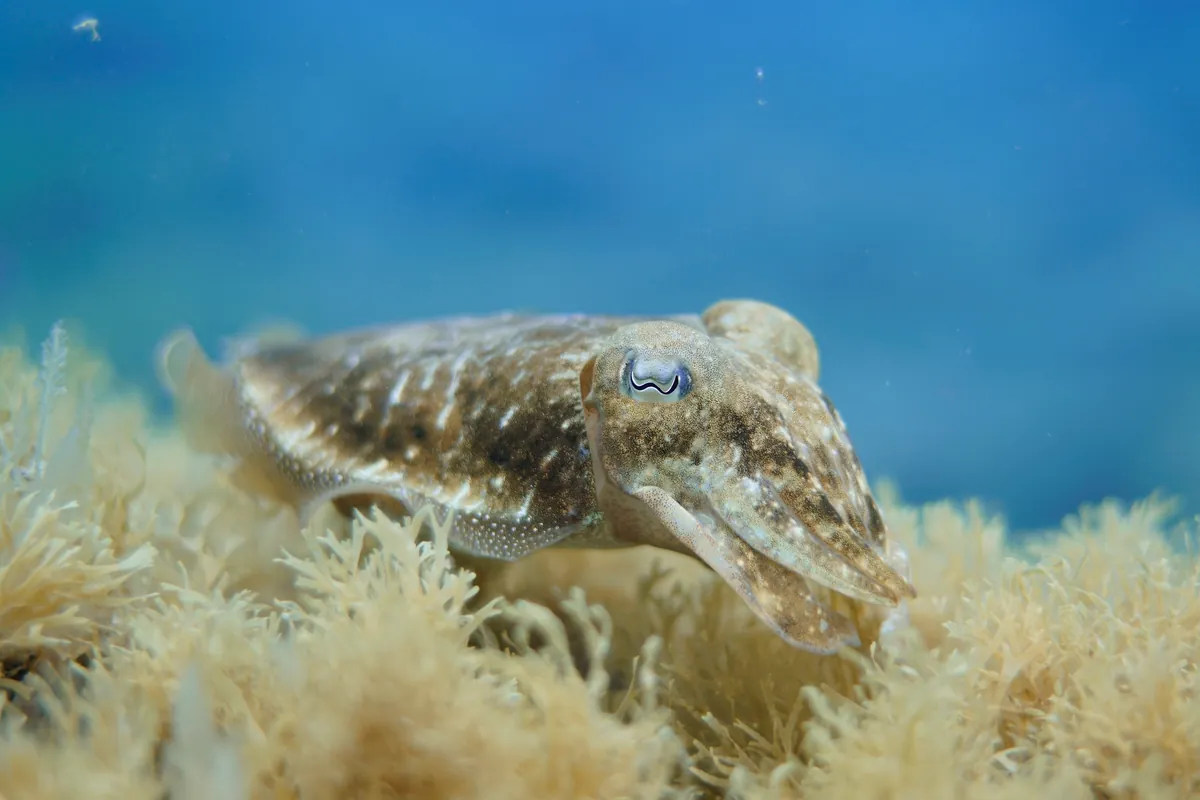
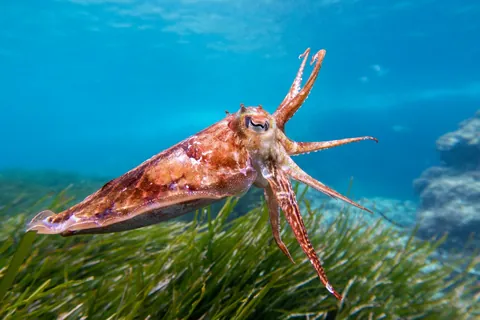
The common cuttlefish spends the day hidden and the night hunting, and can grow to nearly half a metre and 4 kg, making it one of the biggest cuttlefish species you might meet on a dive. It is also a master of disguise, able to shift its skin colour and pattern almost instantly.
Also known as: european common cuttlefish, sepia officinalis, sepia officinalis linnaeus, 1758
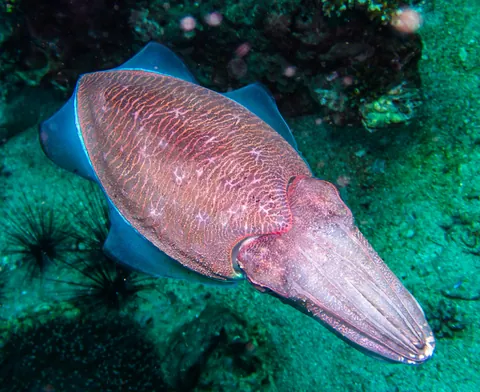
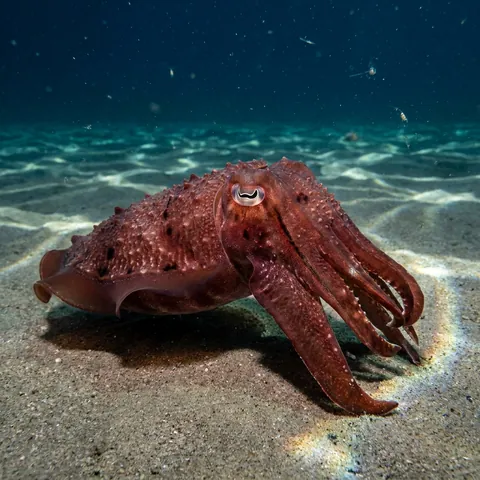
This cuttlefish has a broad, flattened mantle, the main body behind the head, which holds an internal shell called the cuttlebone. It has two large, well-developed eyes, eight arms around its mouth for holding and handling prey, and two longer feeding tentacles it shoots out to grab prey from a distance. Its mouth is a hard beak used to break food apart.
It lives over sandy or muddy seabeds close to shore, from the shallows down to considerable depth, and can tolerate brackish water where rivers meet the sea. Many move inshore in spring and summer to breed, then head back out to deeper offshore grounds in autumn and winter.
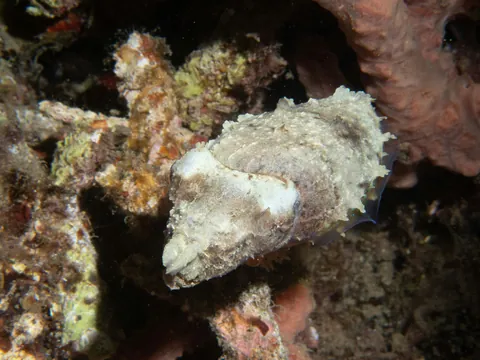
By day this cuttlefish usually stays buried in the sediment and inactive. At night it becomes an active hunter, ambushing prey from cover. Its main defence against predators is camouflage: it lies still and matches its surroundings, and if spotted, it jets away using a water-powered siphon and can release a cloud of ink to cover its escape.
This is a carnivorous hunter that eats crustaceans such as crabs and shrimp, small bottom-dwelling fish, and molluscs like clams and snails. When other prey is scarce, it will also eat other cuttlefish.
In one study, cuttlefish embryos that were shown a certain type of prey animal, such as a crab, before hatching grew up to prefer hunting that same prey over their usual choice, shrimp, showing they can learn what to hunt before they are even born.
Describe what you saw and we name it, then keep every species you find in your Oceandex.