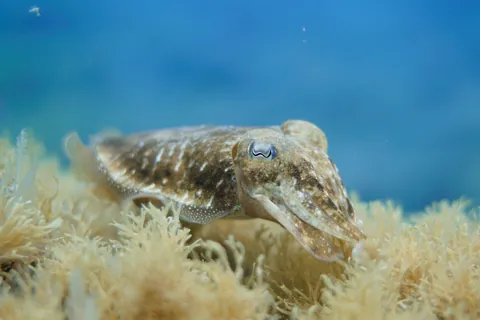
Common cuttlefish
Sepia officinalis
Ascarosepion apama
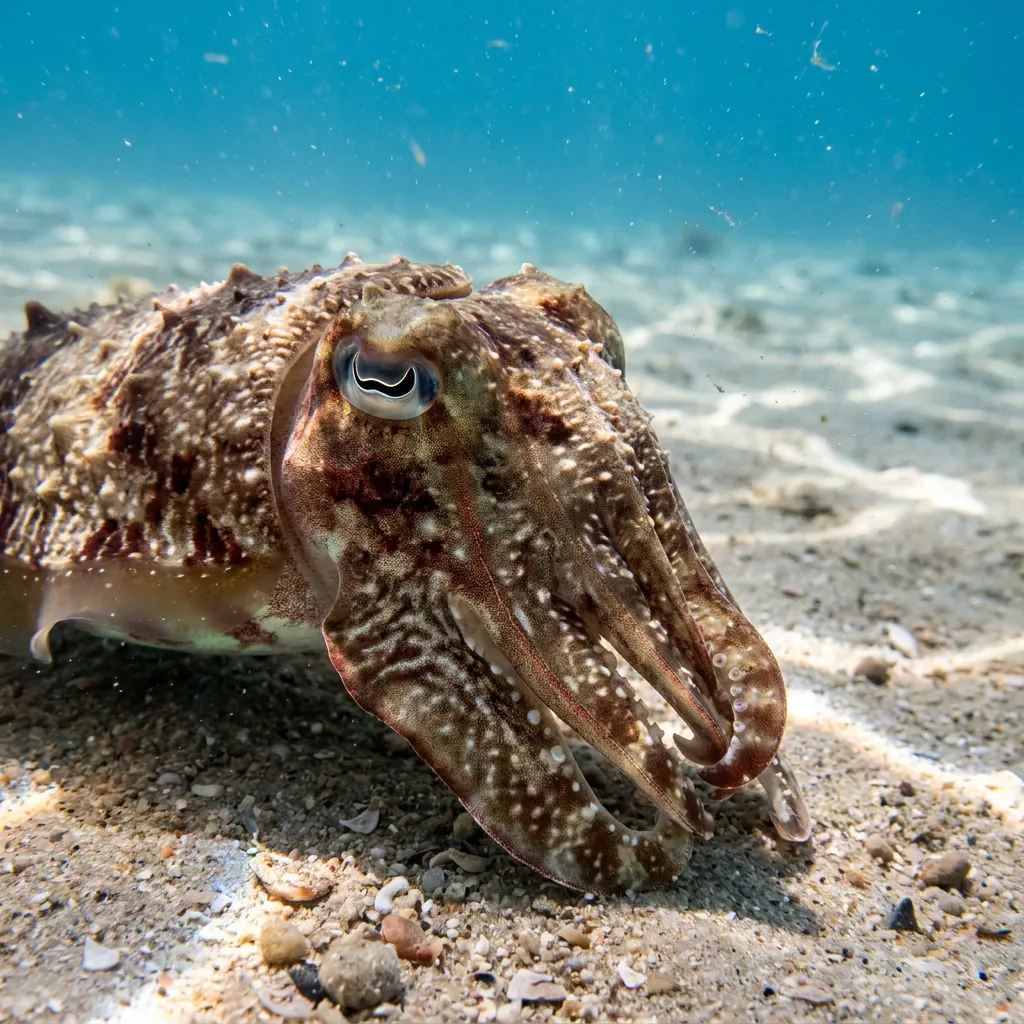
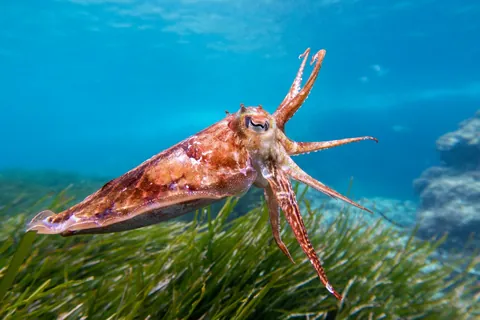
The Australian giant cuttlefish is a master of disguise. It can flash through a rainbow of colours and patterns in an instant. Each winter it gathers in one of the ocean's strangest breeding events.
Also known as: giant australian cuttlefish, giant cuttlefish, Sepia apama
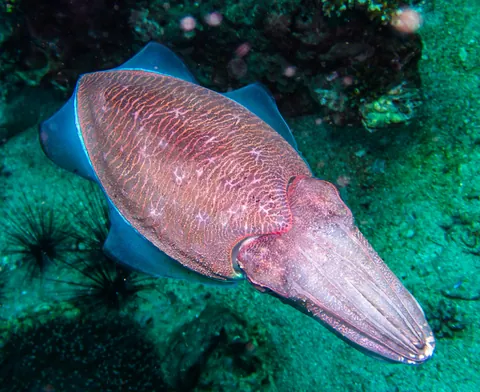
It is the biggest cuttlefish species in the world. Where cuttlefish of very different sizes overlap, its sheer size alone sets it apart from smaller reef cuttlefish.
Like other cuttlefish, it has eight arms and two longer feeding arms called tentacles. Its blood is blue, and it has three hearts. Special skin cells called chromatophores let it change colour almost instantly. It can shift between a mottled, hidden look and bold, flashing patterns.
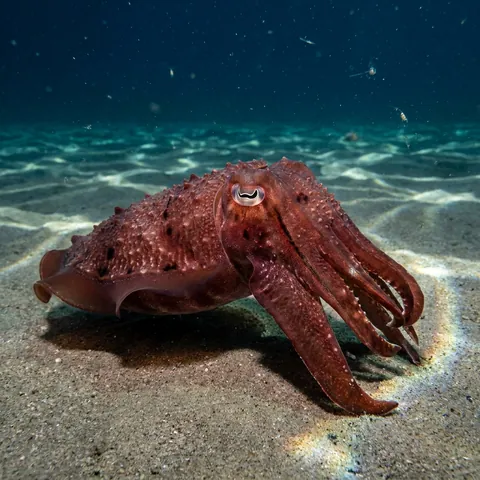
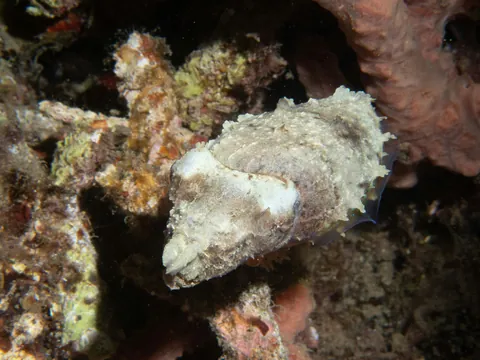
It rests on the seabed by day and hunts crustaceans, such as crabs and shrimp, and fish. It uses its colour-changing skin both to hide from predators and to send signals to other cuttlefish. Most of the time it wears dull, hidden colours. When breeding, males drop this cover and flash bright, fast-changing patterns to court females and warn off rival males.
One group in South Australia's Upper Spencer Gulf gathers each winter for the only known mass cuttlefish breeding event on Earth. Huge numbers pack onto shallow reefs to breed.
Describe what you saw and we name it, then keep every species you find in your Oceandex.