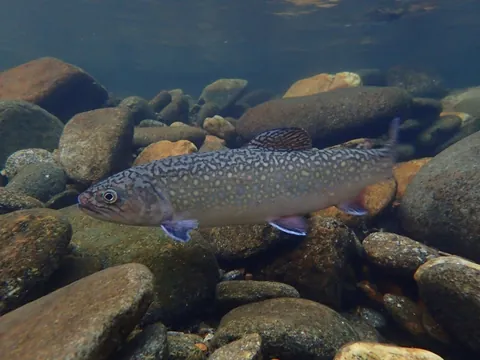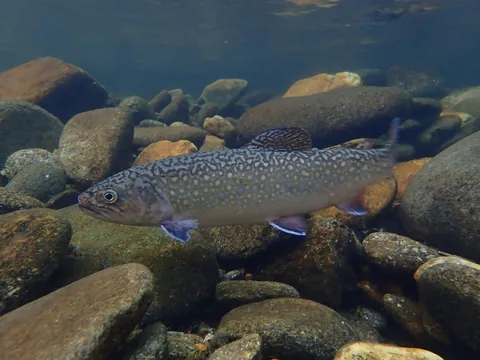
Brook Trout
Salvelinus fontinalis
Salvelinus alpinus
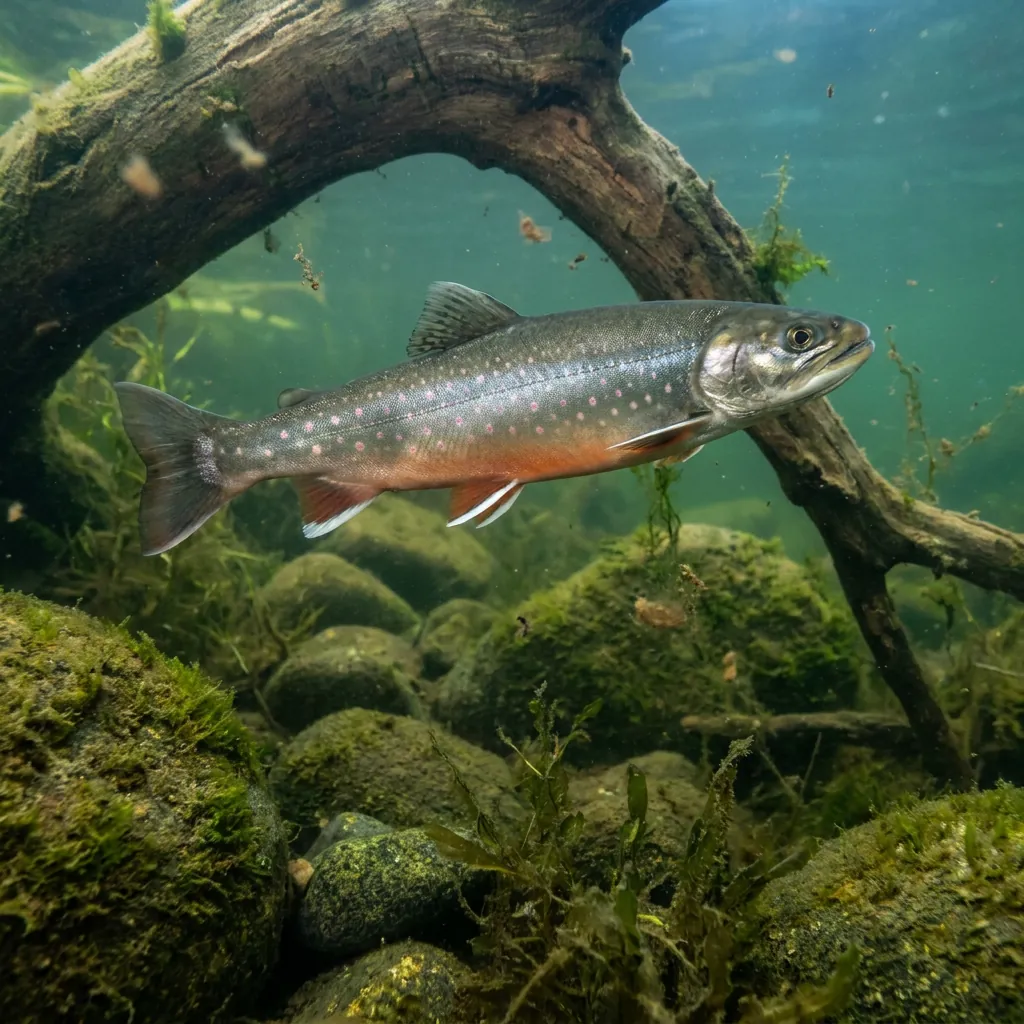
The char is a cold-water fish related to both salmon and trout. It can grow up to 107 cm and weigh as much as 15 kg, though most are closer to 40 cm. It lives further north than almost any other freshwater fish.
Also known as: arctic charr, breeder, lake char, charr, cole's char, trevelyan's charr, scharff's charr, coomasaharn char, gray's char, blunt-snouted irish char, scharff's char, trevelyan's char
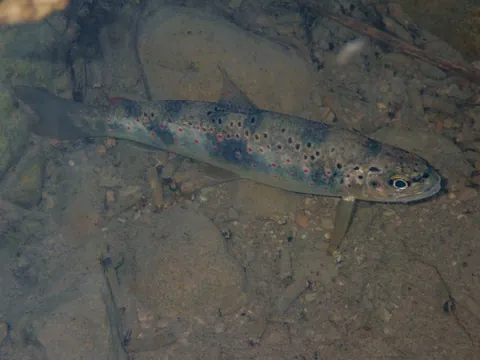
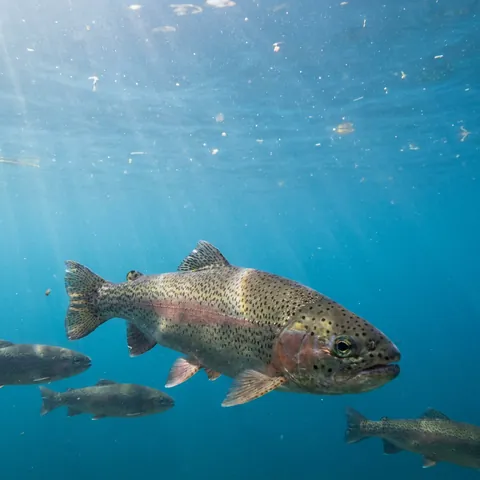
Char are close relatives of salmon and trout, and can look similar to both. Check the spots along its side: on a char, the largest ones are bigger than the fish's own eye pupil, a detail worth a close look before you decide which species you are seeing.
Char have dark backs and pale, colourful undersides that can be red, yellow, or white. Colour changes a lot with the season, the place, and how close the fish is to breeding. Along its sides and back, it has pink to red spots. Its lateral line, the faint sensory line running along its side, curves slightly downward from the head.
Char live in cold fresh water across the Arctic and subarctic: lakes, rivers, and coastal streams. Some stay in lakes their whole lives, while others swim out to sea as adults and return to fresh water to spawn. They usually stay near the surface, in the top metre of water, though they can dive down to about 70 m. Char live in some of the coldest, most northern waters of any freshwater fish, including deep glacial lakes.
Some char stay in lakes their whole lives, while others migrate to sea and back. They usually swim near the surface, though landlocked char may go deeper in summer to find colder water. Predators include polar bears, otters, and other fish, and larger char sometimes eat smaller ones of their own kind. Char can shift their colour to hide from predators, turning darker in fresh water and lighter at sea.
Char eat whatever is easiest to find, and their diet changes with the season. In spring and summer, they eat insects from the water's surface, snails, small crustaceans from the lake bottom, and smaller fish. In autumn and winter, they switch to zooplankton and small freshwater shrimp. At sea, they mostly eat copepods and krill, small floating crustaceans.
Char spawn over rocky lake shallows with strong wave action, or in slow, gravel-bottomed river pools. Breeding males grow a hooked jaw, called a kype, and turn a bright red colour, while females stay silver. Males guard a territory and often mate with several females. The female digs a nest, called a redd, in the gravel to lay her eggs. Unlike Pacific salmon, char do not die after spawning, and most breed again in later years.
No other freshwater fish is found as far north. In Lake Hazen, deep in the Canadian Arctic, the char is the only fish species present.
Describe what you saw and we name it, then keep every species you find in your Oceandex.