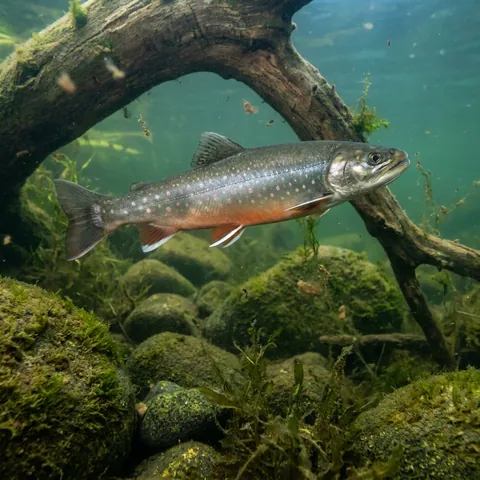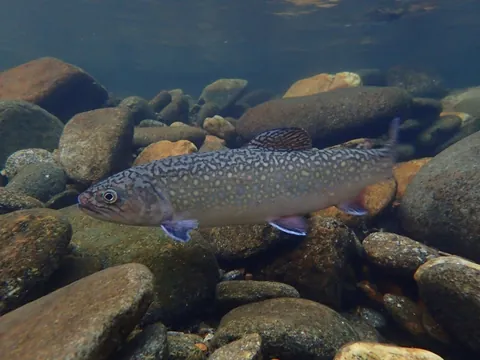
Brook Trout
Salvelinus fontinalis
Salmo trutta
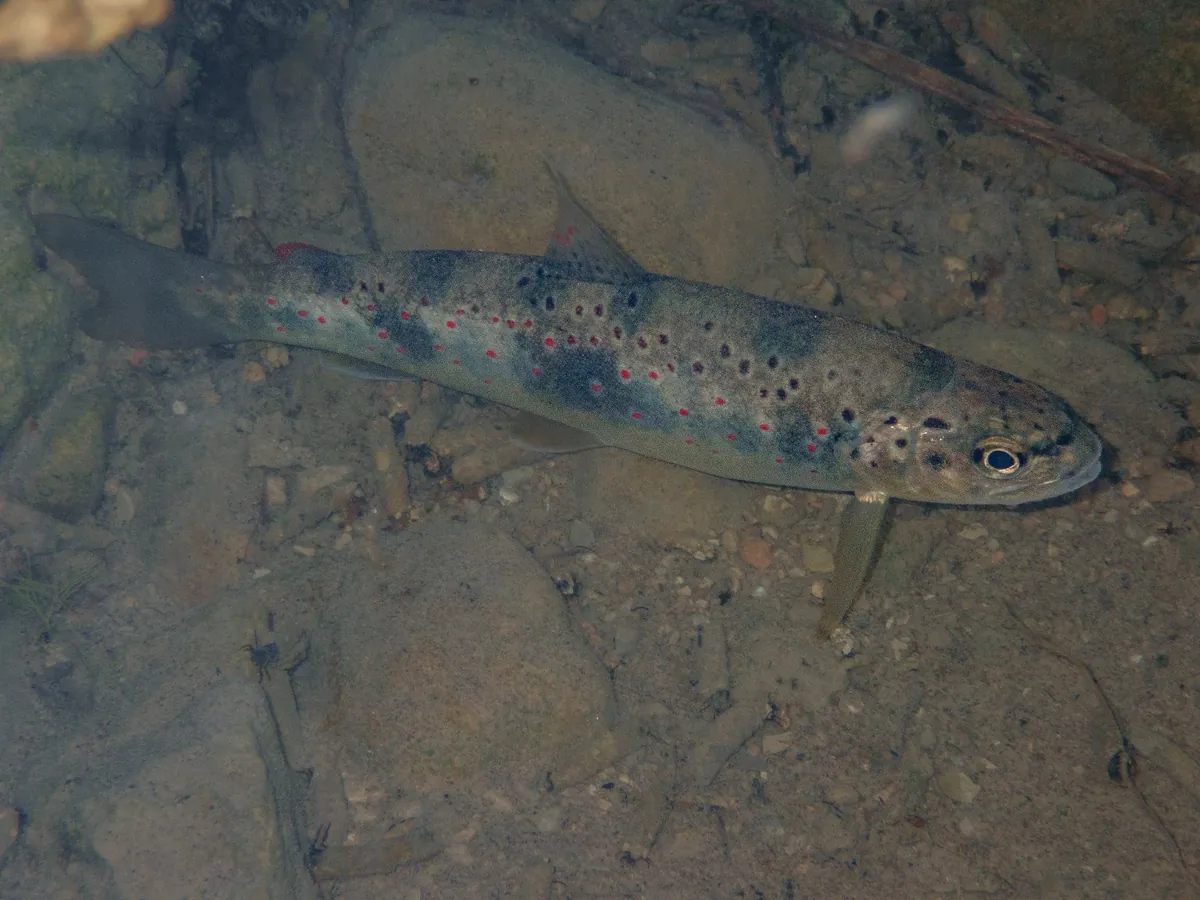
The brown trout is a meat-eating freshwater fish native to Europe, West Asia, and parts of North Africa. People have brought it to many other parts of the world as a fish to catch for sport, and in some places it has become a harmful invasive species.
Also known as: brownie, loch leven trout, german brown, spotted trout
Brown trout can change to fit where they live, and they take three different forms. A river form is called the river trout, a lake form is called the lake trout, and a form that swims out to sea and back is called the sea trout. All three still swim back to fresh water to breed. They lay eggs in gravel beds in small streams, where the water is cold and rich in oxygen.
Brown trout come from an area that runs from northern Norway and Arctic Russia south to the Atlas Mountains in North Africa, and from Iceland east into Central Asia. People have since brought them to rivers and lakes on many continents. Lake trout like large, calm, deep lakes. River trout live in big rivers, creeks, and mountain streams. Sea-run brown trout live at sea as adults, then return to fresh water to breed. Sunken rocks and logs, undercut banks, and plants hanging over the water give trout shelter from predators and bright sun.
Brown trout mostly eat small water animals such as crustaceans and molluscs, plus land insects that fall into the water. Bigger fish eat more and more other fish, including small suckers, minnows, sculpins, and darters. Some lake trout instead eat zooplankton, matter on the lake bed, or algae. Sea-run brown trout also eat marine worms once they reach the ocean.
The brown trout is not at risk overall, though some local groups are under pressure. Damage to habitat, overfishing, and stocking with farmed fish that breed with wild fish all take a toll. Warm summer water can lower oxygen enough to kill off local fish, a problem made worse by fertiliser washing into rivers from farmland. Overfishing of large females hurts most, since each one removed means far fewer eggs at breeding time.
In Britain and Ireland, the sea-going form of this fish has a different local name almost everywhere: sewin in Wales, finnock in Scotland, peal in England's West Country, mort in north-west England, and white trout in Ireland.
Describe what you saw and we name it, then keep every species you find in your Oceandex.