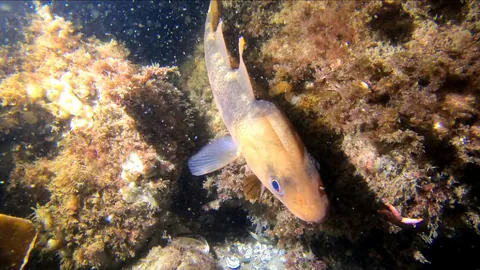
Atlantic cod
Gadus morhua
Lota lota
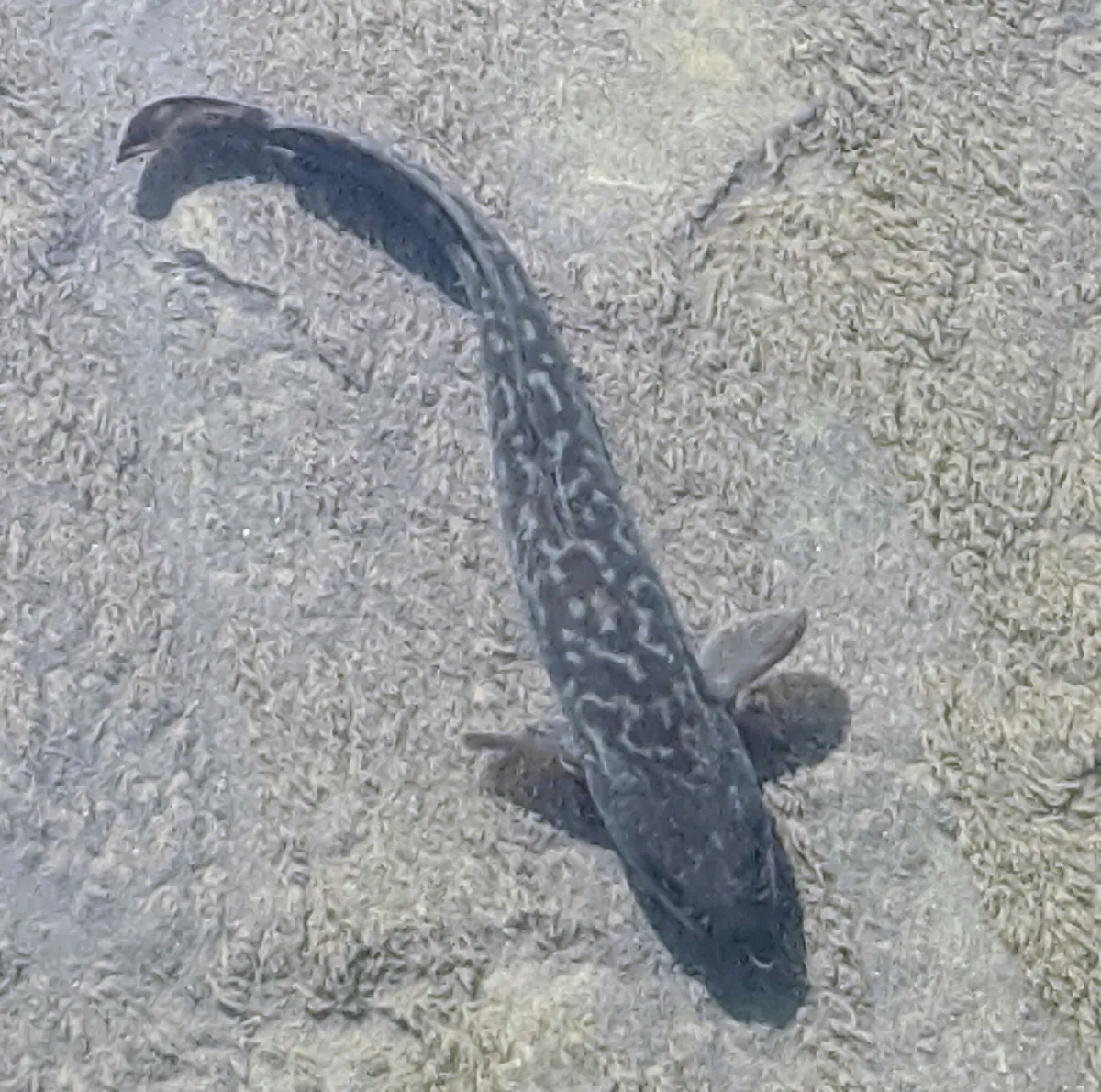
The burbot is a cold-water hunter that looks like nothing else swimming beside it, part eel, part catfish. It can grow to an impressive 152 cm, though most divers will see fish closer to 40 cm.
Also known as: Lota lota; eelpout; freshwater cod
Its eel-like body can be mistaken for a lamprey or eel at a glance. Look for the single whisker-like barbel under its chin, a feature true eels and lampreys lack.
It has a long, snake-like body that is flattened from side to side, with a broad, flat head and a wide mouth full of small teeth. Two dorsal fins run along its back, the first short, the second much longer, and the anal fin nearly matches the second dorsal in length. The skin looks bare, though it actually carries scales so tiny they are barely visible.
Burbot live in cold streams and lakes across the northern hemisphere, from Europe and Russia to Alaska and Canada, plus a few brackish stretches of the Baltic Sea. They favour deep, cool water, usually between about 5 and 60 metres, and river fish tend to hold in deep holes for most of the year.
Burbot spend much of the year resting in deep water and stay close to the bottom, since their small fins make them poor swimmers against currents. Unusually for a freshwater fish, they become active in mid to late winter, when they gather to spawn.
Young burbot eat small invertebrates such as copepods and amphipods before switching to fish as they grow, including whitefish, perch, and young pike. In parts of the Great Lakes, burbot have become major predators of the invasive round goby, found in most stomachs sampled.
Burbot spawn from around November to March, often under ice in near-freezing water. Groups of males and females roll together in a writhing ball on the bottom, releasing eggs and sperm at the same time with no nest or guarding. A single female can produce anywhere from about 63,000 to over 3 million eggs, depending on her size.
Harmless.
The burbot is listed as Least Concern overall, but many local populations have declined or disappeared. River damming and pollution are the main threats to river-dwelling burbot, and because they are not a popular commercial catch, most regions give them little conservation priority.
In parts of Lake Erie, burbot have eaten so many invasive round gobies, found in 71% of sampled stomachs, that they are credited with helping stop the goby population's spread.
Describe what you saw and we name it, then keep every species you find in your Oceandex.