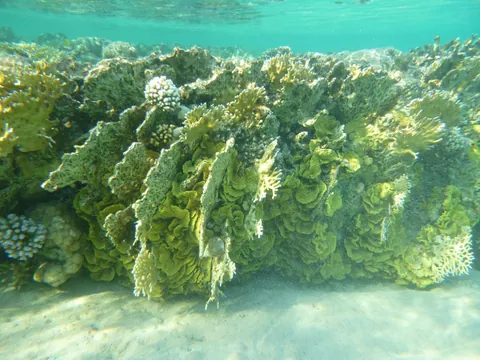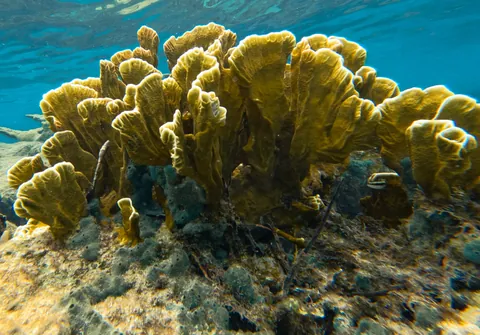
Blade Fire Coral
Millepora complanata
Millepora alcicornis
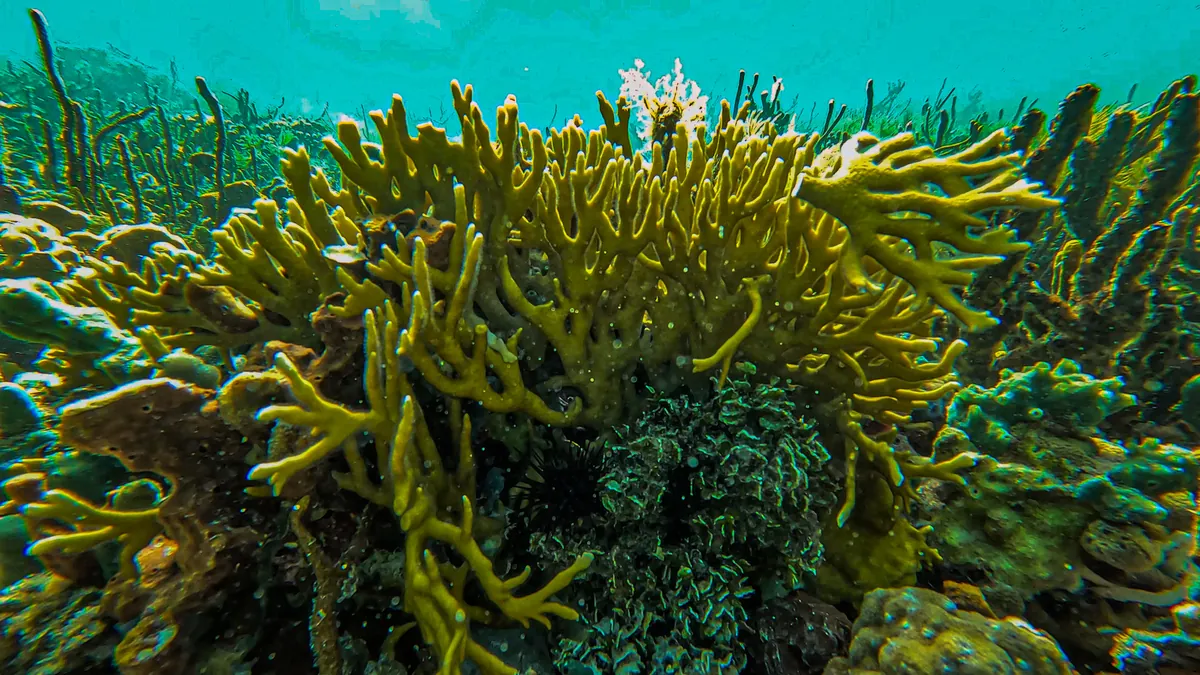
Fire coral earns its name honestly: brush against its branches and the sting lingers long after the dive. Despite the name, it is not a true coral at all, but a colonial hydrozoan built from thousands of microscopic polyps.
Also known as: sea ginger
Its smooth, cup-free surface and pale, cream-to-brown branches with white tips separate it from true stony and soft corals it grows alongside. Treat any coral matching this look as a fire coral and avoid contact, since the sting is real.
Growth form varies a lot: colonies start by encrusting rocks, dead coral, or even wreck hulls, then can grow into plates in rough surf or upright, branching shapes in calmer water. The cylindrical branches usually spread in a single flat plane, ranging from brown to pale, cream-yellow, with branch tips that turn white. The surface looks smooth, without the pitted cups seen on true stony corals.
Found on reefs, seagrass beds, and sometimes mangrove roots across the Caribbean, Gulf of Mexico, and the coasts of Central and South America, down to about 55 m. It grows in both sheltered bays and surf-battered reef edges, and is one of the few fire corals commonly found deeper than 10 m.
Feeds on plankton, catching prey with stinging tentacles that stay extended most of the time and retract if disturbed. It reproduces both by fragments breaking off in storms and growing into new colonies, and by releasing tiny jellyfish-like stages that drift and settle elsewhere. A few animals, including hawkfish and certain shrimp, shelter among its branches unharmed.
When fire coral grows near a gorgonian sea fan, it can turn aggressive, growing hand-shaped branches that reach out, encircle, and smother the sea fan before using its skeleton as a base for new growth.
Describe what you saw and we name it, then keep every species you find in your Oceandex.