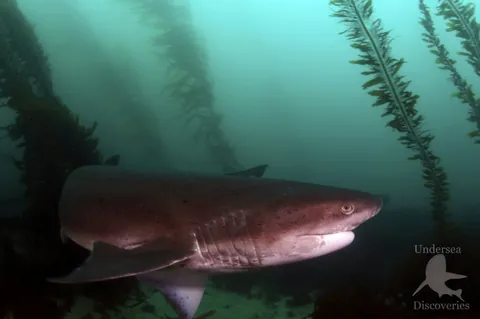
Broadnose Sevengill Shark
Notorynchus cepedianus
Hexanchus griseus
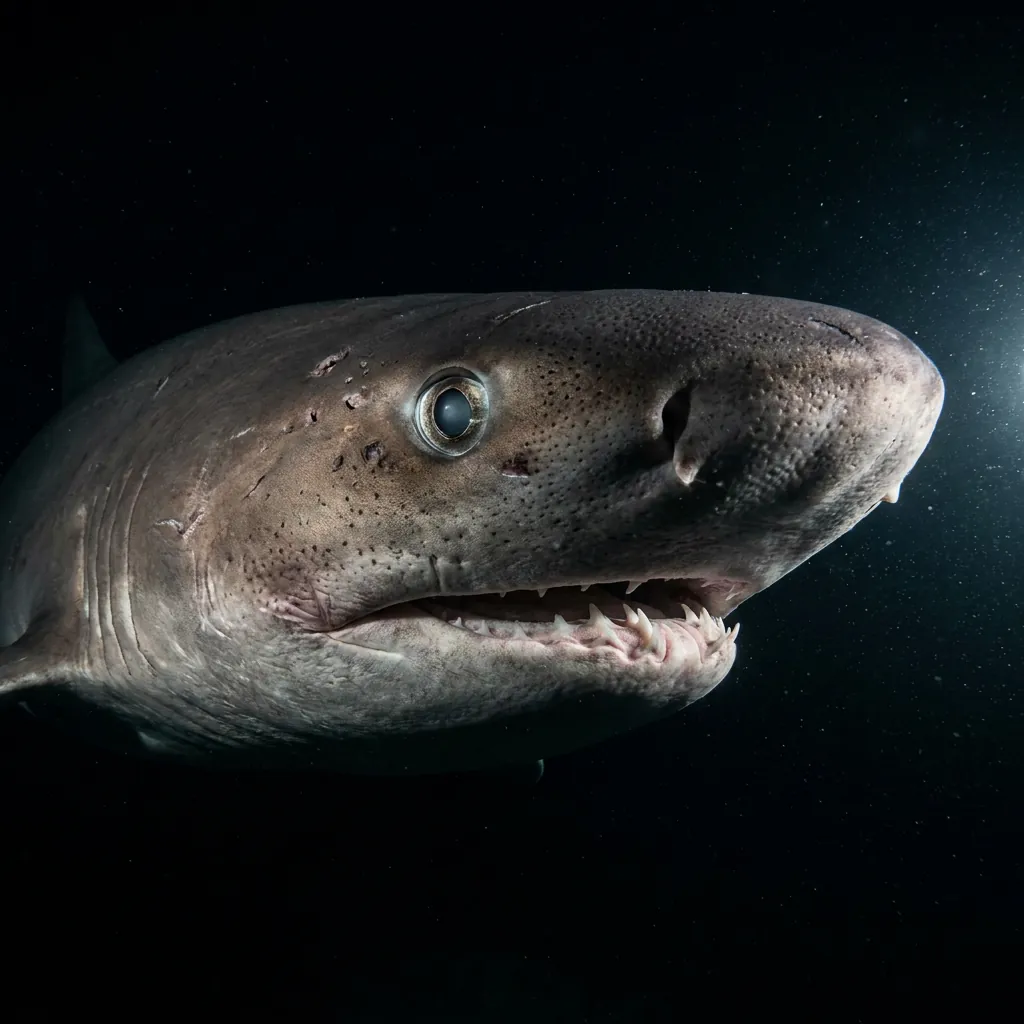
The bluntnose sixgill shark is a huge, heavy-bodied shark that lives far below the reach of most divers. It can grow to 482 cm long and weigh up to 590 kg, though most adults are closer to 300 cm.
Also known as: bluntnose sixgill, bluntnose sixgill shark, bluntnose sixgill shark, six-gill shark, brown shark, bull dog shark, sixgill shark, cow shark, grey shark, 6-gilled shark, mud shark, sixgilled shark, six-gill shark, six-gilled shark, gray shark, bull shark, sixgill cow shark, atlantic mudshark, bluntnose sixgill shark, grey shark, cow shark, sixgill shark, mud shark, bull shark, bluntnose six-gill shark
This is the shark to check the throat for: six visible gill slits behind the head, one more than in most other sharks, is the single mark that confirms it.
This shark has a large, thick body, a long tail, and a wide, blunt snout with small eyes that glow a striking blue-green. Its skin ranges from tan through brown to black, with a pale line along each side and darker spots scattered on its flanks. It has one dorsal fin, set far back near the tail, and broad, rounded pectoral fins. Six gill slits sit behind its head, one more than the five slits found on most other sharks.
It lives worldwide in tropical and temperate seas, usually swimming near the sea floor or over the continental shelf in dim, deep water between 180 and 1,100 metres, though it has been recorded as deep as 2,500 metres. Young sharks sometimes move into shallow water near shore to feed, while adults stay much deeper and rise close to the surface only at night.
Though it usually moves slowly, this shark can put on a burst of speed with its powerful tail to catch prey. It can push its jaws forward and uses both sawing and tearing motions to tackle food, giving it the flexibility to feed on almost anything. It eats fish, rays, squid, crabs, seals, carrion, and even other sharks, resting on the bottom by day and moving up to feed at night.
This shark gives birth to live young rather than laying eggs, with large litters typical for the species. Males are considered mature once their claspers, the paired reproductive organs beneath the body, turn rigid and hardened rather than short and flexible. Females grow rapidly in both length and weight as they near maturity.
This shark was filmed for the documentary Blue Planet II feeding on a dead whale on the seafloor, and in unaired footage it shoved against a deep-sea submersible with its body, apparently trying to push away what it saw as competition for the meal.
Describe what you saw and we name it, then keep every species you find in your Oceandex.