Atlantic Mackerel
Scomber scombrus
Scomber australasicus
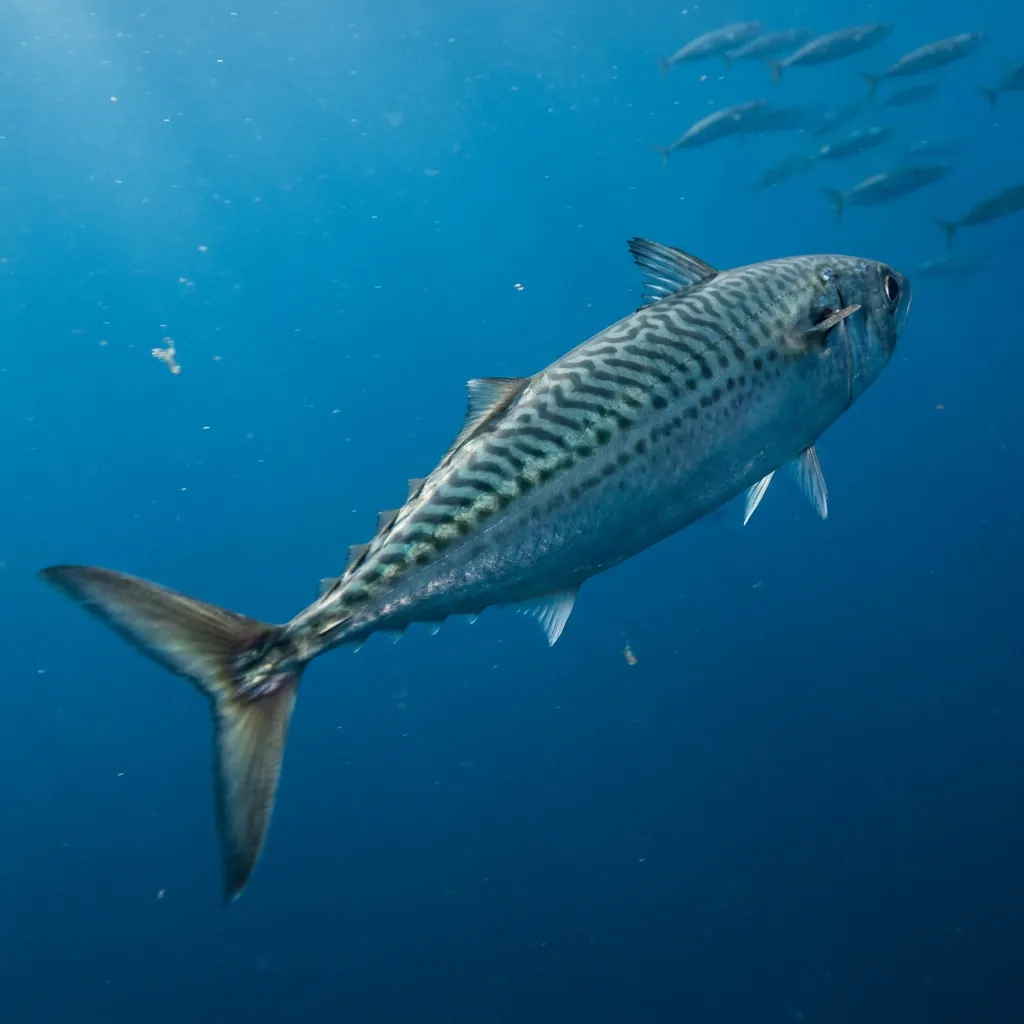
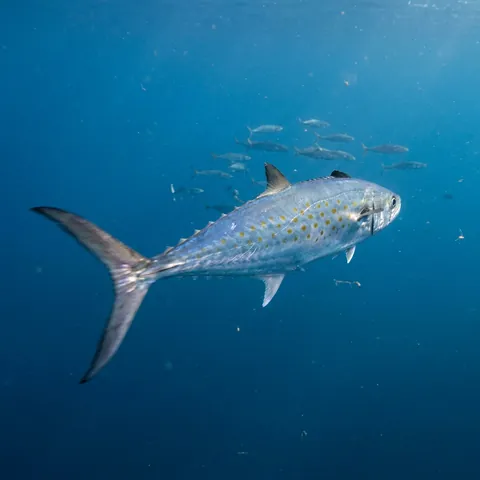
A fast, silvery schooling fish of open water, the blue mackerel grows to 44 cm and can weigh up to 1.4 kg.
Also known as: japanese mackerel, slimey mackerel, slimy mackerel, spotted chub mackerel, spotted mackerel, chub mackerel, spotted mackerel, southern mackerel, common mackerel, spotted chub mackerel, pacific mackerel, slimy mackerel, mackerel, slimy mackerel, pacific mackerel, common mackerel, english mackerel, school mackerel, spotted chub mackerel, slimies
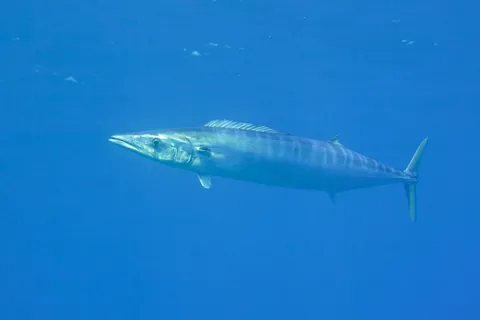
This mackerel has a round, tuna-like body that tapers toward the tail behind its second dorsal fin. Small scales cover the body, with no thick armour of larger scales near the head. Its back is marked with narrow, zigzagging oblique lines, while the belly is pearly white with thin, wavy, broken lines.
Blue mackerel live in tropical to subtropical parts of the Indian and Pacific Oceans, from the Red Sea across to Japan and Australia, and on to the eastern Pacific. They swim in both coastal and open ocean water and have been recorded from about 87 to 200 metres deep.
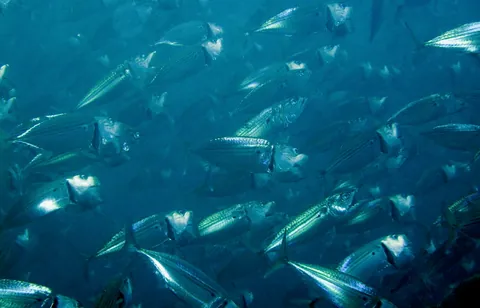
Blue mackerel are aggressive, indiscriminate hunters that will strike at almost anything moving, including lures and bare hooks when a school is feeding hard. They hunt by sight during the day, which has given them large, sensitive eyes. Schools often mix with other similar-sized fish such as jack mackerel and sardines. Spawning takes place in warmer months, varying by region.
The blue mackerel was thought to be just a subspecies of the chub mackerel until the late 1980s, when genetic differences showed it was its own species.
Describe what you saw and we name it, then keep every species you find in your Oceandex.