
North Pacific Spiny Dogfish
Squalus suckleyi
Squalus acanthias
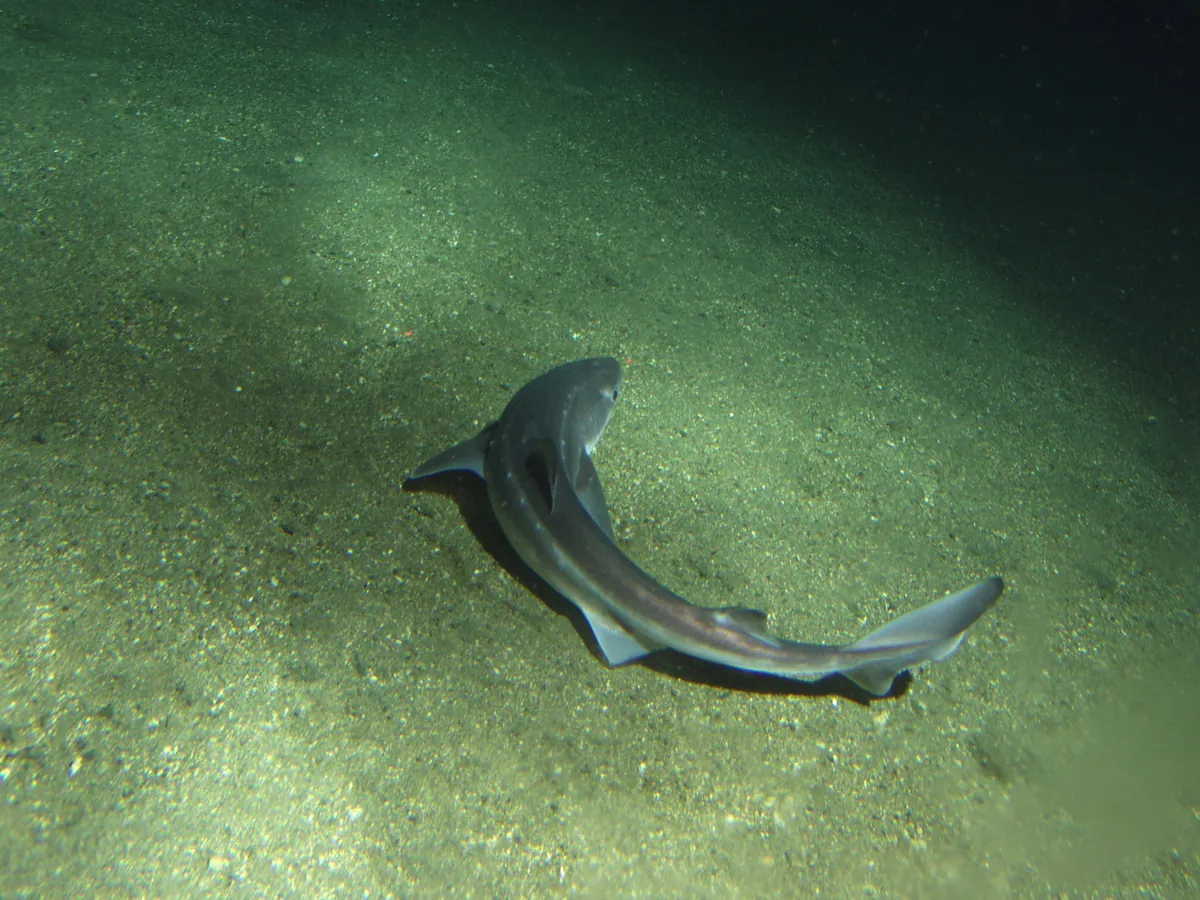
The spiny dogfish, also called the blue dog, is a small, slender shark once thought to be the most abundant shark on Earth. It reaches up to about a metre long and can weigh as much as 9.1 kg.
Also known as: common spiny fish, darwen salmon, spring dogfish, spiky dog, grayfish, rigg, spiny dogfish, southern spiny dogfish, flake, dog fish, spur dogfish, rock salmon, shortspine spurdog, pacific dogfish, victorian spotted dogfish, dogfish, white-spotted dogfish, whitespotted dogfish, picked dogfish, piked dogfish, huss, spurdog, white-spotted spurdog, spotted spiny dogfish, spiny dogfish, pacific dogfish, piked dogfish, picked dogfish, white spotted dogfish, whitespotted spurdog, victorian spotted dogfish, spotted spiny dogfish, white-spotted spurdog, whitespotted dogfish
Small sharks without an anal fin are uncommon, which narrows things down quickly. Confirm it by checking for a sharp spine at the front of each dorsal fin.
This shark has a slim, grey body with white spots scattered along its back, two dorsal fins, and no anal fin. Each dorsal fin is preceded by a sharp spine, and the tail fin has an uneven, longer upper lobe.
It lives mostly near the sea floor on continental shelves, from about 50 to 300 metres deep, in cool water between 7 and 15°C. It also turns up in midwater and near the surface, and tolerates brackish enclosed bays and estuaries.
Spiny dogfish are highly social and migratory, travelling in schools that can number in the thousands and are often sorted by size or sex. If grabbed, one can arch its back to jab an attacker with the spines in front of its dorsal fins, which carry a mild venom.
It is an aggressive hunter with a broad diet, taking squid, herring, mackerel, and other fish, as well as crabs, shrimp, jellyfish, and sea cucumbers. It can sense the weak electric fields given off by hidden prey.
The spiny dogfish is listed as Least Concern globally, but stocks in parts of its range, especially the Northeast Atlantic, have fallen sharply after decades of overfishing to supply European seafood markets. Catch limits introduced since the 1990s came late and were poorly enforced for years.
If caught, a spiny dogfish can arch its back sharply enough to stab its captor with its own dorsal spines, which ooze a mild venom on contact.
Describe what you saw and we name it, then keep every species you find in your Oceandex.