Black Scabbardfish
Aphanopus carbo
About
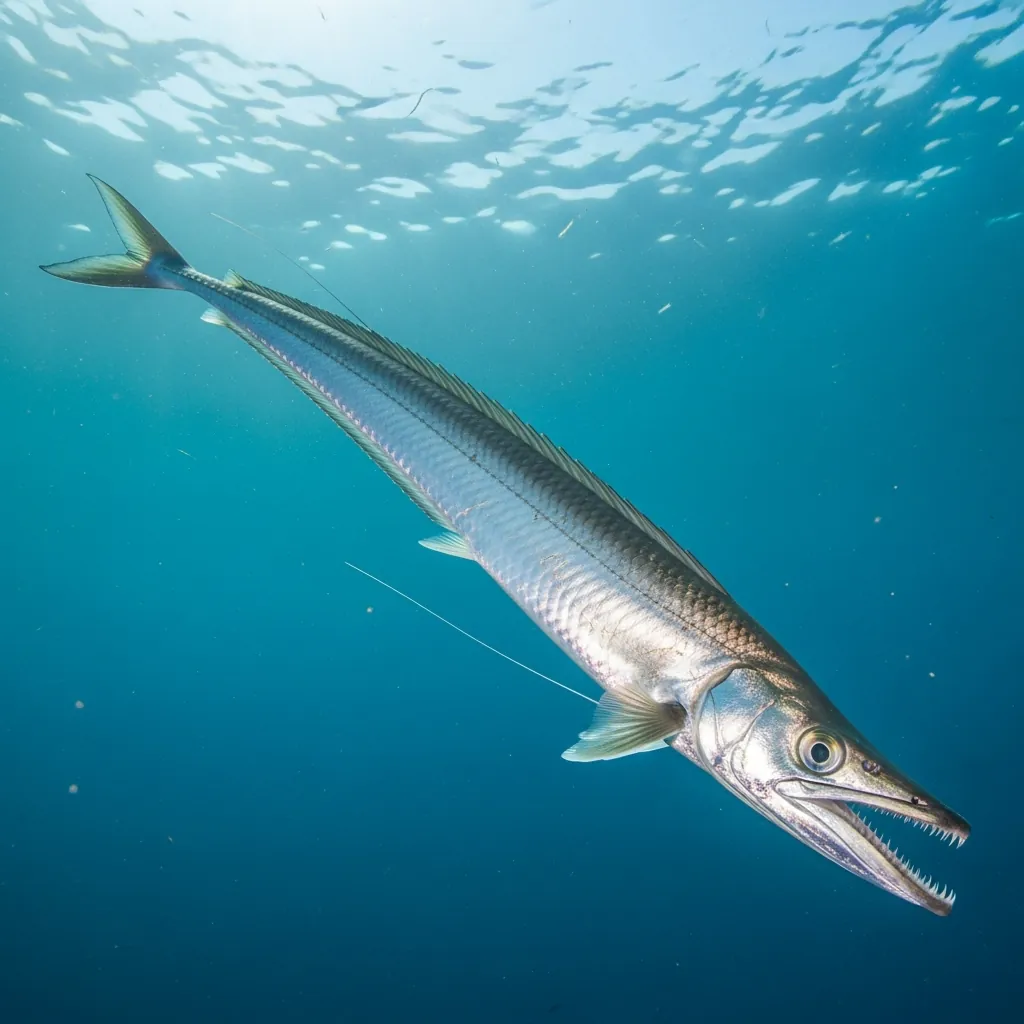
A black ribbon of a fish from water far below where light reaches. The black scabbardfish can reach about 151 cm, yet it stays as thin as a blade, and its mouth is full of fangs. It usually lives between 700 and 1,300 m, which puts it well outside diving range and squarely in the world of deep trawls and submersibles.
Also known as: cutlassfish, black espada, black scabbard fish
- Length
- 70 cm · max 1.5 m
- Depth
- 700–1300 m
How to tell it apart
Deep-water fish arrive on deck looking much alike: long, dark and battered. Two checks help. Look at the belly where hip fins should sit, because an adult has none at all, not even a stub. Then open the mouth, which is lined with black inside, gill chambers included. Be careful all the same, since a close relative lives in the same water, and nothing in the record separates the two by these marks alone.
Appearance
The body is extremely long and narrow, many times longer than it is deep. The head runs out to a large snout with strong, fang-like teeth. A long fin runs down the back for most of the body. Young fish have a single spine where each hip fin would be, and adults have nothing there at all. The colour is a coppery black with a shine to it. The inside of the mouth and the gill chambers are black as well. The eyes are very large.
Habitat
This is a fish of the Atlantic, above all the northeast, where it is found from about 200 m down to 2,300 m and most often between 700 and 1,300 m. It seems to travel a great loop over its life, driven by food and breeding. Spawning happens near Madeira and the Canary Islands late in the year. The fish are then thought to head north into cooler water to feed and grow, before moving back south towards Portugal and on to the spawning grounds. Young fish live higher in the water than adults.
Behaviour
By day the black scabbardfish stays deep. At night it climbs into mid-water to feed, then drops again. Its long thin body, pointed head and long back fin are the build of a fast swimmer, and the big fangs in a wide mouth finish the picture of a hunter. The huge eyes gather what little light there is that deep. The coppery black skin hides it in the dark. It shares its water with a close relative, the intermediate scabbardfish.
Diet
This fish is not fussy: more than 35 kinds of prey have been recorded from it. It takes shellfish and other crustaceans, squid and octopus, and a wide range of fish, including grenadiers, codlings and the soft-bodied deep-sea fish known as naked heads. Blue whiting and other mid-water fish appear to be favourites. When those are short, it will chase shoals of smaller fish such as sardine and mackerel.
Breeding
A female breeds more than once in her life, and each season she releases all her eggs in a single go rather than in batches. Every egg she will use that year is already formed in the ovary beforehand. Females can go on spawning for many years, but they may also skip a season and put the energy into travel and growth instead. Eggs and young drift with the plankton. Breeding fish have only been found late in the year, around Madeira, the Canaries and the northwest coast of Africa.
Conservation
The IUCN has not yet assessed this species. That gap matters, because the fish is caught in large numbers in mixed deep-water trawls and deep-sea species recover slowly from heavy fishing. Numbers are reported to be falling in parts of the northeast Atlantic. It is commercially important to fisheries around the Iberian Peninsula.
Did you know?
The black scabbardfish carries roundworm parasites picked up from its prey, and scientists have turned that into a tracking tool. Because the worms are common in some areas and not others, checking which worms a fish carries gives a clue to where it has been. In effect, the parasites work as tags the fish tagged itself with.
Log it in Into the Blue
Describe what you saw and we name it, then keep every species you find in your Oceandex.