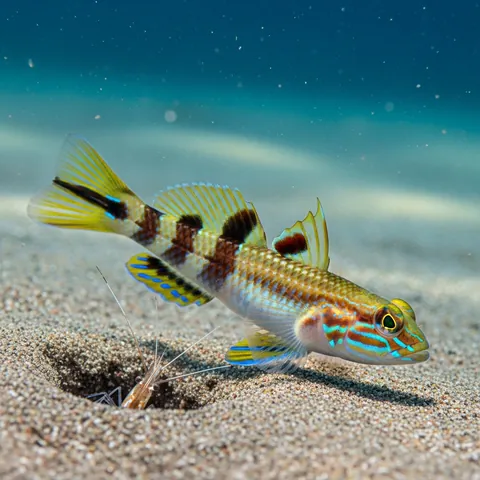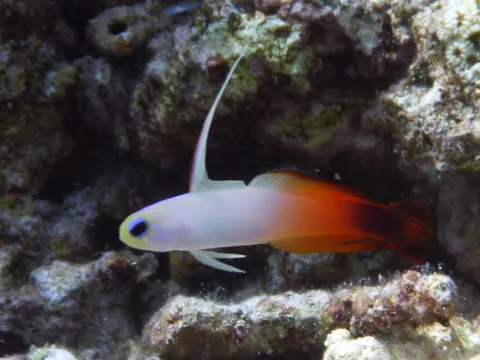
Fire Dartfish
Nemateleotris magnifica
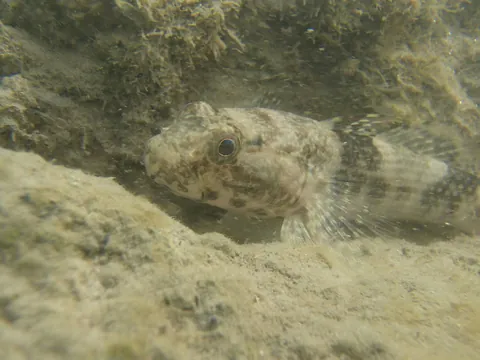
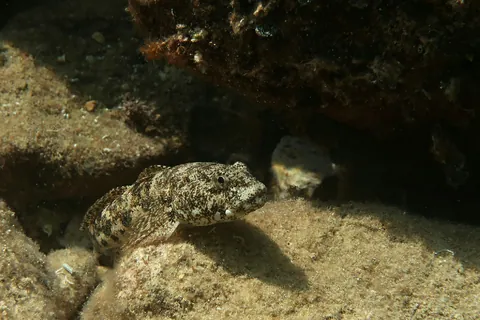
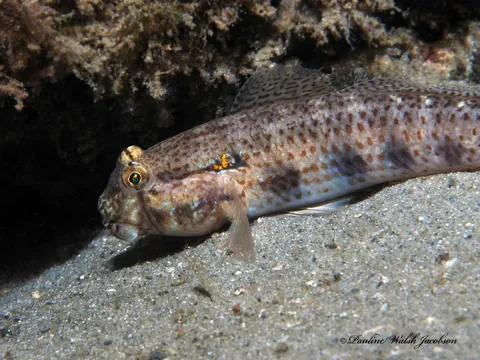
Gobius niger
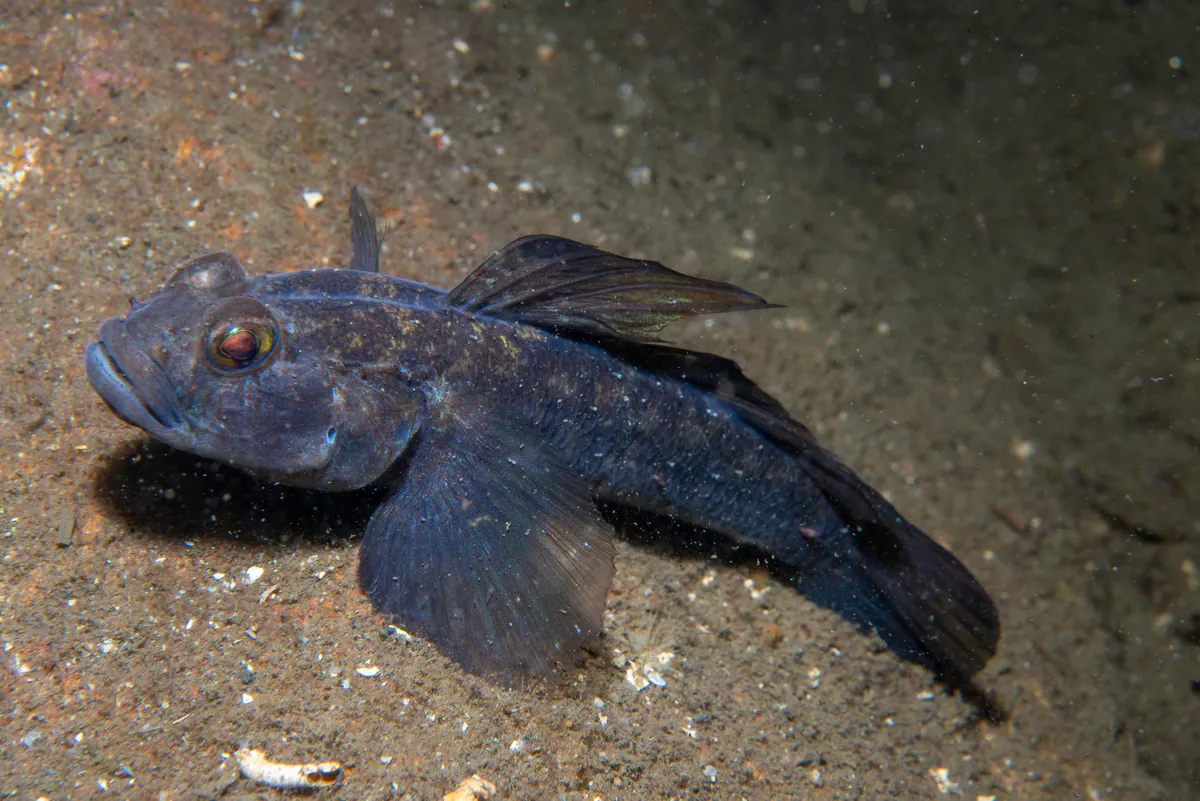
The black goby is a small, chunky bottom-dweller found resting on sand, mud, and seagrass in shallow coastal water. It is one of the bigger and heavier-built gobies you will come across in these habitats.
Several small gobies share this fish's habitat and are easy to confuse with it. The clearest mark is its two dorsal fins sitting close together with almost no gap between them, unlike the common and sand gobies, which show a distinct gap.
This goby has a deep, thickset body and a rounded snout, larger overall than several similar gobies sharing its habitat. It has two dorsal fins set close together, almost touching. The front one carries stiff spines that can poke through the fin membrane, and the rear one is shorter with soft rays. Its pelvic fins are fused into a single disc, as in other gobies. Body colour is dark brown with faint blackish blotches; during the breeding season, males darken to almost black and their fins become more vividly coloured. It grows up to 18 cm long.
This goby lives in shallow coastal waters down to around 50 m, though it can be found somewhat deeper. It favours lagoons, estuaries, and inshore water over sand or mud, often among seagrass or seaweed, and occasionally strays into brackish or fresh water. Its range runs along the eastern Atlantic coast and through the Mediterranean and Black Sea.
It feeds on small bottom-dwelling animals, including crustaceans, bivalves, snails, worms, and occasionally small fish, picking them off the sand, mud, or plant growth around it.
Breeding happens in summer. A male sets up a territory in a shallow, weedy spot and prepares a clean patch of seabed as a nest. He then invites a female to inspect it, and if she accepts, she lays her eggs there while he stands guard until they hatch.
Describe what you saw and we name it, then keep every species you find in your Oceandex.