Anchovies
anchovies_g293
Anchoa mitchilli
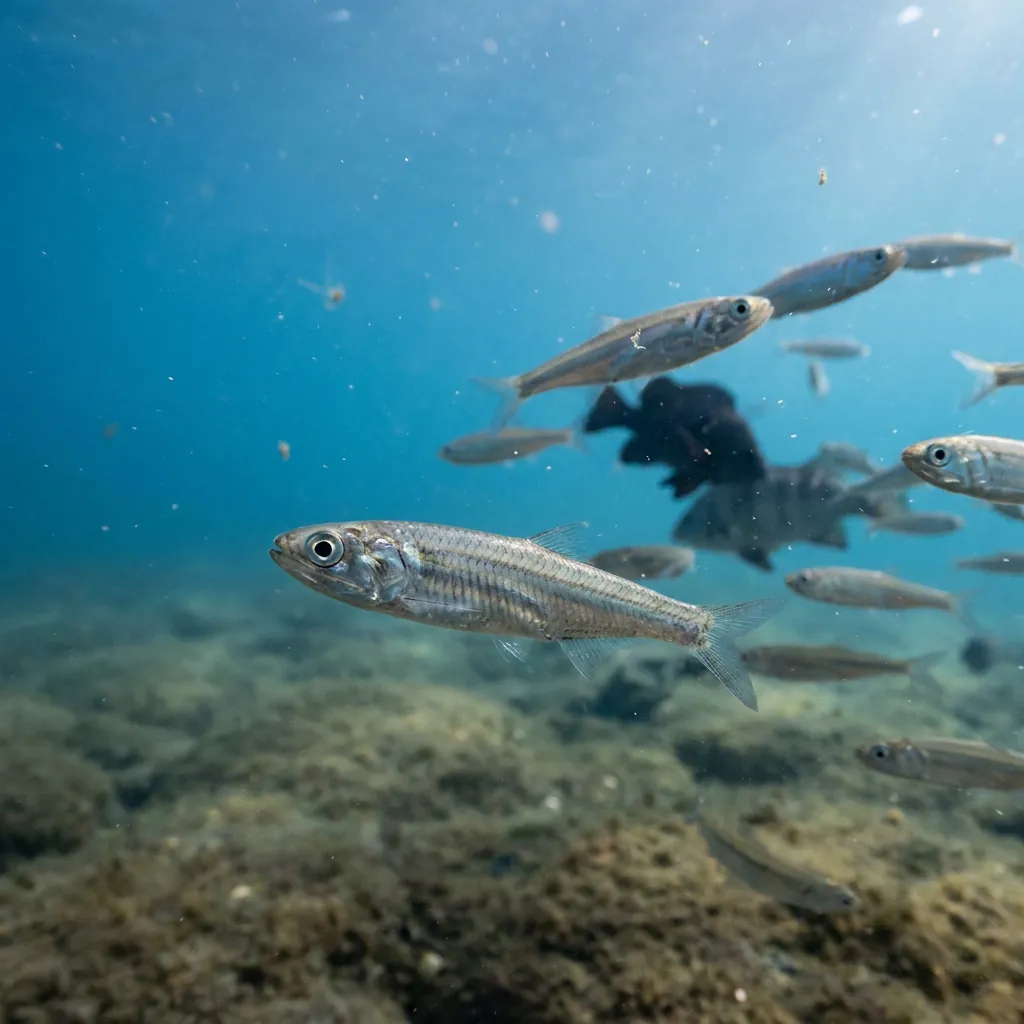
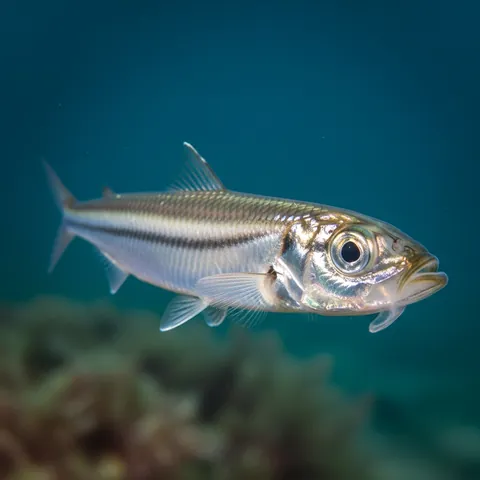
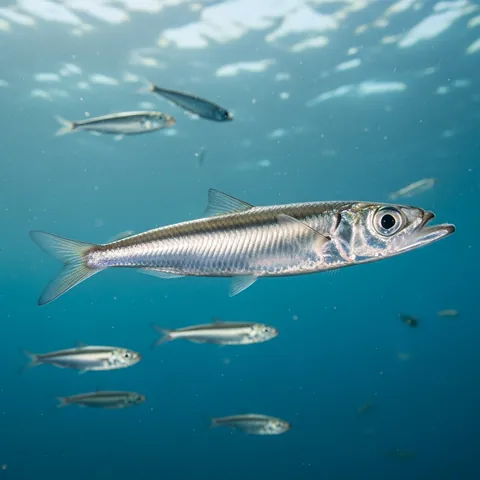
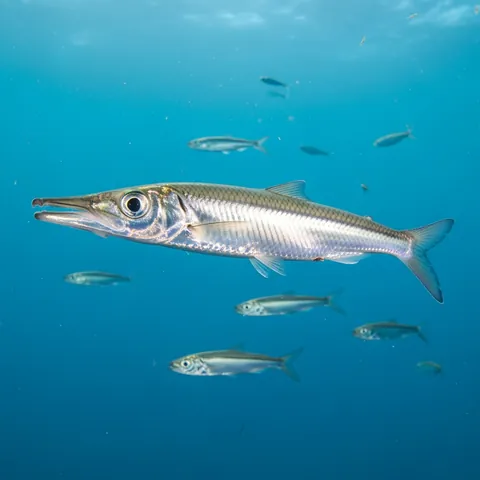
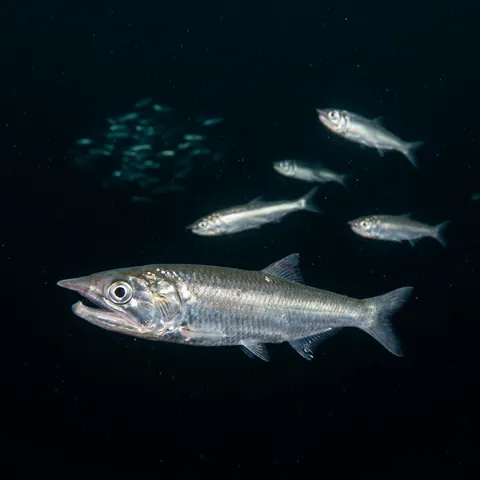
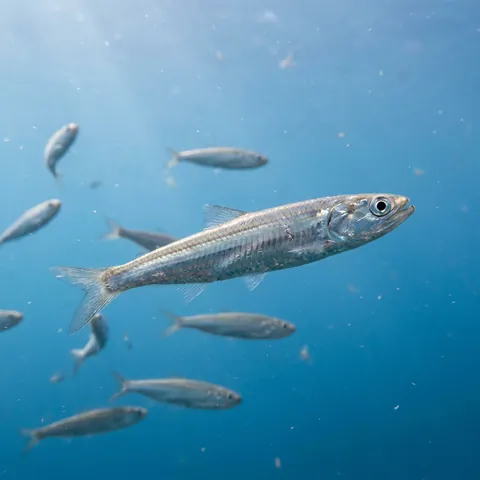
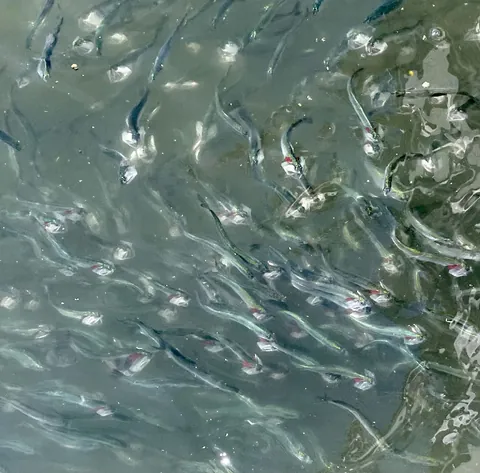
The bay anchovy is a small, silvery fish that swarms in huge schools along the eastern coast of North America. It is one of the most common fish in these waters and a key food source for many larger animals.
It looks similar to other small anchovies sharing its range, especially the Cuban anchovy. The clearest difference is fin placement: the Cuban anchovy's anal fin sits noticeably further back on the body.
This is a small, slender, schooling fish with a greenish back, a silvery stripe along its side, and a silvery belly. Its jaw is very long, reaching well back past the eye. It has a single dorsal fin, set above the start of the anal fin.
It lives along the Atlantic coast and Gulf of Mexico from Maine to the Yucatan, and is especially common in the Chesapeake Bay. It spends most of its time swimming in open water, but also turns up over bare seabed, in tide pools, and in the surf zone. It tolerates muddy, brackish water and a wide range of salinity, but cannot survive long in low-oxygen conditions.
Bay anchovies feed on zooplankton such as copepods, mysids, and crab larvae. They are in turn eaten by larger fish, including weakfish, striped bass, and bluefish, as well as terns. Because of this, they form a key link in the food web, moving energy from plankton up to bigger predators. They spawn in the water column, year-round in the south and during the warmer months further north.
Unlike many coastal fish, the bay anchovy cannot cope with low-oxygen water and suffocates quickly if oxygen levels drop.
Describe what you saw and we name it, then keep every species you find in your Oceandex.